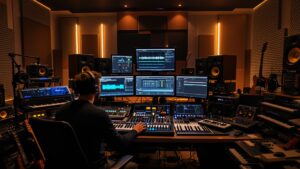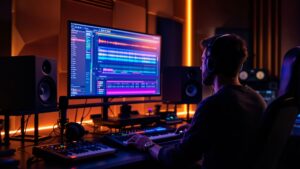
Welcome to Music Production 101, the creative workshop of Tune Streets, where imagination meets innovation and every beat, tone, and texture comes to life. This is where raw inspiration becomes a full-fledged track—where you learn to sculpt sound, shape energy, and build emotion through the tools of modern production. Whether it’s layering vocals, mixing instruments, or designing beats from scratch, music production is the art of turning invisible ideas into something you can feel. Here, you’ll discover the fundamentals of recording, mixing, mastering, and digital audio creation. Learn how producers use DAWs, plugins, and sound design techniques to craft everything from intimate acoustic tracks to stadium-shaking anthems. Every article here breaks down the process in ways that inspire both beginners and experienced creators to experiment, evolve, and find their unique sound. This is where creativity becomes production—and production becomes magic.
A: Lower preamp gain; aim peaks near −12 dBFS; watch input meters.
A: 48 kHz/24-bit; keep the whole project consistent.
A: Treat room, step back 6–8", HPF ~80–120 Hz, cut 200–400 Hz carefully.
A: High-pass non-bass tracks, sidechain kick/bass, check phase/mono.
A: Use direct monitoring; 64–128 buffer; freeze heavy instruments.
A: Peaks under −1 dBFS, no limiter needed for mix notes; target musical LUFS.
A: Whichever solves the problem; try gentle subtractive EQ → comp → sweeten.
A: Shorter times, pre-delay 20–40 ms, HPF/LPF the return, send less on lows.
A: 24-bit WAV, interleaved stereo; leave headroom; dither only when going to 16-bit.
A: Yes for translation/consistency; keep mixes dynamic so mastering can work.