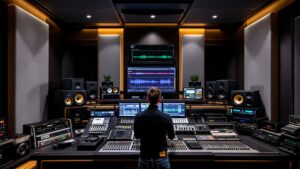
Welcome to Mixing & Mastering, the finishing suite of Tune Streets, where music transforms from great to unforgettable. This is where every instrument finds its space, every frequency locks into balance, and every note comes alive with clarity and emotion. Mixing is the art of sculpting sound—shaping depth, energy, and texture until every element fits together in perfect harmony. Mastering, in turn, is the polish that elevates a track from personal creation to professional release. Here, you’ll dive into the world of EQs, compressors, limiters, and stereo imaging—the secret tools that producers use to craft immersive, high-impact sound. Learn how to make vocals shine, basslines thump, and tracks translate beautifully across every speaker and headphone. Whether you’re fine-tuning your first mix or perfecting your next release, Mixing & Mastering gives you the insight to make your music sound as big, bold, and balanced as your vision.
A: Fix balance/arrangement first; preserve transients, then add tasteful limiting.
A: Aim for musical LUFS; prioritize dynamics and translation over numbers.
A: Emphasize upper-bass harmonics; tame 200–400 Hz; check mono.
A: De-ess 5–8 kHz, soften with slower attack comp, brighten above 10 kHz instead.
A: Shorter times, more pre-delay, EQ returns, automate sends down in busy parts.
A: Longer attack, faster release; filter sidechain lows so kick doesn’t dominate.
A: Reduce out-of-phase wideners; keep key elements center/mono-compatible.
A: Clean edits → corrective EQ → gentle comp → tonal EQ → saturation → limiter → dither (if to 16-bit).
A: 24-bit WAV at session rate for archive; apply SRC/dither only when required.
A: Fresh ears help; if self-mastering, take a day off and compare to references.