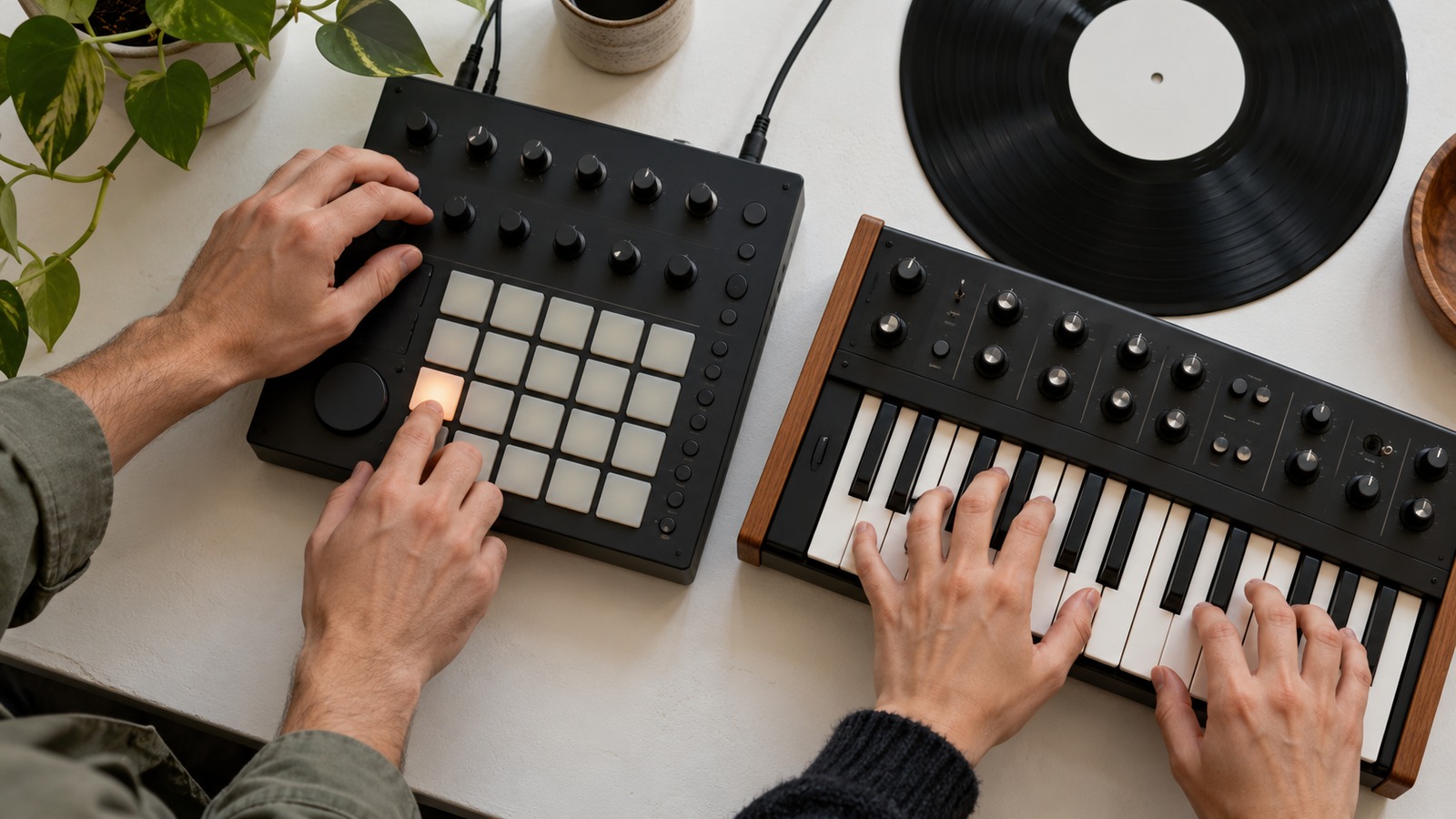
Two Labels Can Describe Different Parts of the Same Record
A spacious electronic album can reward stillness through headphones, while a club track organizes a room around movement. Both may use synthesizers, samples, and programmed rhythms, but those shared resources do not make their purposes identical. Electronic music is the broader field; EDM abbreviates electronic dance music and directs attention toward dance-oriented work. The complication is that everyday usage sometimes gives EDM a narrower association with festival culture or a particular commercial sound. Understanding the distinction means identifying which meaning someone intends before arguing about the music. This guide separates sound-making, musical function, and cultural classification so the labels become useful tools for discovery. You do not need production training to hear the difference. Follow what the sound asks the listener to notice, and what the arrangement makes possible in a particular setting.
A: Yes. Its creative field includes dance-oriented and other kinds of work.
A: Electronic dance music, a broad name for electronically shaped dance-oriented music.
A: The abbreviation can carry associations with festival culture and commercial presentation.
A: No. Sustained grooves and gradual changes can provide its main development.
A: Yes. Rhythm can organize attention without a primary dance-floor purpose.
A: They are specific traditions within the broader electronic dance conversation.
A: No. A voice can participate in music organized substantially through electronic processes.
A: Yes. Different settings can foreground different features of the same recording.
A: No. Evaluate the musical decisions in relation to the work's purpose.
A: State whether you mean the broad dance umbrella or a narrower cultural usage.
Electronic Music Describes a Broad Creative Field
Brian Eno’s ‘1/1’ from Ambient 1: Music for Airports provides a useful nondance electronic example. Recurring piano tones overlap within a spacious, slowly shifting environment, without a kick-and-snare pattern organizing a dance floor. The electronic work lies partly in how recorded material is repeated and placed in time. Eno’s official discography identifies the album. Hearing it beside a club track makes the broad category tangible: electronic methods can create a place for sustained attention without directing the body toward a regular dance pulse.
EDM Foregrounds a Relationship With Dancing
Daft Punk’s ‘Around the World,’ from 1997’s Homework, supplies the club-facing contrast. A recurring bass line, regular kick and processed title phrase provide stable references while layers enter and leave. The duo’s official archive includes the original recording’s video and related versions. Unlike Eno’s ‘1/1,’ this arrangement gives the listener a persistent physical grid. Development arrives through changed combinations of parts, so continuing motion does not require a new melody every few seconds.
A useful starting point is the work’s relationship with movement and the listening cultures around it. From there, a more specific genre name can explain its rhythmic character and context.
The Same Abbreviation Can Carry a Narrower Meaning
Martin Garrix’s 2013 ‘Animals’ illustrates the narrower, festival-facing use of EDM. Its larger melodic buildup prepares an emphatic drop organized around a much sparer, percussive figure. The contrast is immediate enough to function as a shared crowd event. The official release link supplies the recording. Compare that conspicuous reset with ‘Around the World,’ where parts can accumulate and disappear within a more continuously available groove. Both are dance-oriented electronic music, but their dramatic proportions differ.
Context usually helps reveal the intended scope. An event announcement, a record-shop category, an artist interview, and a conversation about local dance culture need not use the abbreviation identically. Ask what examples the speaker has in mind. That small clarification is often more informative than treating one meaning as automatically universal.
Narrower usage should not erase the older and distinct traditions gathered under a broad dance umbrella. Nor should a broad definition require every artist to adopt EDM as a personal identity. A descriptive label and an artist’s preferred account of their work can serve different purposes. Precision comes from stating the scope of the term rather than expecting it to carry the entire history.
Sound-Making and Musical Function Are Separate Questions
A synthesizer generates and shapes sound through a system of sources and controls. In subtractive synthesis, for example, a source can be shaped by filtering and changes over time. Moog’s introduction to synthesis explains these building blocks. The process tells us something about how a sound is made, but it does not dictate whether the resulting work is a dance track.
Musical function emerges through arrangement and context. A short sound may become a pulse-bearing figure, while the same general timbre can appear as a rare interruption in a quiet composition. A sustained layer might connect sections of a club track or form the main subject of an ambient piece. To classify more accurately, describe both the resource and what the music does with it.
A Beat Alone Does Not Settle the Category
Electronic recordings can have a beat without being primarily organized around a dance floor, and dance music can use rhythms other than a regular kick on every beat. Tempo, syncopation, repetition, and the relationship among parts all affect how movement feels. One audible feature cannot resolve the entire classification. Listen for how the arrangement maintains or redirects physical continuity across a passage. Then consider the work’s genre context and how it is presented or used. This approach leaves room for broken rhythms, subtle changes, and records whose dance function differs from the most familiar festival example.
Arrangement Connects a Track to Its Setting
A dance-oriented arrangement may make recurring patterns and changes easy to follow within a continuous set. Introductions, transitions, and sustained rhythmic passages can support the relationship between one record and the next. That does not mean every track must be built for the same type of mixing. It means sequence and continuity can become part of the composition’s practical purpose.
An album-oriented electronic piece may instead organize attention around a self-contained progression, an evolving sound field, or a striking interruption. It can still have recurring motifs and rhythmic energy. The distinction concerns what those features are doing within the whole. Listening without assuming a dance-floor function makes other forms of development easier to notice.
Some music works effectively in several settings. A recording can sustain physical movement at a venue and detailed attention at home, with different features coming forward each time. Context changes which relationships become most prominent without rewriting the recording. Genre boundaries are therefore useful guides to likely experiences rather than walls preventing a track from having more than one life.
Builds and Drops Are Available Devices
A build can establish expectation by altering density, rhythm, register, or the apparent pressure of a passage. A subsequent release may return a rhythmic foundation or introduce a strongly contrasting section. These devices can be particularly legible in a shared performance setting. Their presence helps explain a track’s organization but does not define every example of electronic dance music.
Other dance tracks develop through smaller additions, subtraction, recurring figures, or long shifts in texture. Their force can come from sustained participation rather than a series of conspicuous arrivals. Judging them only by the size of a drop misses their compositional purpose. Describe how the record changes attention before deciding whether it lacks the expected event.
Specific Genre Names Restore Useful Detail
House, techno, drum and bass, and other genre names can point toward different rhythmic expectations, production practices, and musical histories. They provide more detail than the broad adjective electronic or an ambiguous use of EDM. Even so, each name includes internal variation and changing practices. Treat the narrower term as an invitation to explore those differences rather than a promise that every track will behave identically.
Community and place also matter to genre accounts. Dance traditions developed through artists, venues, audiences, and distribution networks, not simply the discovery of a machine setting. A technical description can explain a sound while leaving that social history almost untouched. Follow the people and circumstances as well as the equipment when learning how a style formed.
Artist descriptions, release notes, and accounts from the relevant musical communities can help clarify a recording’s identity. A platform tag may offer a starting point, but its usefulness depends on how closely it matches the work and the listener’s purpose. Compare sources when the term seems too broad. That extra context can turn an apparently miscellaneous electronic playlist into several more meaningful paths of discovery.
Vocals and Acoustic Sources Do Not Cancel Electronic Identity
A human voice, guitar, or recorded environmental sound can become part of a work whose defining organization is electronic. Sampling, processing, sequencing, and arrangement can give recorded sources new roles. Conversely, a recording does not necessarily become electronic music simply because digital equipment was involved in making it. Contemporary recording tools appear across many genres. The relevant issue is whether electronic processes substantially shape the work’s musical identity, together with how artists and audiences situate it. Hybrid music makes that assessment especially useful because its interest may lie in the interaction among resources.
Production Skill Is Not a Genre Ranking
Neither electronic music nor EDM automatically tells us how sophisticated, sincere, or accomplished a recording is. A restrained texture can involve highly selective choices, while a dense dance arrangement can require careful management of rhythm, balance, and expectation. Complexity should be assessed through what the work attempts. It is not established by the prestige attached to a label.
The comparison becomes more revealing when it follows actual decisions. Does a repeated figure remain engaging as its surroundings change? Do contrasting sounds occupy clear roles? Does a transition feel purposeful within the track’s setting? Those questions apply across the field and make room for different kinds of successful work without requiring every piece to demonstrate the same technique.
Choose Search Terms Around the Experience You Want
If you want music for sustained dancing, add a relevant genre or venue context to a broad electronic search. If you want a quieter or more exploratory listening experience, terms such as ambient, experimental, or a particular artist’s influences may offer a better route. Broad labels are most effective when accompanied by a purpose. A useful result should lead you toward music with the qualities you sought, then leave room for a discovery that changes the original plan. Keep a promising artist’s neighboring releases and collaborators in view so a platform category does not become the limit of your exploration.
Use the Distinction to Hear More Clearly
Try the three examples in this order: Eno’s ‘1/1,’ Daft Punk’s ‘Around the World’ and Garrix’s ‘Animals.’ In the first, follow overlapping events without expecting a drum-led payoff. In the second, keep the beat as a reference and hear how the bass, voice and other layers reorganize the same space. In the third, notice how withholding and restoring the low end makes a new section feel like an event. The useful distinction is now audible: electronic describes a broad method and field, dance identifies a purpose, and festival EDM often names a particular public presentation of that purpose.
A slowly changing sound field may foreground electronic transformation without maintaining a dance pulse. A club-oriented piece may use recurring bass and percussion to support movement while evolving through modest adjustments. A festival-facing track may organize a conspicuous cycle of tension and release. These are illustrative listening situations, not a rulebook preventing any artist from combining their features.
Electronic music is the wider field, and EDM describes dance-oriented work while sometimes carrying a narrower cultural meaning. The distinction matters when it prevents a broad production method from being mistaken for one musical experience. State the meaning you intend, use more specific names when they help, and let the recording supply the details. Clearer language should enlarge what you can hear and find rather than make the boundaries more rigid than the music itself. When a recommendation disappoints, identify the missing experience before abandoning the entire category. You may have wanted a continuous groove and found a sequence of isolated sound events, or sought subtle evolution and encountered emphatic contrasts. Naming that difference gives the next search a concrete direction while respecting what the recording actually attempts.