Counting rhythm is one of the most important skills you can develop as a musician. It is the bridge between understanding music on paper and bringing it to life through sound. While rhythm may feel natural when you listen to music, counting it accurately requires focus, practice, and a clear understanding of timing. For beginners, learning how to count rhythm can feel overwhelming at first, but once you break it down into simple steps, it becomes much more approachable and even enjoyable. At its core, counting rhythm is about organizing time. It allows you to know exactly when to play, how long to hold notes, and when to pause. This structure is what keeps music cohesive and ensures that musicians stay in sync with one another.
A: Start with quarter notes, count out loud, and use a slow metronome.
A: Count them as “1 and 2 and 3 and 4 and.”
A: A common system is “1 e and a, 2 e and a.”
A: Because silence still takes time, so you must keep counting through it.
A: It adds half of the note’s original value to its length.
A: Yes, clapping often makes timing easier before playing notes on your instrument.
A: Slow down, subdivide more clearly, and practice one bar at a time.
A: At first yes, but later much of the counting becomes internal.
A: Daily short sessions with clapping, subdivision, and a click track help a lot.
A: Yes, strong timing matters whether you sing, strum, bow, strike, or produce music.
Understanding the Beat as Your Starting Point
Before you can count rhythm, you need to understand the beat. The beat is the steady pulse that runs through a piece of music, like a heartbeat. It is what you naturally tap along to when you hear a song. Counting rhythm always begins with identifying this pulse and locking into it. Once you feel the beat, you can begin assigning numbers to it. Most beginners start by counting “1, 2, 3, 4” in a steady loop, which reflects one of the most common patterns in music. This repetition creates a sense of structure and predictability, making it easier to follow and perform rhythms. The key is consistency. Your counting should remain steady and even, without speeding up or slowing down. This forms the foundation for everything else you will learn about rhythm.
Time Signatures and What They Mean
Time signatures are the roadmap for counting rhythm. They tell you how many beats are in each measure and what type of note receives one beat. You will usually see them written as two numbers stacked on top of each other at the beginning of a piece of music. The top number indicates how many beats are in each measure, while the bottom number tells you the note value that represents one beat. For example, in a 4/4 time signature, there are four beats in each measure, and the quarter note gets one beat. This is the most common time signature and is often the easiest for beginners to understand. In a 3/4 time signature, there are three beats per measure, which creates a different feel, often associated with waltzes. Understanding time signatures helps you organize your counting and prepares you to interpret different rhythmic patterns accurately.
Counting Quarter Notes: The Basic Pulse
Quarter notes are the building blocks of rhythm counting. In many time signatures, especially 4/4, each quarter note represents one beat. This makes them the easiest place to start. To count quarter notes, you simply say the numbers in order, matching each number to a beat. For example, you would count “1, 2, 3, 4” repeatedly, keeping a steady pace. Each number corresponds to one quarter note. Practicing this out loud while tapping your foot or clapping your hands helps reinforce the connection between counting and physical movement. This step is crucial because it trains your internal sense of timing. Once you are comfortable counting quarter notes, you will have a strong foundation to build more complex rhythms.
Adding Eighth Notes: Dividing the Beat
Once you understand quarter notes, the next step is learning how to divide the beat. Eighth notes split each beat into two equal parts, creating a faster rhythmic pattern. To count eighth notes, you add the word “and” between each number. Instead of counting “1, 2, 3, 4,” you count “1 and 2 and 3 and 4 and.” This method allows you to keep track of both the main beats and the subdivisions between them. The numbers still represent the main beats, while the “and” fills in the spaces. Practicing this slowly at first is important. Focus on keeping the spacing between each count even. Over time, your ability to subdivide the beat will become more natural, allowing you to handle more intricate rhythms with confidence.
Sixteenth Notes and Faster Subdivisions
As rhythms become more complex, you will encounter sixteenth notes, which divide each beat into four equal parts. Counting these requires a more detailed system. A common method is to use “1 e and a, 2 e and a, 3 e and a, 4 e and a.” Each syllable represents a subdivision of the beat. While this may feel complicated at first, it becomes easier with repetition. The goal is to maintain a steady flow of counting while evenly spacing each syllable. Practicing slowly is essential. Start at a comfortable tempo and gradually increase your speed as you become more confident. This level of subdivision allows you to understand and perform fast, intricate rhythms that are common in many styles of music.
Rests: Counting Silence
Counting rhythm is not just about playing notes; it is also about recognizing silence. Rests are just as important as notes because they create space and shape the flow of music. Each rest has a specific duration, just like notes, and must be counted accordingly. When you encounter a rest, you continue counting in your head or out loud, even though you are not playing anything. This ensures that you stay in time and enter at the correct moment when the next note begins. For beginners, it can be tempting to stop counting during rests, but this often leads to timing mistakes. Developing the habit of counting through silence is a key step toward becoming a more precise and reliable musician.
Ties, Dots, and Holding Notes
As you progress, you will encounter symbols that affect how long notes are held. Ties connect two notes of the same pitch, combining their durations into one continuous sound. When counting tied notes, you do not rearticulate the second note; instead, you hold the sound for the combined length. Dotted notes add half of the note’s original value to its duration. For example, a dotted quarter note lasts for one and a half beats. Understanding these concepts requires careful counting and attention to detail. It is important to keep your counting steady while adjusting for these extended durations. Practicing with simple examples can help you become more comfortable with these variations.
Syncopation and Off-Beat Counting
Not all rhythms fall neatly on the main beats. Syncopation occurs when notes are played on off-beats or unexpected parts of the measure. This creates a sense of surprise and energy in the music. Counting syncopated rhythms requires you to stay aware of the underlying beat while emphasizing different subdivisions. For example, you might play notes on the “and” counts rather than the numbered beats. This can feel unnatural at first, but it becomes easier with practice. Listening to music that features syncopation can help you internalize the feel. The key is to keep your counting consistent, even when the rhythm shifts away from the main beats.
Using a Metronome to Stay in Time
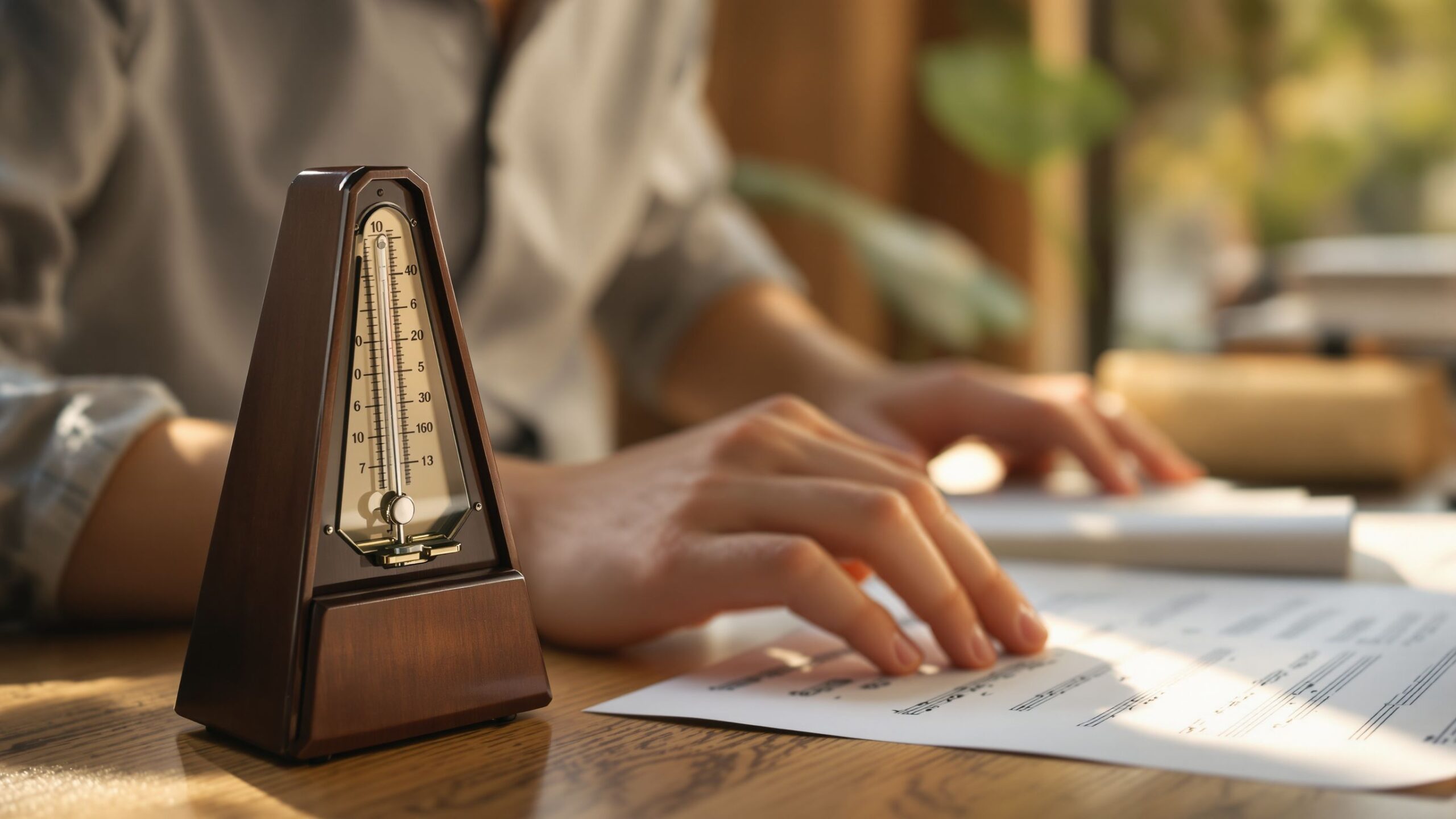
A metronome is one of the most valuable tools for learning how to count rhythm. It provides a steady, consistent beat that you can use as a reference. Practicing with a metronome helps you develop accuracy and prevents you from drifting out of time. Start by setting the metronome to a slow tempo and counting along with each click. As you become more comfortable, you can increase the tempo or experiment with different subdivisions. The goal is to internalize the timing so that you can maintain it even without the metronome. Regular practice with this tool can significantly improve your rhythmic precision and confidence.
Clapping, Tapping, and Physical Practice
Counting rhythm is not just a mental exercise; it is also physical. Clapping, tapping, or even stepping along with the beat can help reinforce your understanding of timing. These physical actions create a direct connection between your body and the rhythm, making it easier to internalize. For beginners, combining counting with movement is one of the most effective ways to learn. It engages multiple senses and helps you stay focused. Over time, this physical awareness becomes second nature, allowing you to feel the rhythm without consciously thinking about it.
Common Mistakes and How to Avoid Them
Many beginners struggle with rhythm because they try to rush the process. One common mistake is speeding up during difficult passages or slowing down when unsure. This inconsistency can disrupt the flow of music. Another mistake is failing to count consistently, especially during rests or longer notes. The solution is to practice slowly and deliberately. Focus on accuracy before speed. Break rhythms into smaller sections and work on them individually. Consistency and patience are key. By building a strong foundation, you will avoid many of the common pitfalls that beginners face.
Why Counting Rhythm Builds Musical Confidence
Learning how to count rhythm does more than improve your timing; it builds confidence. When you understand how rhythm works, you feel more in control of your playing. You are less likely to get lost or make mistakes, and you can perform with greater assurance. This confidence extends to other areas of music, including reading notation, playing with others, and even improvising. Counting rhythm gives you a sense of structure and stability, allowing you to focus on expression and creativity.
Final Thoughts: Turning Counting Into Feeling
Counting rhythm is an essential skill, but it is only the beginning. As you become more experienced, counting becomes more internalized, and you rely less on conscious effort. The goal is to move from counting to feeling. When you reach this point, rhythm becomes intuitive and natural. You can respond to music instinctively, without needing to think about every beat. This is where true musicality begins. By practicing consistently and staying patient, you will develop a strong sense of rhythm that supports everything you do as a musician.