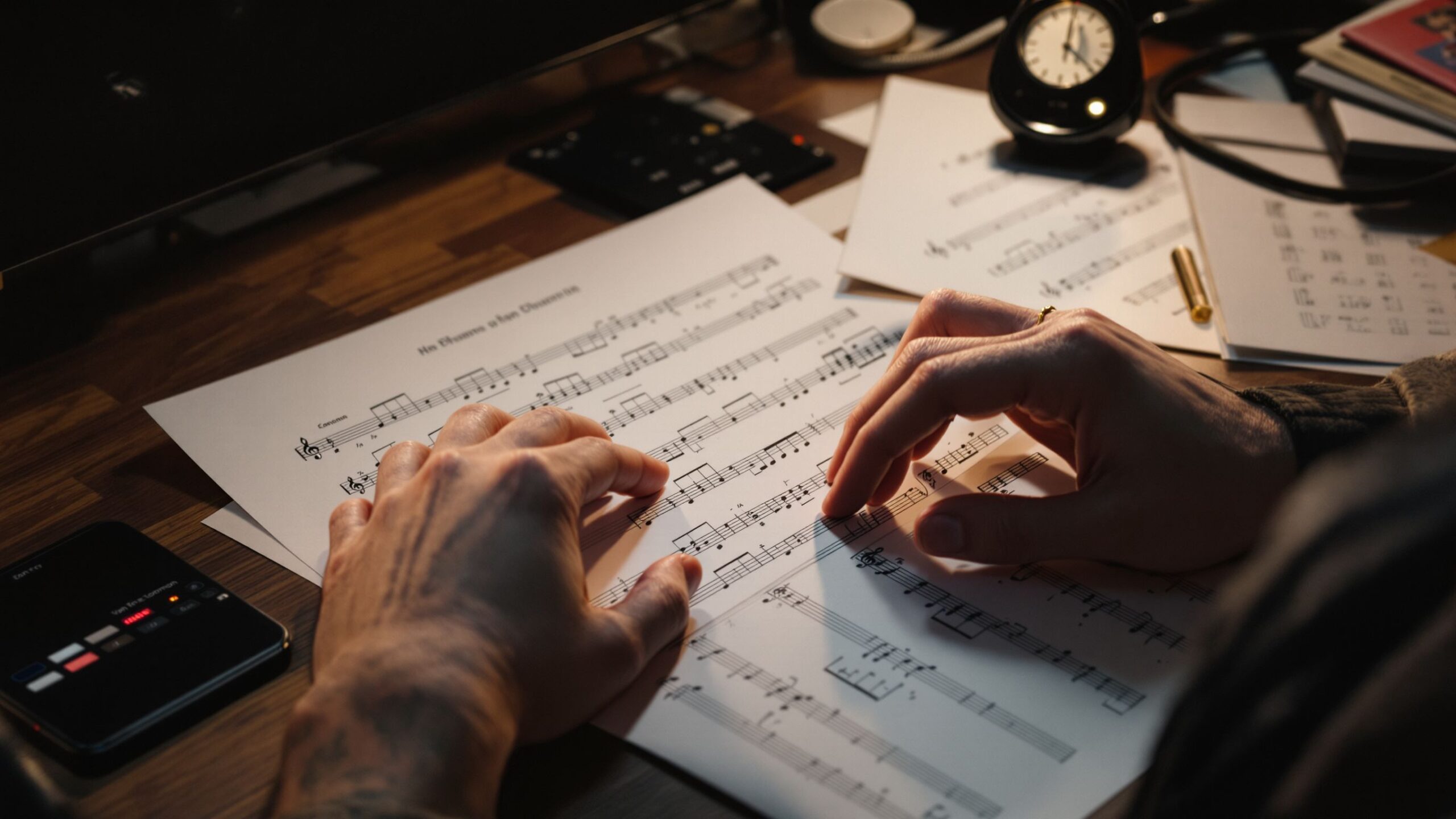
Rhythm is the heartbeat of music. It is the invisible force that makes your foot tap, your head nod, and your body move instinctively to a beat. While melody and harmony often get the spotlight, rhythm is what holds everything together. It provides structure, energy, and flow, turning sound into something organized and emotionally powerful. For beginners, understanding rhythm can feel mysterious at first, but once you grasp its core elements, it becomes one of the most exciting and accessible aspects of music. At its essence, rhythm is about timing—when notes happen and how they are spaced in relation to one another. It is the pattern of sounds and silences that creates movement in music. Whether you are listening to a slow ballad or a fast-paced dance track, rhythm is always present, guiding the listener through the experience. Learning rhythm is not just about counting beats; it is about feeling time, anticipating motion, and connecting with the pulse of a piece.
A: It is the organized pattern of beats, note lengths, and pauses over time.
A: No, tempo is speed, while rhythm is the pattern happening at that speed.
A: Start by clapping simple beats along with a metronome.
A: You may need to count subdivisions more clearly and practice more slowly.
A: It means there are four beats in each measure, with the quarter note getting one beat.
A: It is when accents land in unexpected places, often between strong beats.
A: No, songs can have very different patterns, meters, and feels.
A: Yes, many musicians learn rhythm by listening, clapping, and repeating patterns.
A: It gives music movement, structure, energy, and emotional impact.
A: Daily short practice with counting, clapping, and a steady click track works well.
The Foundation of Rhythm: Understanding the Beat
The beat is the most basic unit of rhythm. It is the steady pulse that runs through a piece of music, much like a ticking clock. When you clap along to a song or tap your foot, you are responding to the beat. It is consistent, predictable, and forms the foundation upon which all rhythmic patterns are built. In most music, the beat is grouped into measures, also known as bars. These measures organize the beats into repeating patterns, making the music easier to follow. For example, a common pattern in Western music is four beats per measure. This creates a steady cycle that listeners can recognize and anticipate. The beat is not always explicitly played by an instrument, but it is almost always implied. Even in complex or experimental music, there is usually an underlying pulse that provides a sense of timing. As a beginner, learning to identify and feel the beat is the first step toward mastering rhythm.
Tempo: The Speed of Music
Tempo refers to how fast or slow the beat is. It determines the overall pace of a piece and plays a major role in shaping its mood. A slow tempo can feel calm, emotional, or reflective, while a fast tempo can feel energetic, exciting, or urgent. Tempo is typically measured in beats per minute, often abbreviated as BPM. A song with a tempo of 60 BPM has one beat per second, while a song at 120 BPM has two beats per second. This numerical system helps musicians maintain consistent timing, especially when performing together. For beginners, practicing with different tempos is essential. Slowing down a rhythm allows you to understand its structure more clearly, while speeding it up challenges your coordination and precision. Over time, your sense of tempo becomes more internalized, allowing you to stay in time without relying on external cues.
Meter: Organizing the Beat
Meter is the way beats are grouped together into patterns. It gives rhythm its structure and helps define the feel of a piece. The most common meters are based on groups of two, three, or four beats. A meter is usually indicated by a time signature, which appears at the beginning of a piece of music. The top number tells you how many beats are in each measure, while the bottom number indicates the type of note that receives one beat. For example, a 4/4 time signature means there are four beats per measure, and each beat is a quarter note. Different meters create different rhythmic feels. A 4/4 meter feels steady and balanced, making it the most widely used in popular music. A 3/4 meter, often associated with waltzes, has a more flowing, circular feel. Understanding meter helps you anticipate how rhythms will unfold and makes it easier to stay in time.
Note Values and Durations
Rhythm is not just about when notes occur, but also how long they last. This is where note values come into play. Different types of notes represent different durations, allowing musicians to create a wide variety of rhythmic patterns. For example, a whole note typically lasts for four beats in common time, while a half note lasts for two beats, and a quarter note lasts for one beat. Shorter notes, such as eighth notes and sixteenth notes, divide the beat into smaller segments, adding complexity and movement to the rhythm. Rests are equally important. They represent moments of silence and are essential for creating contrast and phrasing. Without rests, music would feel cluttered and overwhelming. Learning to balance sound and silence is a key part of developing rhythmic skill.
Syncopation: Playing with Expectations
One of the most exciting aspects of rhythm is syncopation. This occurs when accents are placed on unexpected beats or off-beats, creating a sense of surprise and groove. Instead of emphasizing the main beats, syncopated rhythms highlight the spaces in between. Syncopation is widely used in many genres, including jazz, funk, and pop. It adds energy and complexity, making the music feel more dynamic and engaging. For beginners, syncopation can be challenging at first, but it becomes easier with practice and careful listening. The key to understanding syncopation is recognizing the underlying beat while allowing the accents to shift around it. This creates a tension between expectation and variation, which is a fundamental element of musical expression.
Rhythm and Groove: The Feel of Music
While rhythm can be described in technical terms, groove is something you feel. It is the way rhythm interacts with timing, dynamics, and articulation to create a sense of movement. Groove is what makes music danceable, relatable, and emotionally compelling. Different styles of music have different grooves. A rock groove might feel steady and driving, while a jazz groove might feel loose and swinging. Electronic music often features precise, repetitive grooves that create a hypnotic effect. Developing a sense of groove involves more than just playing the right notes at the right time. It requires listening closely, adjusting your timing, and connecting with the overall feel of the music. This is where rhythm becomes more than a technical skill—it becomes an expressive tool.
Polyrhythms and Complexity
As you advance in your understanding of rhythm, you may encounter polyrhythms. These occur when two or more different rhythmic patterns are played simultaneously. For example, one instrument might be playing a pattern in three beats while another plays a pattern in four. Polyrhythms are common in many musical traditions around the world, particularly in African and Latin music. They create rich, layered textures and can add a sense of depth and sophistication to a piece. For beginners, polyrhythms can seem intimidating, but they can be broken down into simpler components. By practicing each pattern separately and then combining them gradually, you can develop the coordination needed to perform complex rhythms.
The Role of Rhythm in Different Genres
Rhythm plays a unique role in every genre of music. In classical music, rhythm often supports the structure and phrasing of the composition. In pop music, it drives the energy and accessibility of the song. In hip-hop, rhythm is central to both the beat and the vocal delivery. Jazz places a strong emphasis on rhythmic variation and improvisation, allowing musicians to interpret the timing in flexible ways. Electronic dance music relies heavily on consistent, repetitive rhythms to create a sense of immersion and momentum. Understanding how rhythm functions in different genres can deepen your appreciation of music and expand your creative possibilities. It also helps you adapt your playing style to suit different musical contexts.
Developing Your Sense of Timing
Timing is the ability to play or perform rhythm accurately and consistently. It is one of the most important skills for any musician, and it improves with practice and experience. Developing good timing involves both technical precision and internal awareness. One of the best ways to improve your timing is to practice with a metronome. This tool provides a steady beat that you can use as a reference. By playing along with a metronome, you can train yourself to stay in time and recognize when you are speeding up or slowing down. Listening is equally important. Pay attention to how rhythm is used in your favorite songs. Try clapping along, tapping out patterns, or even recreating rhythms by ear. Over time, your sense of timing will become more intuitive and reliable.
Rhythm in Everyday Life
Rhythm is not limited to music. It exists all around us, from the sound of footsteps to the pattern of speech. Our daily lives are filled with rhythmic patterns, often without us even realizing it. This natural connection to rhythm is what makes music so accessible. Even people with no formal training can feel and respond to rhythm instinctively. By tapping into this innate sense, you can make learning rhythm more enjoyable and less intimidating. Recognizing rhythm in everyday life can also enhance your musical awareness. It helps you see rhythm not as an abstract concept, but as a fundamental part of human experience.
Common Challenges for Beginners
Many beginners struggle with rhythm because it requires coordination, focus, and consistency. One common challenge is staying in time, especially when playing with others. It can be tempting to speed up during exciting parts or slow down during difficult sections. Another challenge is understanding complex rhythms, particularly those that involve syncopation or unusual time signatures. These patterns can feel unnatural at first, but they become more familiar with practice. The key to overcoming these challenges is patience and repetition. Break rhythms down into smaller parts, practice them slowly, and gradually increase the tempo. With time and dedication, even the most complex rhythms can become second nature.
Why Rhythm Matters More Than You Think
Rhythm is often underestimated, but it is one of the most powerful elements of music. It shapes how we perceive sound, influences our emotional response, and connects us to the music on a physical level. Without rhythm, music would lack direction and coherence. It would feel static and disconnected. Rhythm provides the framework that allows melody and harmony to shine. It is the glue that holds everything together. For beginners, focusing on rhythm can accelerate your overall musical development. It improves your coordination, enhances your listening skills, and makes you a more versatile performer. Whether you are playing an instrument, singing, or producing music, rhythm is an essential foundation.
Final Thoughts: Finding Your Rhythm
Learning rhythm is a journey that combines technical understanding with personal expression. It starts with simple concepts like the beat and tempo, but it quickly expands into a rich and dynamic world of patterns, textures, and emotions. The most important thing to remember is that rhythm is meant to be felt, not just analyzed. While theory can guide you, your intuition and experience are just as valuable. Trust your sense of timing, stay curious, and keep exploring. As you continue to develop your rhythmic skills, you will begin to notice how deeply rhythm influences every aspect of music. It is not just a component—it is the pulse of creativity itself.