Heaviness Begins in the Relationship Between Attacks
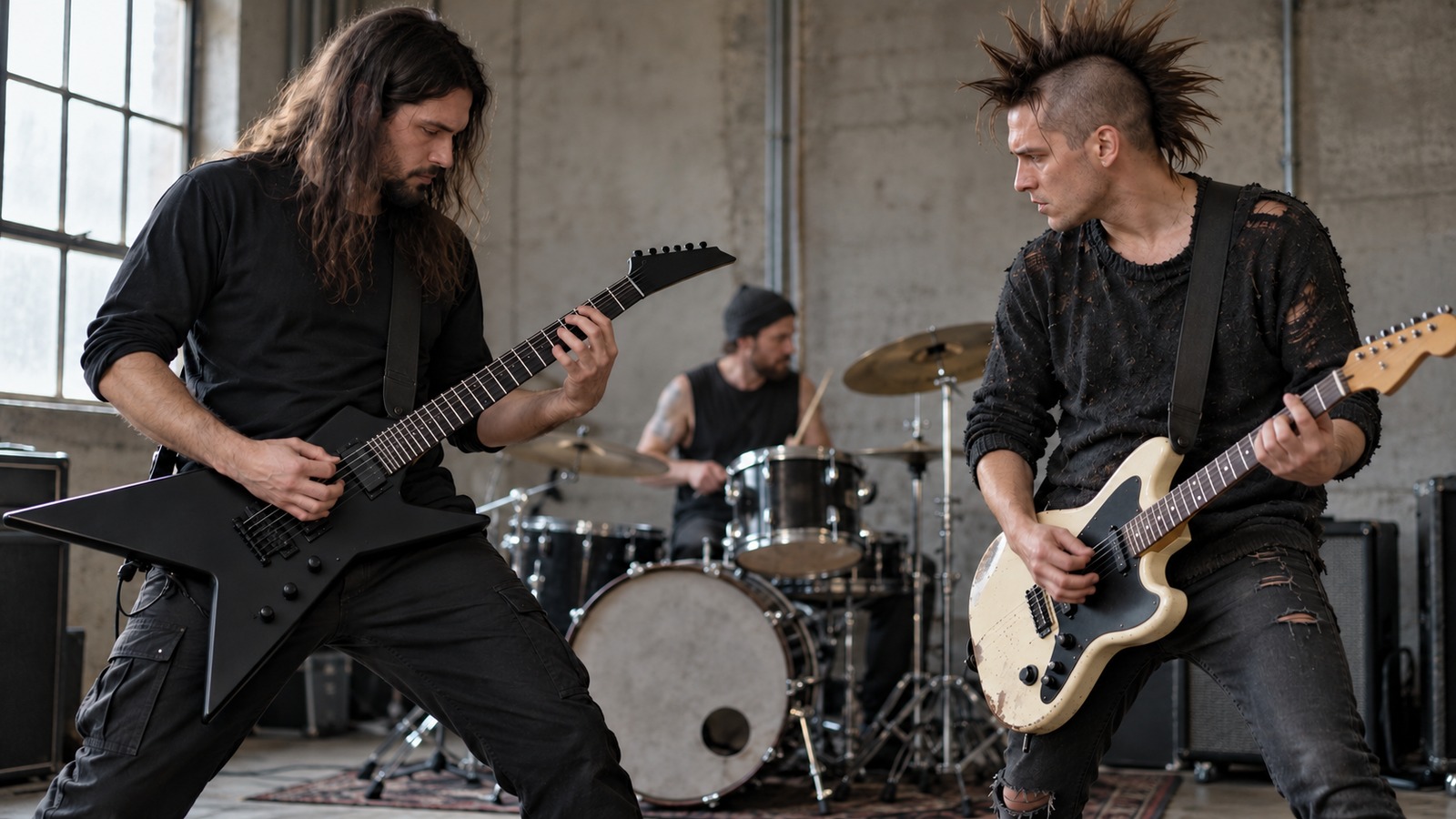
A low guitar figure enters, the bass reinforces its movement, and the drums give each return a deliberate weight. When the band stops together, the silence can make the next entrance feel larger than another increase in volume would. This coordinated sense of force is a useful way into heavy metal. The genre grew from amplified rock and developed a wide range of riff-centered writing, rhythmic approaches, vocal techniques, and imaginative settings. Its history contains slow and spacious music as well as rapid playing, clear melodies as well as extreme textures. This guide follows the relationships that connect those contrasting sounds. Begin with what the ensemble makes a recurring figure do over time, then hear how individual branches develop that foundation in different directions. Loudness can intensify the experience, but it cannot explain the composition by itself.
A: No. Tone, timing, space and ensemble relationships create musical weight.
A: Yes. Deliberate pacing and sustained sound are important in doom-associated approaches.
A: It can provide material that organizes and develops the composition.
A: Its density needs to suit the articulation and musical role.
A: They help establish weight, continuity and the shape of instrumental figures.
A: Traditional and other branches often make melody a major expressive resource.
A: Recurring material and contrasts may become clearer with attentive familiarity.
A: Its connections and direction matter more than duration alone.
A: Different releases and musical resources may support different labels.
A: Hear how a slow and a fast recording create force through contrasting relationships.
Metal Developed Within an Expanding Rock Vocabulary
Heavy metal emerged through intensified forms of guitar-based rock around the end of the 1960s and the beginning of the 1970s. Blues-associated resources, amplified ensemble sound, and new approaches to weight and atmosphere contributed to its formation. It did not begin as a fully settled list of rules. Musicians developed recognizable approaches while listeners and the industry worked out how to describe them. The Rock & Roll Hall of Fame’s historical exhibition identifies bands including Black Sabbath, Led Zeppelin, and Deep Purple within the rise of early heavy metal. The grouping offers useful context without making every recording by those artists stylistically identical. A history becomes clearer when it connects a developing vocabulary with particular works. Hear what each band emphasized within the resources it shared with its contemporaries.
Black Sabbath Made Weight and Atmosphere Central
Black Sabbath’s self-titled 1970 debut gives the early history a precise reference. The opening title track uses rain, a bell and a slow, ominous guitar figure to establish atmosphere before the voice enters. Later that year, Paranoid supplied ‘Iron Man’ and ‘War Pigs,’ which made riff shape, dramatic contrast and coordinated instrumental weight central to a much larger audience’s idea of heaviness. The official Paranoid anniversary history dates that album context. The innovation is audible in how much pressure the ensemble can create around a recurring figure without relying on maximum speed.
Listen to how a deliberate pattern gives individual attacks time to register. A comparatively spacious rhythm can make each return consequential, while a change in pace can alter the song’s apparent scale. The music can feel threatening or imposing without maintaining the fastest possible surface. This approach helped establish one enduring route toward heaviness. Early examples also resist the assumption that metal is necessarily detached from its wider circumstances. Dramatic imagery and atmosphere can engage fear, conflict, or disillusionment through an imaginative setting. Specific songs deserve specific readings rather than a universal claim about what the band or audience believes. Historical context and close listening reinforce each other when neither replaces attention to the work.
The Riff Gives the Ensemble Something to Develop
A riff is a recurring figure that can supply a song’s recognizable instrumental identity. In metal, it often coordinates guitar, bass, and drums into a sharply defined relationship. Repetition establishes a reference that later changes can complicate, expand, or interrupt. A new figure may then redirect the composition as substantially as a new vocal section. Follow the recurring material through the whole arrangement to hear its structural role. The riff’s effectiveness depends on articulation, rhythm, tone, and placement, so a simple figure can remain compelling without acquiring more notes each time it returns.
Guitar Tone Supports the Shape of the Phrase
Distortion can enlarge a guitar’s sustain and harmonic texture, giving attacks and held tones a particular physical presence. The sound still needs a clear relationship with the phrase. A sharply articulated pattern can become difficult to follow if its individual events lose definition. A longer sustained tone may benefit from the same density in another setting.
Techniques such as palm muting can make short attacks more controlled, while open sustained sounds can widen the apparent space. Their contrast can give one instrument several expressive roles within a song. Hear the articulation as part of the writing rather than as a collection of isolated effects. Tone becomes meaningful through what it allows the musical figure to communicate.
Bass and Drums Establish More Than Support
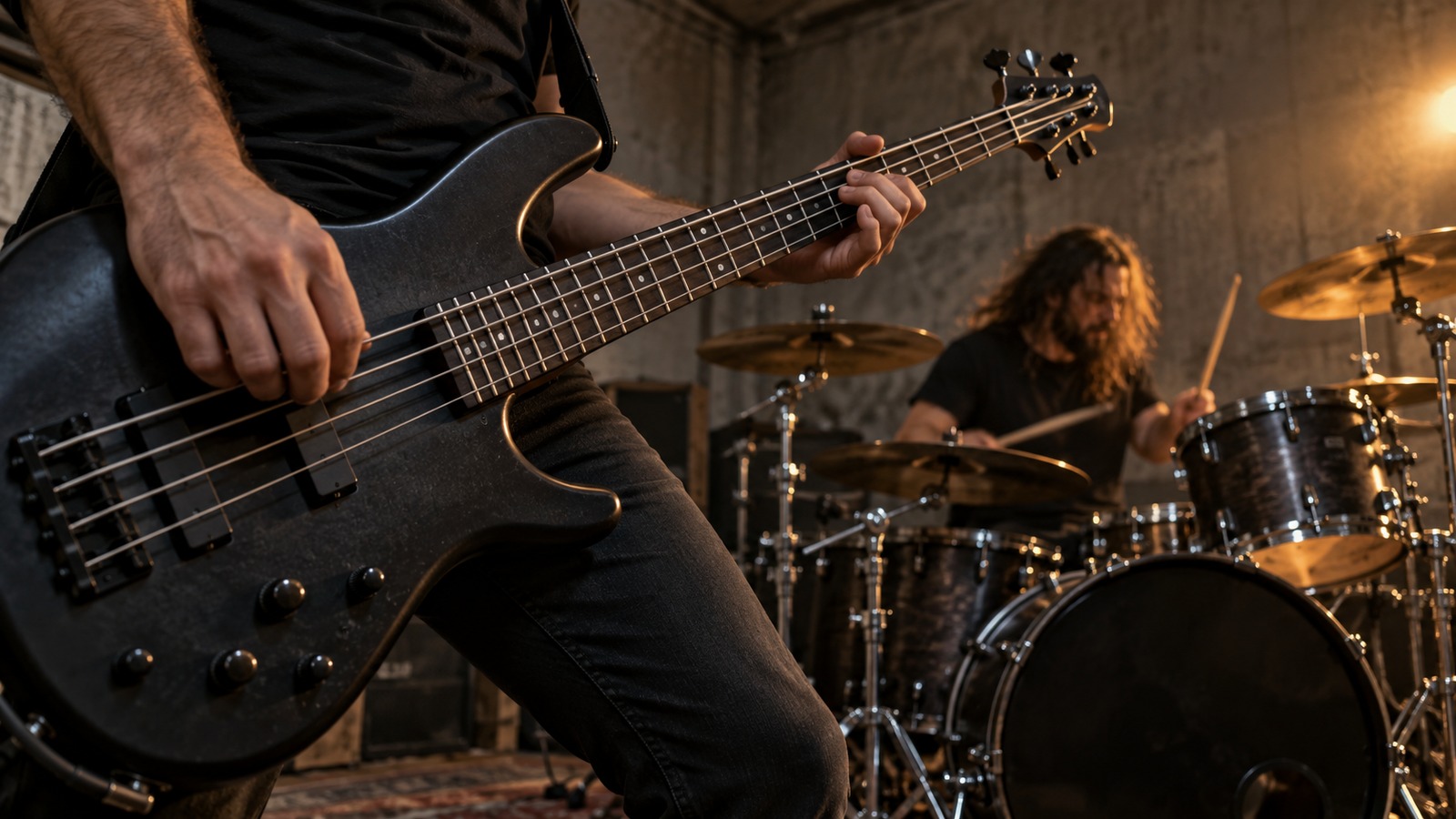
Bass can reinforce a guitar figure, supply a contrasting line, or help connect material across a transition. Its contribution changes the weight and continuity of the ensemble. A doubled pattern may make an entrance feel unified, while an independent movement can open another direction underneath it. The part deserves attention even when it is less prominent than the guitar.
Drums determine how attacks acquire rhythmic scale. A kick pattern can coordinate tightly with a riff, and cymbal placement can make a passage seem open or continuously pressured. A fill can connect sections without interrupting their relationship. These are compositional contributions rather than decoration around the main instrument.
Silence also requires ensemble coordination. When several parts stop or return together, the result can make a familiar figure feel newly emphatic. The musicians’ timing determines whether that moment is clear. Listen to the ends of phrases as carefully as their beginnings, because the release of an attack helps shape the next one.
Traditional Metal Gives Melody a Forceful Setting
Judas Priest’s ‘Victim of Changes,’ on 1976’s Sad Wings of Destiny, gives traditional metal a more explicitly theatrical vocal and guitar setting. The official discography identifies the work and year. Rob Halford moves between lower, controlled address and piercing high phrases, while quieter passages make the returning guitar weight larger. The twin-guitar identity offers more than distortion: lines can answer, reinforce or separate from each other. Hear the dramatic changes of scale across the complete track. It shows how melody and force can become mutually dependent rather than competing priorities.
Thrash Changes the Distribution of Speed and Precision
Metallica’s 1986 ‘Master of Puppets’ makes thrash specific through tightly coordinated fast picking, hard-edged rhythmic stops and an extended form. Its central quieter passage opens another musical space before the heavier material returns. The band’s history dates the album’s March 1986 release. Speed is only one resource here: the memorable event is how the same ensemble can move from relentless attack into measured melodic development and back. Follow the returns of the title refrain and main figure to keep your orientation through the longer instrumental journey.
The Rock Hall’s Metallica account describes a combination of speed, precision, hooks, and punk-associated energy. The connection illustrates exchange rather than an isolated stylistic invention. Different records by the same artist can reorganize those priorities. A band’s development should therefore be heard through particular works instead of being reduced to its earliest label.
Doom Makes Slow Movement a Source of Pressure
Candlemass’ ‘Solitude,’ opening 1986’s Epicus Doomicus Metallicus, offers a useful doom contrast with Metallica’s thrash. The slow, heavily outlined guitar movement leaves enough space for each arrival to feel consequential. Johan Längqvist’s clean, sustained singing expands above that weight rather than mimicking the guitar’s attack. The record makes heaviness an experience of duration and register. A listener can compare the distance between major chord attacks with the more rapidly articulated motion in ‘Master of Puppets.’ The musical argument does not become smaller because the pulse is slower.
That approach challenges an easy equation between intensity and speed. A dense low figure can create pressure while allowing each articulation to remain exposed. Changes in harmony, texture, or vocal character then alter the setting without needing to accelerate. Hear how the music maintains involvement across its larger spans.
Doom also contains varied branches and expressive perspectives. A broad association with darkness cannot describe every band’s atmosphere or lyrical purpose. Some performances emphasize ritual scale, others personal exposure or physical density. The useful description follows how the particular ensemble shapes the space it creates.
Extreme Branches Expand Vocal and Instrumental Texture
Death’s ‘Pull the Plug,’ from 1988’s Leprosy, and Mayhem’s ‘Freezing Moon,’ on the 1994 album De Mysteriis Dom Sathanas, provide distinct extreme-metal entrances. Death combines a low, rough vocal with sharply articulated riff changes and a comparatively solid, muscular attack. Mayhem often creates a more continuous, chilling surface through rapidly repeated guitar picking, with Attila Csihar’s unusual vocal changing the perceived distance of the performance. Death’s official catalog and Mayhem’s label history identify the recordings and context. Death and black metal each contain wide variation, but these examples make the difference in guitar texture and vocal presentation audible instead of merely calling both aggressive.
Progressive Approaches Can Enlarge Form
Dream Theater’s ‘Pull Me Under,’ from 1992’s Images and Words, gives progressive metal a specific entry. The official album page identifies its keyboard-inclusive lineup. A measured opening develops into heavier ensemble passages, while instrumental detail and changes of texture enlarge the journey around James LaBrie’s melodic vocal. The song retains recognizable returns, so development need not mean abandoning orientation. Hear how guitar and keyboard occupy different registers and how the abrupt ending changes the expectation of a conventional final resolution.
Follow what connects the contrasting passages. A motif, rhythmic relationship, or vocal perspective can provide continuity while the surface changes substantially. An instrumental display gains significance when it contributes to that direction. Describe what the music develops before treating visible technical activity as the whole point of the style.
Subgenre Names Are Routes Through a Large Field
Metal labels can identify rhythmic priorities, vocal approaches, historical connections, or combinations of resources. Their meanings are not always perfectly aligned, and a band can move among them over time. More than one term may therefore help describe a release. The labels become useful when their scope is clear.
Start with a broad name, then follow the particular feature that attracts you. If you enjoy sustained weight, seek another recording organized around that resource; if rhythmic precision catches your attention, explore a contrasting example that develops it differently. This method connects discovery with an audible interest. It avoids making the taxonomy more rigid than the actual music.
Genre histories also involve scenes, distribution, performance settings, and audiences. A description limited to instruments cannot explain how a branch gained an identity or why its participants recognized it. Reliable accounts from artists and communities add that missing context. Musical analysis and social history answer different questions within the same exploration.
Hear Heaviness Without Reducing It to Volume
For a practical listening session, identify the recurring figure and follow how the bass and drums give it weight. Notice where sounds stop, how they return, and what a vocal entrance changes. Then compare a slower example with a faster one. The exercise reveals several ways an ensemble can make force audible, including space, timing, density, and contrast. Hear the full sequence at a comfortable playback level so the composition remains available to attention. A more imposing volume cannot substitute for understanding the relationships that make the music compelling.
Metal’s Variety Is Part of Its Identity
Heavy metal connects amplified rock resources with recurring instrumental figures, tonal weight, coordinated rhythm, and many forms of dramatic expression. Its history has produced melodic, spacious, rapid, dense, and experimental approaches rather than one fixed sound. Begin with a few contrasting recordings and pursue the choices that remain interesting after the first impression. As you learn to hear the ensemble’s roles, a genre name becomes more specific and a familiar riff becomes more informative. The field’s shared foundations are clearest when the differences among its artists are allowed to remain audible.
Try keeping attention on one recurring passage across several hearings, first following guitar, then bass, then drums. Each pass can reveal another decision that the initial impact concealed. When the parts reunite in your hearing, the riff may feel more substantial because its coordination is clearer. That familiarity does not require accepting every branch as a personal favorite. It gives you a precise basis for describing what attracts you, what remains unfamiliar, and which neighboring recording might offer a useful next step. An informed preference grows from those particular encounters rather than from a single rule about what all metal ought to sound like.