Hear the Music, Then Look Around It
A streamed rap track can introduce you to hip-hop, but it cannot show the entire culture on its own. There are also people choosing and transforming records, dancers responding to a break, writers developing visual identities, organizers making a gathering possible, and audiences whose responses help decide what happens next. Hip-hop grew through these relationships before its most visible forms became global commercial products. Understanding that wider setting changes how its music sounds. A beat becomes connected to movement and selection; a voice becomes part of a social exchange rather than an isolated stream of words. This guide explains the foundational practices, the importance of community origins, and the ways the culture continues to change. It treats the familiar elements as a useful map, while leaving room for the people, regional histories, and later developments that no short definition can completely contain.
A: Rap is a vocal practice and a major musical form within the wider culture commonly called hip-hop.
A: No. The foundational map describes connections, not a requirement that every person perform each activity.
A: Her organizing helped make the landmark 1973 gathering possible; cultural development includes work beyond visible performance.
A: It is a useful landmark within a broader process involving earlier traditions and developing community practices.
A: Selection, timing, transformation and response can shape the experience of an entire event.
A: Rhythmic interpretation explains the purpose and placement of movement beyond its physical difficulty.
A: Yes. Visual writing has its own practices and communities alongside its connections with hip-hop.
A: New placement, repetition and surrounding material can give a fragment another musical function.
A: No. Recorded rap expanded access while often centering performers more visible than dancers, DJs and organizers.
A: Yes. Specific historical credit can coexist with attention to new local languages, practices and meanings.
A Culture Is Larger Than Its Most Visible Product
Rap describes a vocal practice in which language moves rhythmically through music. Hip-hop can refer to that music, but it also names a broader culture involving several connected creative activities. In everyday conversation the terms may overlap, particularly when people are discussing recordings. The distinction becomes important when commercial releases are allowed to stand in for everything participants make and do.
A cultural account includes skills, spaces, relationships, and shared ways of judging a performance. It asks who selected the music, how people moved to it, and how an event created opportunities for recognition. Those questions do not diminish a celebrated rapper’s achievement. They reveal the foundation around it and restore contributors whom a recording’s front-facing artist name might leave outside the listener’s immediate view.
The Bronx Matters as a Living Setting
Hip-hop’s early development is strongly associated with 1970s Bronx communities, including Black, Latino, and Caribbean participants whose creative activities met in neighborhood spaces. The National Museum of African American History and Culture’s Bronx account supplies historical context. This setting should not be reduced to a dramatic backdrop for a story of inevitable fame. People were building occasions, skills, and identities under particular social circumstances, using available resources to make something others could join. The importance of place lies in those relationships. A global history can preserve the origin’s specificity while still recognizing that later communities would adapt the practices to situations of their own.
A Famous Party Is an Entry Point, Not the Whole Beginning
The August 11, 1973 gathering organized by Cindy Campbell, with her brother DJ Kool Herc providing music at 1520 Sedgwick Avenue, is a central landmark in many accounts. Cindy Campbell’s account on Kool Herc’s official site recognizes her organizing role. Remembering the organizer changes the familiar picture of cultural invention as only a performer standing behind equipment.
A landmark date can make history easier to tell, but a culture does not become fully formed in a single evening. Earlier musical traditions, sound-system experience, neighborhood gatherings, and developing creative practices all matter. The event provides a place to begin learning about those connections. It should encourage more questions about the surrounding community rather than replace the community with one anniversary.
The same approach helps distinguish different kinds of contribution. Organizing, performing, building equipment skills, and creating an audience are not interchangeable tasks, yet they can be mutually necessary. A cultural breakthrough depends on a setting in which the work becomes possible and meaningful. Crediting those roles produces a fuller history than naming a hero and assuming everything else followed automatically.
DJing Turns Selection Into Performance
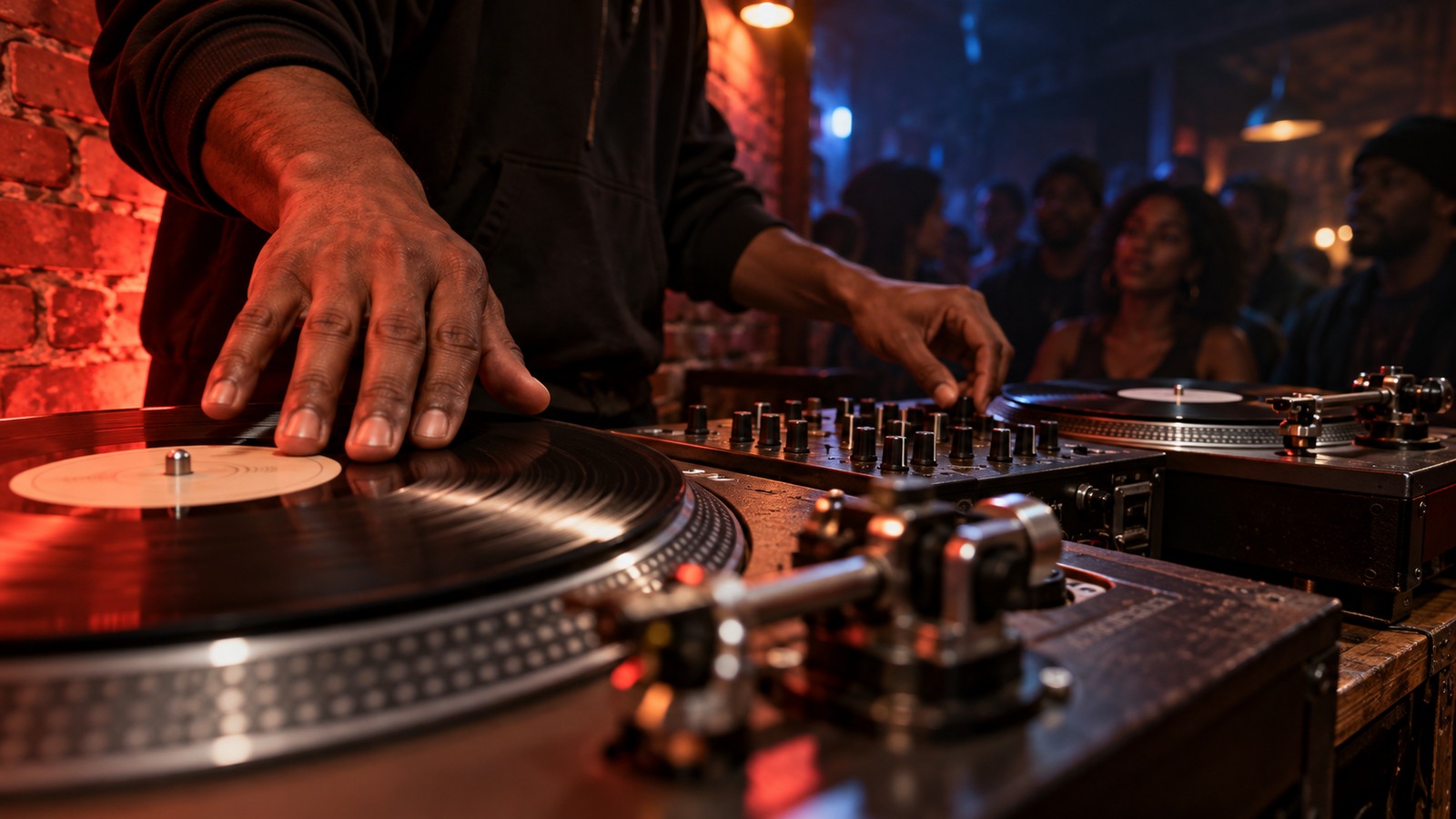
A DJ does more than make recordings play in a sequence. Selection can establish a mood, connect unfamiliar material, or draw attention to a passage that ordinary playback would quickly leave behind. Techniques that extend and reorganize rhythmic sections change the listener’s relationship with recorded music. The person choosing the sound becomes a performer who shapes an event in real time.
This makes listening itself a creative resource. Recognizing a useful break requires attention to what another recording contains and what a current audience might do with it. The response can then influence the next choice. The musical skill lies partly in that relationship between knowledge and timing. Equipment enables the work, but ownership of equipment alone does not establish the judgment that makes a set persuasive.
MCing Makes the Voice Part of the Gathering
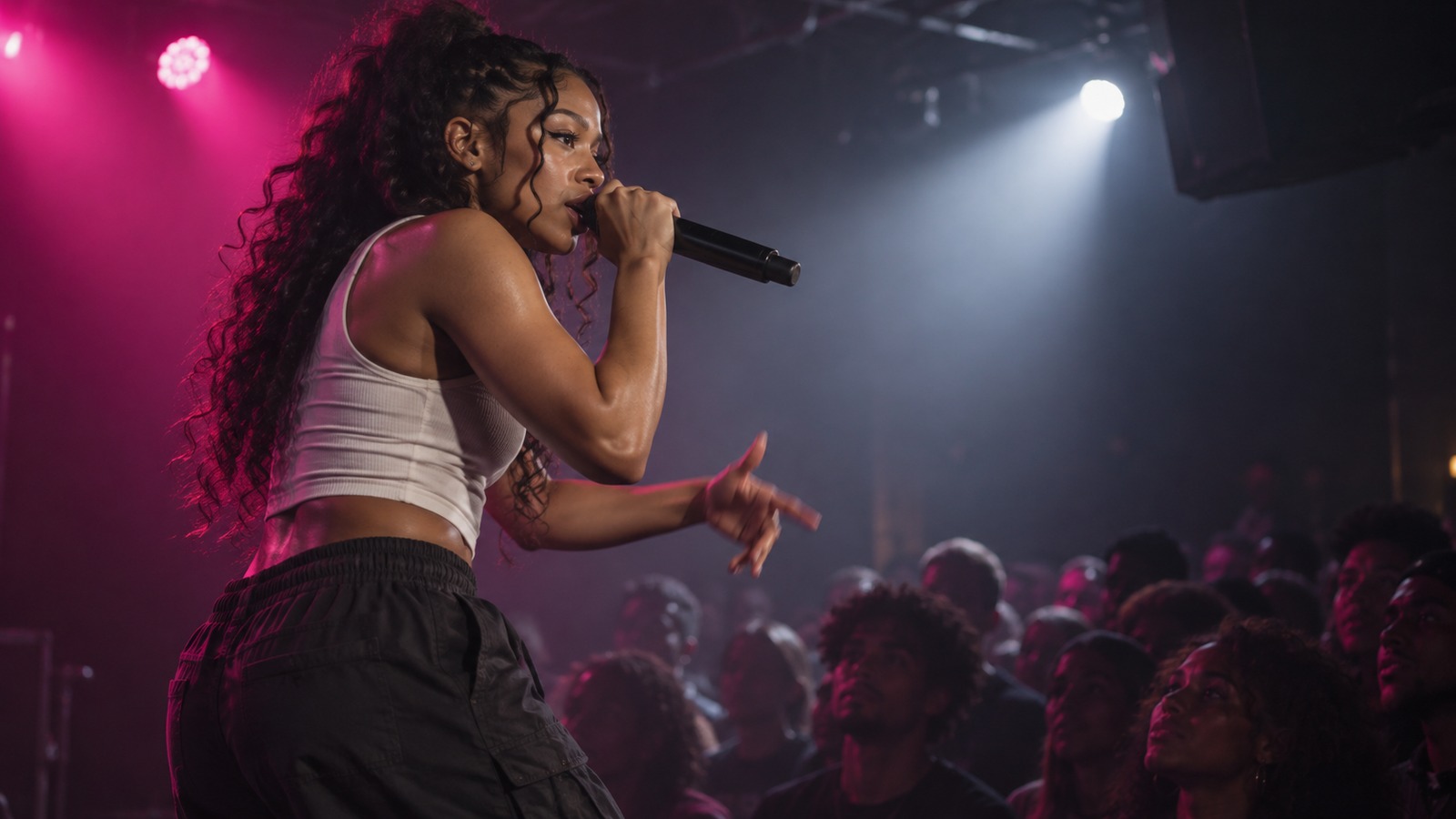
An MC can address a crowd, introduce performers, sustain an event’s energy, or turn rhythmic speech into a developed musical performance. These functions connect the voice to a social situation rather than treating rap only as words written for later recording. A phrase’s effectiveness can depend on when it arrives and how people respond. The Smithsonian’s account of hip-hop’s four main elements places MCing alongside DJing, graffiti, and breaking. That map is useful because it reminds listeners that the vocal became prominent within an active field of other practices. Its later artistic range includes many purposes beyond maintaining a party atmosphere.
Breaking Answers the Music With Movement
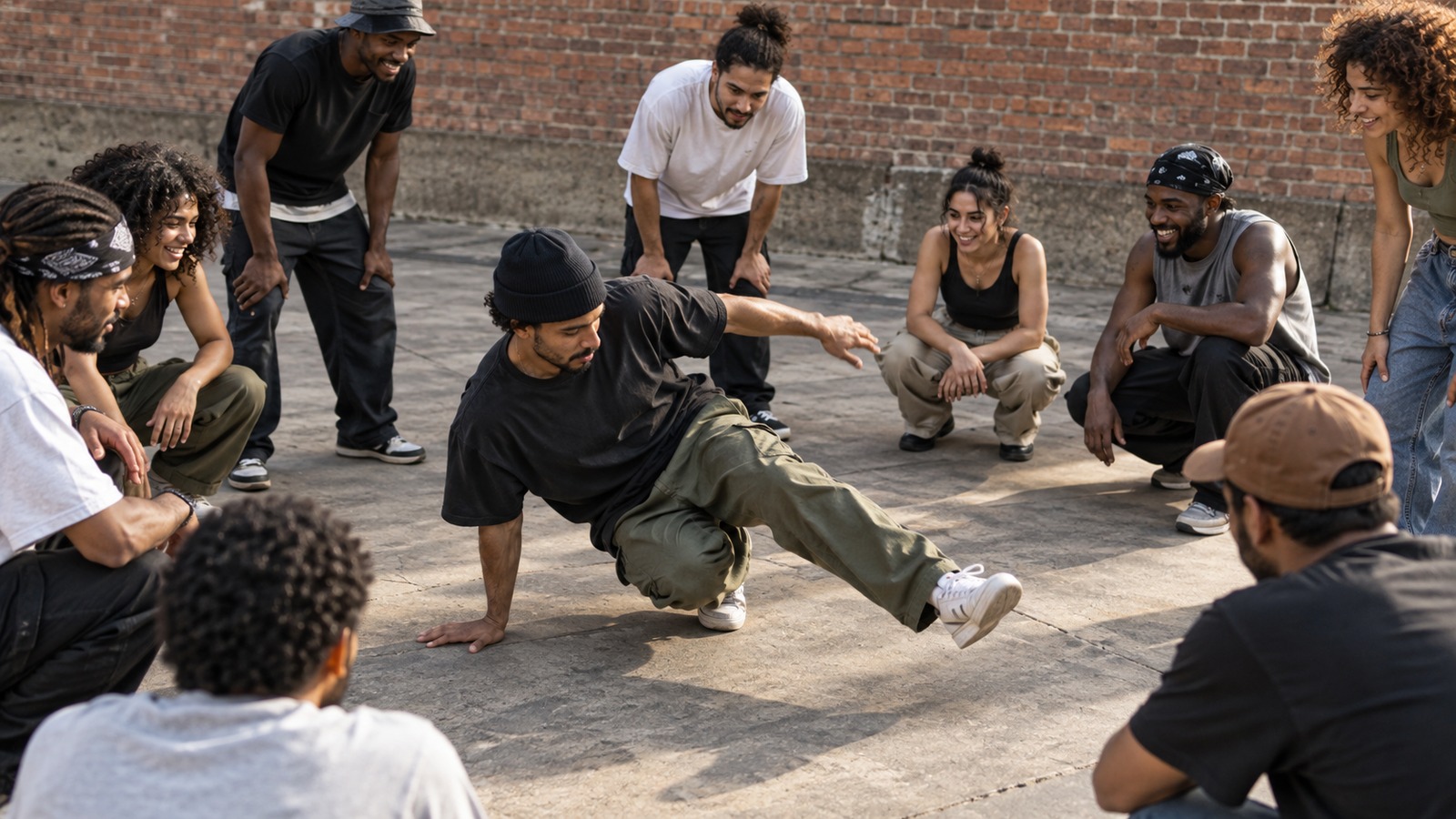
Breaking includes a vocabulary of movement through which a dancer responds to rhythm, space, and other participants. Its musical relationship is essential: an impressive physical gesture does not explain the performance without attention to timing. A dancer can make a break audible in another way, giving shape to accents and transitions through the body. The result is an interpretation of music rather than an unrelated display placed beside it.
A circle of participants also changes the meaning of the movement. Entry, response, anticipation, and recognition create a social form in which a performer acts within a community’s attention. Competitive exchange can encourage invention while shared participation keeps the event larger than a single individual. Watching only an isolated highlight can miss this context. The surrounding people and musical sequence help explain why the movement matters at that particular moment.
Graffiti Adds a Visual Language of Identity
Graffiti writing brings names, letterforms, style, placement, and visibility into the cultural conversation. Its relationship to hip-hop is part of the familiar foundational map, but its own history is not simply an illustration of recorded rap. Writers develop visual practices with communities, influences, and standards that deserve attention in their own right. The connection is richer when each practice remains recognizable rather than being absorbed into the most commercially prominent one.
For a beginning viewer, style can be understood as a way of making identity visible through choices about form. A letter is not only a neutral carrier of a name; its treatment can assert a distinctive presence. Context affects what the work communicates and how people encounter it. Recognizing this relationship helps explain why cultural identity can be expressed visually as well as through voice and movement.
Not every use of lettering or street imagery automatically belongs to the same tradition. Commercial design can borrow its appearance while detaching it from the practices that gave it meaning. A useful cultural account therefore considers makers and histories, not just surface resemblance. This is the same care needed when a sampled sound circulates beyond the context in which listeners first knew it.
Four Elements Provide a Map With Edges
The four-element description offers an accessible introduction, but it should not become a rule that every participant must practice every activity. A dancer can be deeply involved without recording rap, and a visual writer need not perform as a DJ. The map explains connections rather than establishing a test of membership. It also cannot capture every later development in fashion, language, production, education, or community organization.
The Smithsonian’s searchable account of hip-hop origins connects creative activities to everyday neighborhood life. That context helps keep the map human. Elements are carried by people who learn, collaborate, compete, and create opportunities for others. The history becomes more convincing when those interactions remain central instead of turning culture into a checklist of objects.
Sampling Connects Listening With New Construction
Sampling uses recorded sound as material within another work, allowing a fragment to acquire a new rhythmic, harmonic, or expressive function. The source can remain recognizable or become one part of a transformed texture. An artistic discussion asks what has changed: placement, repetition, surrounding sounds, and the relation to a new voice. This is different from assuming the creative work consists only of finding an attractive earlier recording. Context can alter a sound’s role substantially. The musical question is how the new construction makes that role audible, while credit and permissions belong to a separate practical discussion requiring attention to the particular recording and circumstances.
Recorded Rap Expanded Access and Changed Emphasis
Commercial recordings allowed performances to travel beyond the event and its original participants. That opened new possibilities for listeners, artists, and businesses, but it also changed which practices received the greatest public visibility. A record could center a rapper while the dancer, organizer, or local DJ became less apparent to the distant audience. The recording’s reach and the culture’s breadth should therefore be understood together.
Music built for release may use different forms from a performance shaped by an immediate crowd. Duration, arrangement, narrative development, and vocal presentation can all change. Those differences are not evidence that one setting is automatically authentic and the other false. They describe distinct creative circumstances. The important question is what musicians accomplish within the form they choose and what their public presentation reveals or obscures.
The history of recordings also introduces questions of ownership, money, and visibility. A successful release can support an artist while companies and distribution systems determine many of the available opportunities. Cultural value is not identical to commercial reward. Understanding this prevents a chart-based history from becoming the only account of who contributed and whose work mattered within a community.
Global Hip-Hop Develops Through Local Adaptation
Hip-hop’s international reach involves more than a fixed culture being copied unchanged. Participants adapt language, sound, movement, and public meaning to their circumstances. A local rapper’s phrasing may respond to the musical possibilities of a different language, while a scene can use familiar practices to address concerns specific to its own history. Such changes are part of cultural development rather than signs of failure to reproduce an original model.
The origin remains important within that process. Global participation need not erase the Black and Latino communities central to early hip-hop, and historical credit need not prevent later invention. The useful relationship is one of attention to both: acknowledge the practices inherited and hear what a new community contributes. This produces a more accurate map than either an origin-only account or a global account with its foundations removed.
Learn Through Participation and Specific Credit
A good introduction to hip-hop combines listening with attention to people and settings. Hear recordings, watch complete dance exchanges, explore visual work with its makers’ context, and learn how DJs shape a musical sequence. Notice who organizes the occasion and how participants respond to one another. These encounters reveal connections that a definition alone cannot establish.
Hip-hop is a changing culture whose music has become globally prominent, while its wider practices continue to carry identity, skill, memory, and community. Rap is a major route into it, but the route should remain open to what surrounds the record.
A fuller understanding begins when familiar sounds lead you to particular contributors and relationships. The culture becomes easier to appreciate precisely because it is larger than a single product, performer, or story of origin.