The Recording Is Part of the Recommendation
In jazz, recommending a title is only the beginning. A composition can return across many performances with different tempos, musicians, arrangements, and emotional directions. A familiar melody may become an invitation to lyrical reflection in one version and a starting point for extended exploration in another. This guide therefore approaches essential listening through particular recorded performances, including instrumental compositions as well as songs with words. It does not claim that a small selection can settle the greatest works in a century of changing music. Instead, the choices reveal different achievements: melodic authority, vocal interpretation, rhythmic character, harmonic space, and ensemble conversation. You can hear those relationships without mastering specialist theory first. Begin with the recognizable shape, follow what the musicians do around it, and notice how their decisions change the experience as the performance unfolds. Its most rewarding details often emerge when recognition gives way to deliberate attention.
A: The same composition can appear in performances with very different tempos, arrangements and expressive directions.
A: No. Jazz listening also includes instrumental compositions commonly discussed alongside songs.
A: No. Phrase shape, tone, contrast, timing and interaction are accessible without complete harmonic analysis.
A: Paul Desmond wrote it; Brubeck's quartet supplied the famous ensemble recording.
A: Shared material provides a recognizable foundation for individual interpretation and collective exchange.
A: No. Bass, drums and piano continue making choices that shape the musical setting.
A: Its subject is lynching, and reducing it to generalized sadness loses the particular force of its address.
A: Yes. Deliberate timing and sound relationships can create strong direction with relatively restrained activity.
A: Not necessarily. Check recording and original release information separately from later packaging.
A: Follow the personnel or musical quality that interested you into other recordings and ensembles.
Greatness Can Mean Several Things at Once
A jazz recording may be essential because it shaped later musicians, captured an unusually persuasive performance, or opened a new way of organizing sound. Those qualities can overlap, but a listener need not value them in the same proportions. Historical importance does not guarantee immediate personal attachment, and a deeply moving encounter does not require the recording to have changed an entire musical era. Explain the experience before borrowing a ranking as proof. This selection emphasizes several widely known performances as accessible starting points, while recognizing that its center of attention leaves much of the genre’s regional, international, and contemporary work unexplored.
Louis Armstrong: West End Blues
Armstrong’s celebrated 1928 performance of ‘West End Blues’ announces a musical personality through its opening trumpet passage. The sound is not merely a display of range or speed. Phrases have a direction, and the attack of individual gestures gives the listener a sense of someone shaping time deliberately. The Smithsonian’s jazz discography provides a recording reference for the performance.
After the opening, keep listening to the ensemble and the changing foreground. A famous entrance can overshadow the rest of a recording if memory turns it into the whole achievement. Here, the later movement supplies a context in which the soloistic statement becomes one part of an organized performance. The track offers a useful first lesson in hearing authority through phrasing rather than treating virtuosity as a quantity to be counted.
Billie Holiday: Strange Fruit
Holiday’s 1939 ‘Strange Fruit’ requires attention to its historical subject as well as its vocal craft. The song addresses lynching, and the performance’s gravity cannot be understood as simply a mood of generalized sadness. The Library of Congress’s historical account establishes that context. Listening should preserve the particular force of the address rather than turning the recording into an interchangeable emblem of sorrow.
Holiday’s restraint is part of the effect. The voice gives weight to individual words without requiring an uninterrupted sequence of large vocal gestures. Notice how the phrases occupy the accompaniment and how their endings remain charged. Musical intensity can come from precise timing and the refusal to overstate, especially when the language already carries a severe subject.
This recording broadens a jazz collection that might otherwise focus only on instrumental improvisation. Interpretation is creative work too. A singer can alter the listener’s experience through articulation, pace, and perspective within an existing song. The result is not explained by written words alone, because the performance determines how those words arrive and how long their weight remains in the room.
Miles Davis: So What
The original ‘So What’ opens 1959’s Kind of Blue with Paul Chambers’ bass and Bill Evans’ piano before the horns answer. After the theme, Miles Davis’ trumpet gives way to John Coltrane’s tenor saxophone and Cannonball Adderley’s alto, with Jimmy Cobb on drums. Davis uses clear, separated shapes; Coltrane’s longer lines accumulate motion; Adderley’s brighter, blues-inflected articulation changes the conversation again. The official album page supplies release context. Listen for the changed instrumental tone at each handover rather than trying to identify every pitch. The recurring form remains available beneath contrasting personalities, which is why the track can feel spacious without becoming static.
Listening to the Solos Without Getting Lost
Improvisation does not require a beginning listener to identify every harmonic move. Follow the shape of a phrase, the contrast between shorter and longer ideas, and the way a soloist returns to or departs from a recognizable gesture. A passage may build through repetition, increase density, or settle after an energetic stretch. These are audible forms of direction even before they acquire technical names.
In ‘So What,’ hearing the change of soloist helps reveal how individual voices use a shared setting differently. Listen for tone and articulation as well as melodic movement. The rhythm section also continues making choices; it is not a neutral background waiting for the featured musician to finish. The performance becomes easier to follow when you hear several relationships rather than demanding that every moment be explained by one leading line.
The Dave Brubeck Quartet: Take Five
Paul Desmond’s ‘Take Five,’ recorded by the Dave Brubeck Quartet for 1959’s Time Out, combines a distinctive recurring rhythmic shape with an inviting melody and a quartet whose roles remain clearly defined. Paul Desmond composed the piece, even though many listeners associate its title most immediately with Brubeck. The official Time Out publication page makes that credit clear. Accurate attribution distinguishes writing from the ensemble identity of a famous recording.
Its five-beat meter is recognizable without making counting the listener’s only task. You can feel the recurring gait, then notice how the saxophone moves through it. A rhythmic design can be unusual and still provide a welcoming foundation. The musical pleasure comes from the fit between that foundation and the performers’ phrasing, not merely from identifying a departure from a more familiar four-beat pattern.
Pay attention to the drums as an expressive voice. Their role can shift while the listener retains the piece’s identity, showing how texture and foreground change within recurring material. The track is useful for hearing rhythmic character as part of composition and performance together. It makes a distinctive pattern memorable while leaving room for individual musicians to respond.
John Coltrane: My Favorite Things
Use the title performance on John Coltrane’s My Favorite Things, released in 1961, rather than assuming every live version has the same shape. Coltrane plays soprano saxophone, with McCoy Tyner on piano, Steve Davis on bass and Elvin Jones on drums. The familiar Rodgers and Hammerstein melody becomes a point of departure within a recurring three-beat feel. Tyner’s piano passages change the foreground color without dissolving the performance’s pulse. Hearing the tune’s return after the extended improvisation makes the distance traveled more legible.
The soprano saxophone’s sound is central to the performance, yet the whole ensemble contributes to its sustained motion. Listen to how the accompanying patterns provide continuity without making every moment identical. Extended duration gives the musicians room to let attention settle and then shift. The piece rewards allowing that time to unfold rather than waiting only for a brief, isolated display.
Herbie Hancock: Maiden Voyage
The 1965 title recording of Maiden Voyage places Herbie Hancock’s piano with Freddie Hubbard’s trumpet, George Coleman’s tenor saxophone, Ron Carter’s bass and Tony Williams’ drums. Hancock’s discography identifies the group. The suspended-feeling chords and recurring rhythm suggest movement held in a large space. Hubbard’s more pointed trumpet tone and Coleman’s rounder tenor make the changing solo voices easy to follow. Williams keeps the texture mobile rather than merely marking time, while Carter gives the harmony a physical foundation. The nautical title offers an image; the ensemble’s changing balance supplies the actual experience.
Standards Are Shared Material, Not Fixed Performances
A standard is a composition that many musicians return to, offering shared material for individual interpretation and ensemble exchange. The existence of a familiar tune does not mean each performance has the same purpose. Tempo, instrumentation, arrangement, and phrasing can transform what the listener experiences. A ballad can become brisk and active, while another version may expose a phrase’s emotional detail through restraint.
This makes comparison especially rewarding. Hear two recordings of one title after giving each enough time to establish its own setting. Notice what stays recognizable and what changes around it. You are not required to choose a winner. The differences can teach you about interpretation, revealing both the flexibility of the composition and the particular decisions that make a performance more than a repetition of written material.
The Rhythm Section Is Thinking Throughout
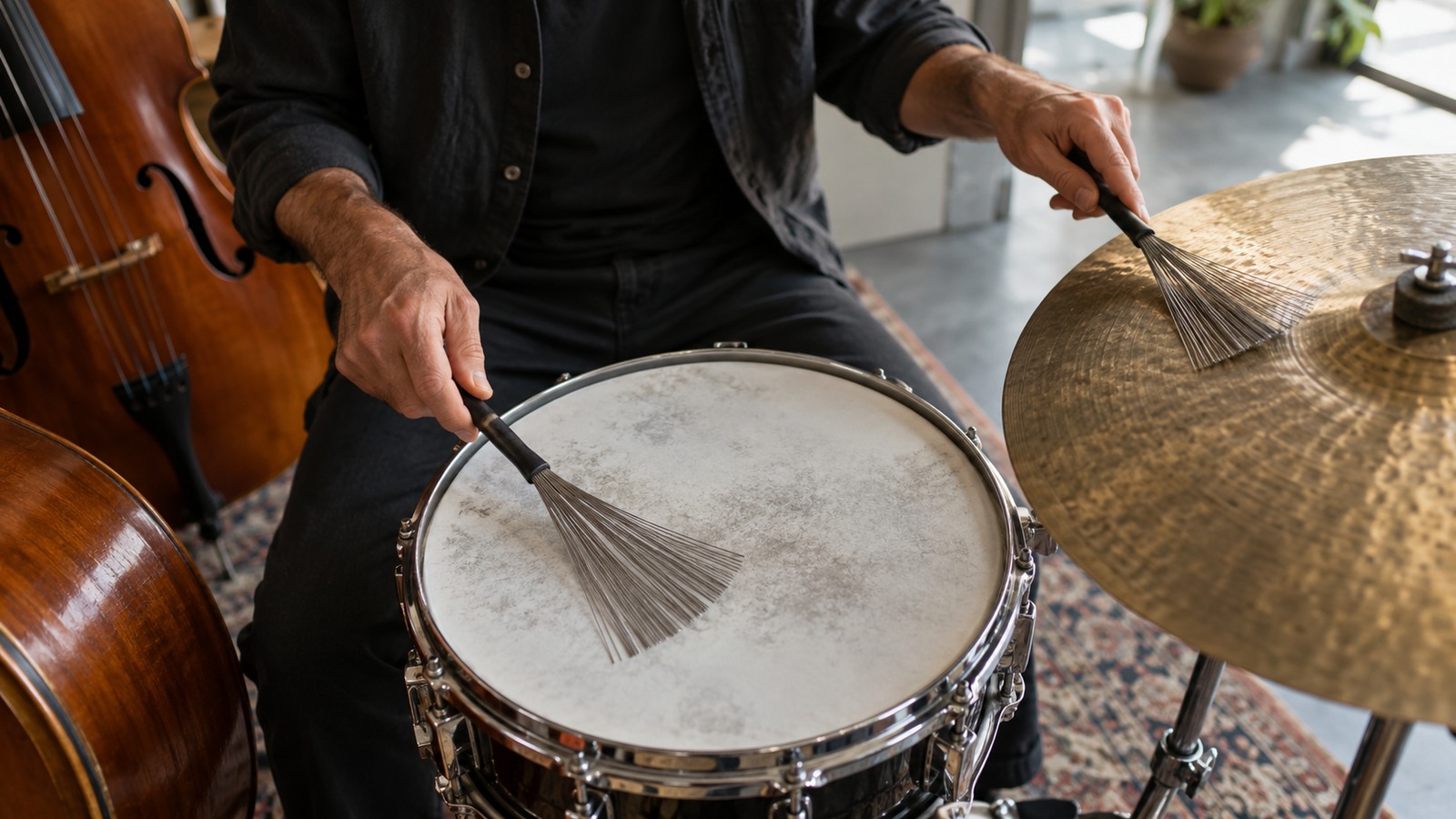
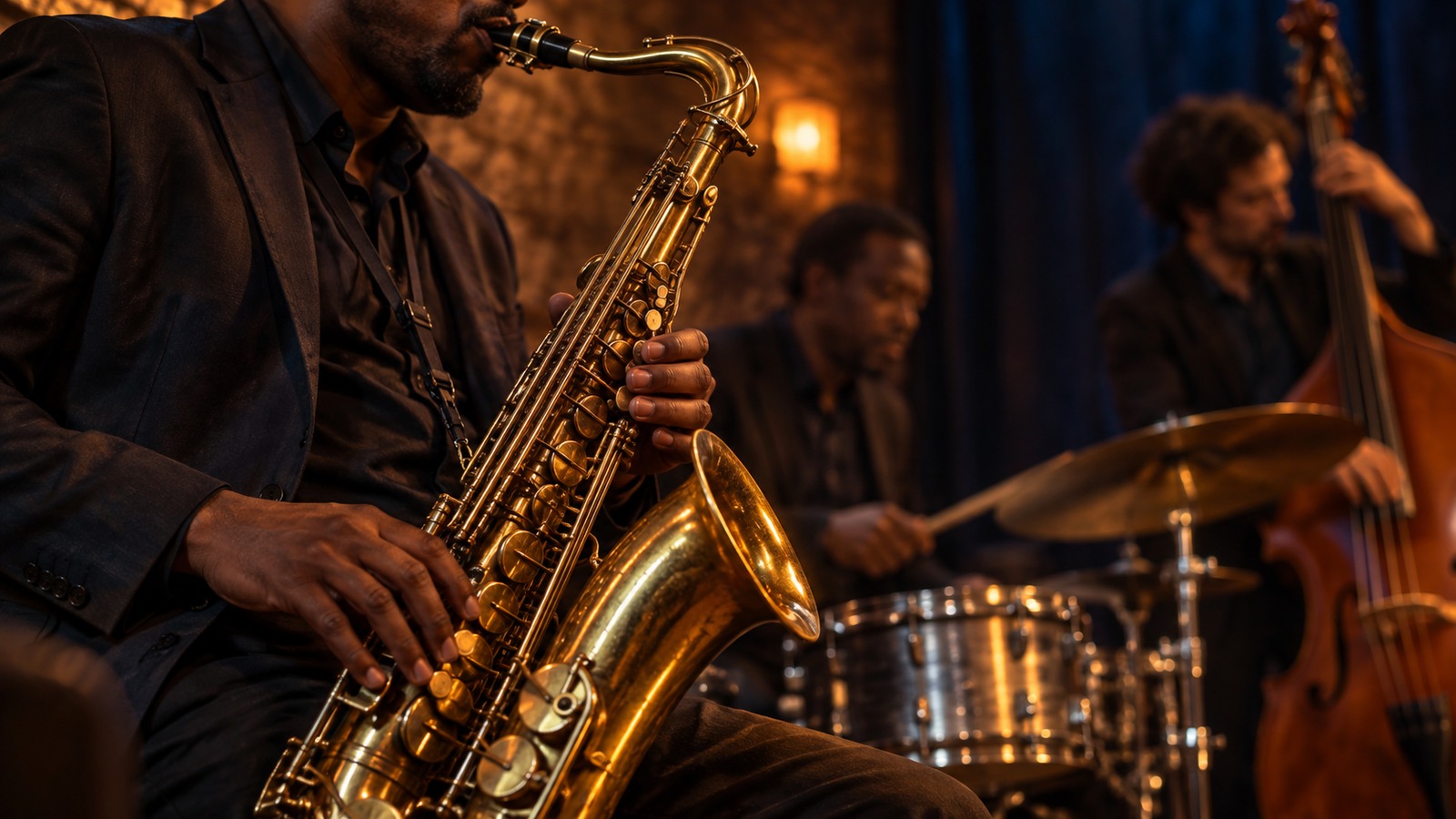
Bass, drums, and piano often provide the conditions in which a soloist moves, but those conditions are active musical decisions. A bass line can guide direction, a pianist can leave room or introduce color, and a drummer can respond through emphasis and texture. Calling these musicians accompaniment should not imply that they stop interpreting while another player occupies the foreground.
The best entry point is one relationship at a time. Follow the bass beneath a solo, then notice how a drum accent answers a phrase or announces a transition. A change can be subtle enough to escape a first listen while still affecting the performance’s energy. Concentrating on these interactions makes an extended passage feel less like one person playing over a loop and more like several people shaping a common event.
This listening approach also prevents an essential-recordings guide from becoming only a list of famous bandleaders. A recorded achievement is often collective even when one name dominates the cover or recommendation. Learning the personnel opens routes into other projects and interpretations. It allows the listener to credit the relationships audible in the music rather than reducing every successful moment to the public figure most easily recognized.
Use Historical Context Without Replacing the Sound
Knowing when a performance was recorded can explain its available technologies and musical surroundings, but historical prestige should not demand a predetermined response. Give yourself time to become familiar with a sound that differs from current recording expectations. Older balances or textures can make an initial encounter less immediate, while repeated attention reveals how clearly the musicians shaped their ideas. Context can support that patience without instructing you to admire everything equally.
Also distinguish release dates, recording dates, and later reissues. A modern package may contain a much earlier performance, and an album title can hide several sessions or versions. The specific recording matters when comparing phrasing and ensemble interaction. Reliable credits and release information make the recommendation usable, allowing another listener to find the version you actually mean instead of an unrelated performance sharing its title.
Make the Next Discovery Deliberate
After hearing these recordings, choose a quality rather than a supposed next level of difficulty. If vocal phrasing interested you, explore another singer’s interpretation; if rhythmic interaction held your attention, follow a drummer or bassist into another ensemble. If spaciousness felt compelling, compare different ways musicians use it. These routes organize discovery around genuine curiosity.
The greatest jazz listening experiences do not require a final ranking to become meaningful. They reward attention to particular voices, shared material, and decisions made together over time.
A short essential collection should teach you to hear those relationships and then let you move beyond its boundaries. The recording becomes a meeting place between musical history and a present encounter, with room for details that each return makes newly audible.