Follow the Bass Before the Familiar Chord Accent
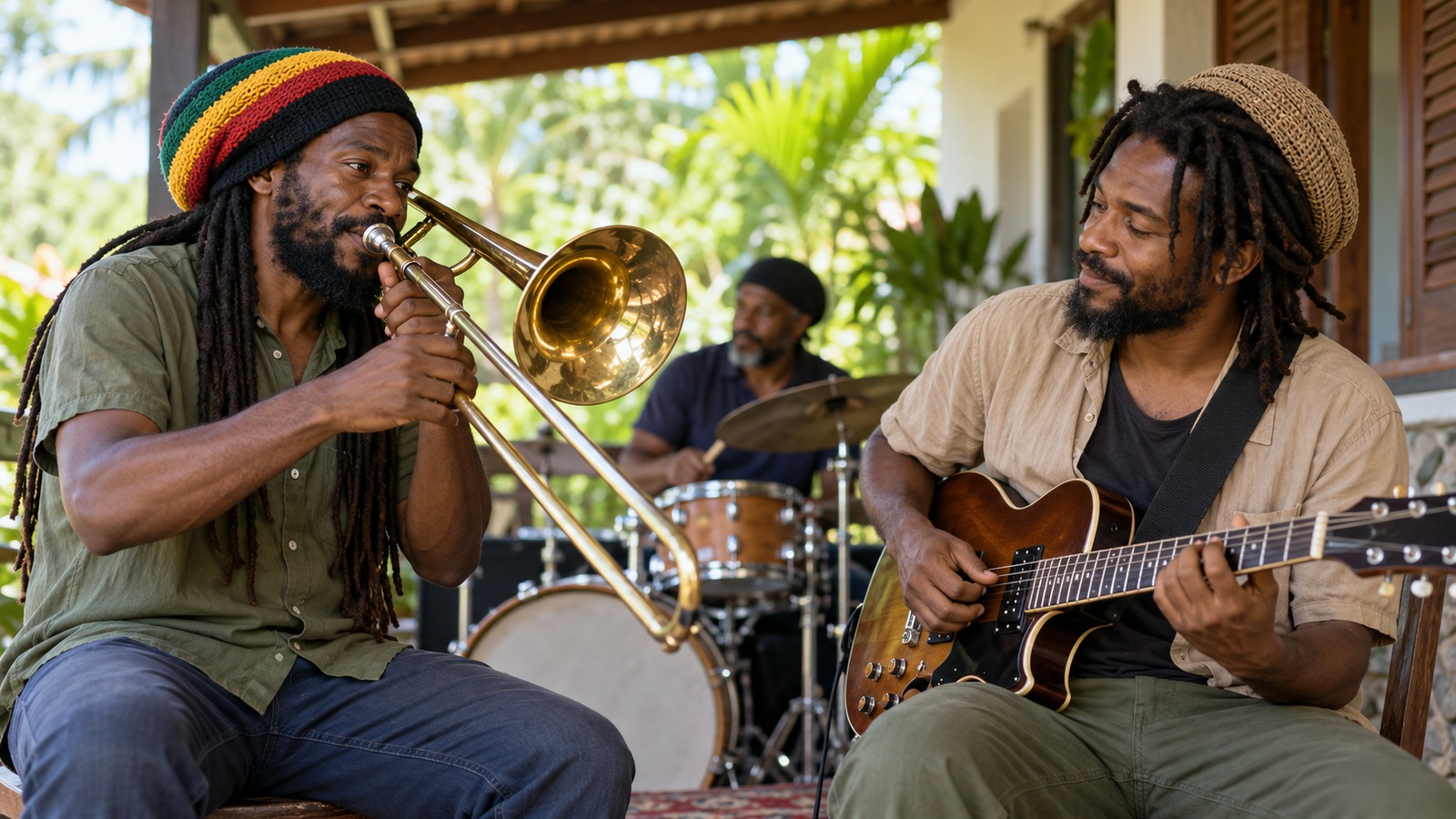
The clipped guitar or keyboard accent often makes a reggae recording immediately recognizable, but the bass may explain more about how the passage moves. Its line gives the drums and accompaniment a particular relationship, leaving space for a vocal entrance or an instrumental answer. Reggae is a Jamaican tradition with a changing history, not a single guitar pattern that can be added to any recording to settle its identity. This guide concentrates on the sound’s coordinated parts while keeping their cultural formation present. Hear bass, drums, accompaniment, voice, and recording space as separate resources, then return to their combined effect. A groove becomes more informative when you can recognize what each contribution makes possible. That attention also reveals why records with related foundations can feel restrained, urgent, tender, or strongly confrontational.
A: Its phrase can explain the passage's continuity and direction.
A: No. It is one rhythmic approach within a varied tradition.
A: Its clipped attack and release create a clear reference while leaving space.
A: They can add a distinct moving figure, harmony or response.
A: A familiar recurring relationship can carry attention through a pause.
A: Placement, articulation and emphasis change the ensemble's coordination.
A: They can answer, confirm or widen the scale of the lead statement.
A: Removal and spatial changes can expose an arrangement's supporting foundation.
A: Harmony and melody also give individual songs their recognizable direction.
A: Keep the Jamaican context and credited contributors visible alongside the musical roles.
The Sound Has a Jamaican History
Reggae developed within Jamaica through connected musical, recording, and performance circumstances. Earlier forms including ska and rocksteady supply important context, while musicians adapted resources toward new rhythmic and expressive relationships. The genre’s international reach followed that development rather than replacing it. A useful definition keeps the point of formation visible beside the sound.
UNESCO’s account of Jamaican reggae connects several influences with a broad range of social and expressive purposes. This context prevents the audible pattern from becoming an anonymous production trick. Particular performers gave the resources individual roles. The sound is understandable through both those decisions and the communities in which they became meaningful.
History also complicates the assumption that one tempo or emotional impression explains every record. Related practices can alter emphasis, density, and the relationship with a voice. Listen to those changes while following documented context. A genre name becomes more useful when its history allows variation instead of imposing one frozen setup.
Stir It Up Makes the Bass a Memorable Moving Line
Use “Stir It Up” from the Wailers’ Catch a Fire as the main listening example. Released internationally on the 1973 album, it gives the bass a recurring melodic identity beneath the vocal. Follow the low line through one complete sung phrase: it does more than double a chord root on every pulse. Its movement connects gaps between vocal gestures, so the groove remains active even when the singer pauses.
That is why a reggae bass part can be both accompaniment and one of the features a listener remembers first. Hum the low phrase through a gap in the singing, then compare its return beneath the next vocal entrance. The same line connects those events without having to become a separate solo.
One Drop Makes Beat Three the Point of Weight
A useful one-drop model places the main combined kick-and-snare emphasis on beat three of a four-beat bar, leaving beat one comparatively open. Count four steady pulses over “Stir It Up” and attend to that central landing rather than expecting the kick to mark every beginning. The hi-hat maintains a finer division around it. Try tapping the four beats with one hand while lightly marking the chord attacks with the other. The two motions should fit together without either copying the vocal rhythm. Stop and restart at a clear phrase boundary if the count drifts. This is a listening model, not a rule for every reggae recording: other drum patterns distribute the kick differently. Naming the pattern lets a beginner hear a specific rhythmic choice instead of reducing reggae to a vague laid-back mood.
Offbeat Accompaniment Supplies a Clipped Reference
Guitar and keyboard parts can provide short recurring accents that sit against the main pulse. Their clipped duration gives other sounds room to remain distinct. The part can therefore be rhythmically important without occupying the foreground continuously. A recognizable attack helps the listener locate another relationship within the pattern.
Fender’s reggae teaching material emphasizes percussive rhythm-guitar playing and ensemble coordination. A practical example can help make articulation audible. It should not be mistaken for a complete cultural definition of the genre. The guitar resource acquires its role through the surrounding bass, drums, and arrangement.
Listen to where the accompaniment stops as well as where it sounds. A sustained chord and a clipped one occupy time differently even if their pitch content is similar. The release helps maintain space for another contribution. The part’s effectiveness lies in what it leaves available as much as in its own recognizable timbre.
Keyboards Can Add Another Rhythmic Layer
Keyboard parts can reinforce accompaniment, sustain harmony, supply a melodic response, or establish another moving figure. Their role changes according to the arrangement. An organ-like tone with a recurring pattern may give the texture a different internal motion from the guitar’s clipped attack. Hear the keyboard as a contribution with its own placement rather than assuming it duplicates another part. When several instruments occupy related registers, balance and articulation help their purposes remain clear. The combined groove depends on those differences, allowing similar harmonic material to do more than one job.
The Parts Need Space to Remain Legible
A comparatively open texture can make timing and articulation especially noticeable. Bass, percussion, accompaniment, and voice do not need to fill every moment for the passage to remain active. The listener carries recurring relationships through a pause. That continuity can make a sparse arrangement feel complete.
Space also gives responses a clear location. A short instrumental answer after a sung phrase may acquire more significance than it would inside continuous density. Its placement helps maintain the exchange while the voice withdraws. The arrangement remains inhabited because another contribution takes responsibility for the moment.
Timing Makes a Pattern Feel Particular
Two performances can use similar broad patterns and still feel different through their placement, articulation, and emphasis. A bass entrance may seem relaxed against a stable reference, while another recording makes the same general relationship more insistent. The difference is not explained by tempo alone. It belongs to how the musicians coordinate the recurring events.
Follow one phrase through several returns. Notice whether the supporting details remain exactly alike or whether a small change redirects attention. An altered duration, accent, or reply can keep the pattern active. Repetition supplies the familiarity that makes those decisions easier to perceive.
Do not interpret a loose or restrained impression as an absence of skill. A convincing feel requires the parts to maintain a coherent relationship. The musicians can make a precise decision sound unforced. Attention to the ensemble reveals that control without requiring every contribution to become a conspicuous display.
The Voice Has Its Own Position Inside the Groove
A singer can enter directly on a familiar reference, lean across it, or allow a phrase to extend through several instrumental events. These choices change how the words arrive. The voice may sound assured, urgent, reflective, or exposed within the same broad rhythmic setting. Hear the phrasing before assigning a general mood. An instrumental pause can make a syllable more prominent, while supporting responses can enlarge an individual statement. The vocal identity comes from those relationships as well as texture and melody, which explains why similar foundations can support very different kinds of address.
Supporting Voices Can Change the Scale of a Statement
A response or harmony can turn a lead phrase into a shared event. Its entrance may confirm, answer, or widen the main voice’s perspective. That role is active rather than decorative. Listen during a pause in the lead to hear how the surrounding voices maintain the setting.
The same technique can serve different purposes among songs. A communal response may support reassurance in one recording and make a demand more forceful in another. The arrangement and delivery determine the result. A general description such as uplifting should follow the evidence of the particular performance instead of substituting for it.
Dub Reveals What a Recording’s Space Can Do
Dub-associated approaches can foreground the rhythm track and reorganize a source through removal, effects, and changing balance. The listener hears how a part’s role changes when another contribution disappears. A bass and drum relationship that seemed supportive can become the main subject. The mix becomes a creative sequence rather than a transparent container.
Echo and reverberation can extend an event beyond its original attack, creating another relationship with what follows. The effect’s timing matters to its musical purpose. A returning fragment can respond to material no longer present in the same form. Hear how the space connects events instead of evaluating the effect as an isolated sound.
This listening route can clarify an arrangement’s foundation. Once the vocal withdraws, the listener may notice the bass phrase or a percussion detail more clearly. Returning to the full song then reveals how those parts supported the original address. A related treatment can therefore make a familiar recording newly informative.
Harmony and Melody Still Shape the Whole
The rhythmic identity can be immediately prominent, but chord movement and melodic writing remain important to individual reggae songs. A harmonic change can redirect the impression of a recurring phrase. A melody can make a restrained instrumental setting feel expansive or bring a large arrangement into a more personal focus. Follow these resources alongside the groove rather than treating rhythm as the only form of composition. Their relationship explains why two songs with broadly similar accompaniment can become individually recognizable. The distinctive result comes from the coordination of writing and performance rather than one defining instrument technique.
Related Forms Give the Sound More Context
Comparing reggae with ska and rocksteady can reveal changes in how rhythm, bass, and vocal resources interact. Hear the recurring accents and phrase relationships within each example. A difference in pace can matter, but it should not become the entire explanation. The arrangement determines what the changed speed makes possible.
Dancehall and other connected practices introduce further developments in vocal presentation and production. A programmed foundation can establish another kind of continuity, while a voice uses it differently from a band-centered song. Specific genre terms and release information clarify the context. The family relationships remain useful when they preserve the distinct identity of the recording being heard.
Compare Stir It Up With Exodus in Three Passes
First play “Stir It Up” and count a steady four without following every sung syllable. Trace the bass phrase across that count. Then return to the clipped chord attacks between the main pulses. Hearing those two layers separately makes their conversation easier to recognize.
Next play the title track of the Wailers’ Exodus, released in 1977. Its driving, persistent rhythmic motion offers a contrast with the more spacious teaching example. Listen for how repeated instrumental material supports an extended performance without demanding a fresh chord sequence every few seconds.
Finally move attention to the voices. “Stir It Up” places a personal address inside its repeating groove, while “Exodus” turns repetition toward collective movement. The comparison gives bass, drums, offbeat accompaniment and vocal delivery distinct jobs. It also demonstrates why two reggae records can share resources without producing the same emotional or physical effect.
A Clear Definition Connects Sound and People
Reggae is a Jamaican tradition whose recognizable movement often depends on bass, drum emphasis, clipped accompaniment, vocal placement, and space working together. Its history and expressive range prevent any one technique or mood from supplying the full account. Hear the coordinated parts, follow the credited contributors, and explore how related recordings change the relationship. The familiar accent becomes more meaningful when it leads your attention toward the bass beneath it, the voice above it, and the decisions that keep the whole performance moving.