Reggae Carries More Than a Relaxed Mood
A familiar reggae recording may invite movement through a spacious groove, but its meaning can involve resistance, devotion, humor, tenderness, or a sharply situated account of daily life. The genre’s Jamaican history gives those different purposes a shared context without making them identical. Reggae developed through connected musical practices, recording environments, and audiences, then reached listeners far beyond the island. This guide follows that development through related styles, artist routes, and songs that reveal contrasting resources. It does not treat one internationally famous performer as the entire tradition or use a holiday image to replace its social circumstances. Begin with the relationship between rhythmic movement and vocal address, then hear how another recording gives that relationship a different purpose. The history becomes clearer when the sound remains connected with the people making and circulating it.
A: Its expressive range includes resistance, devotion, social commentary, love and other purposes.
A: Related earlier forms clarify continuity and changes in Jamaican musical development.
A: The groove, contributors and cultural context provide necessary additional information.
A: Selection, amplification and audience response give it another performance context.
A: Artists use related resources for contrasting subjects and stances.
A: Bob Marley and Peter Tosh share the writing credit.
A: His work provides another route through Jamaican recording and international circulation.
A: Removal, space and returns can reorganize which relationships receive attention.
A: No. Its particular practices deserve a more specific account.
A: Name the resource, contributors and documented context involved in the exchange.
Jamaican Circumstances Belong in the Definition
Reggae is a Jamaican musical tradition whose identity includes specific communities, performance practices, and recording histories. Its international reach does not remove that point of formation. A broad description of offbeat accompaniment provides one audible clue but leaves the cultural account incomplete. Both kinds of information help explain what the genre offers.
UNESCO’s reggae account places its development within Jamaican circumstances and connects its expressive range with social commentary, spirituality, resistance, and love. That range matters because a single mood cannot represent the field. Particular songs give those resources individual purposes. Hear the specific address before deciding how the groove should feel.
Ska and Rocksteady Give the 1960s a Clear Shape
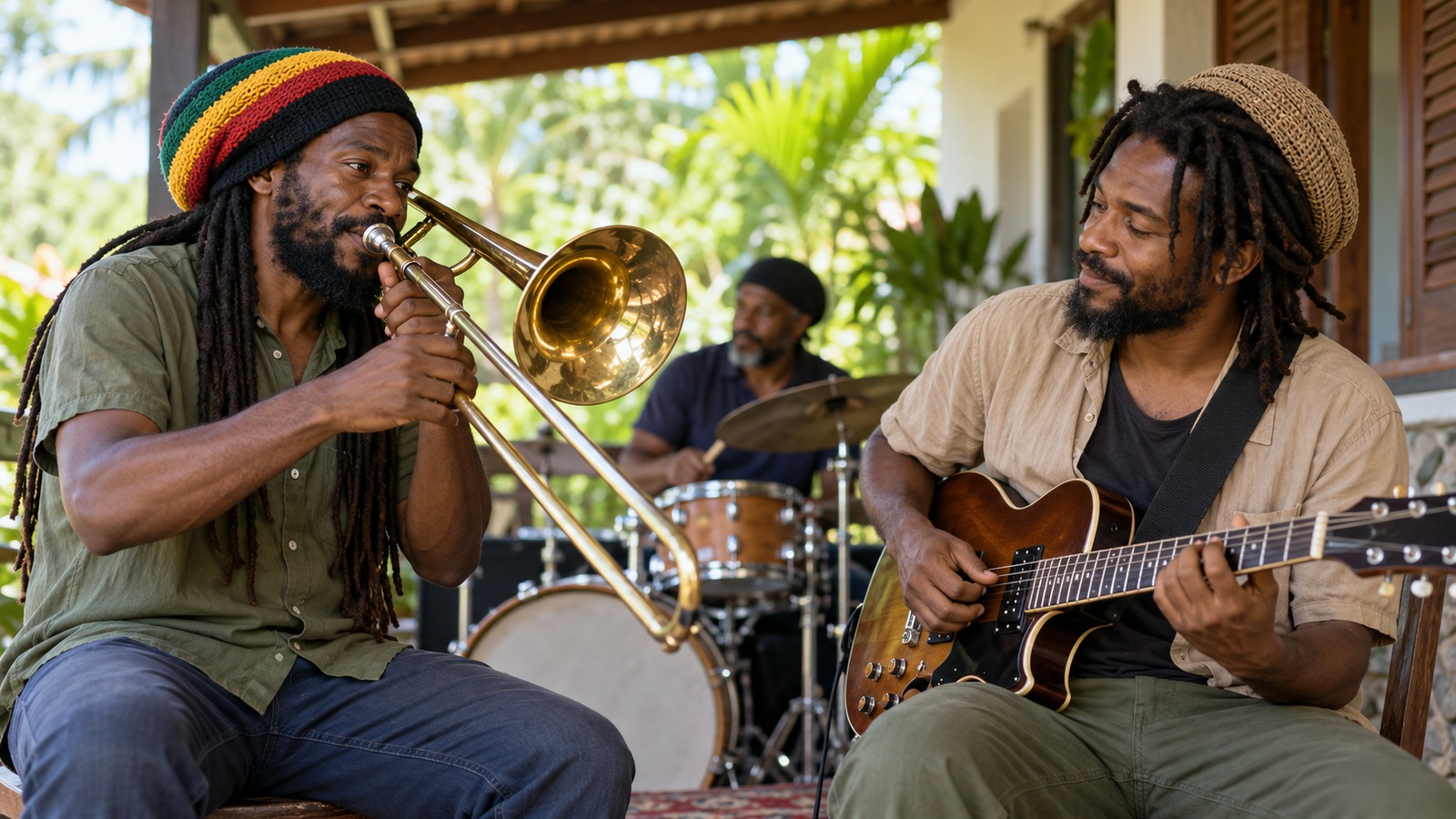
Jamaica’s early-1960s ska recordings brought brisk offbeat accompaniment into busy rhythm sections and prominent horn writing. The Skatalites’ “Guns of Navarone” supplies an instrumental entry: the tune passes through a band whose melodic and rhythmic parts stay active together. The band’s history dates its first Studio One album to 1964 and identifies its work backing other Jamaican singers.
By the middle of the decade, rocksteady placed greater weight on spacious grooves and vocal groups. Alton Ellis’s “Rock Steady” is a useful next stop. The more settled pacing makes room for singing and bass movement without requiring the rhythmic parts to become inactive.
The late-1960s emergence of reggae did not erase those working musicians or studios. Toots and the Maytals’ “Do the Reggay” makes the new name explicit in a 1968 recording. Comparing these three releases gives the chronology a sound: ensemble drive, increased room around voices, and another organization of rhythmic weight.
The Groove Gives Parts Room to Respond
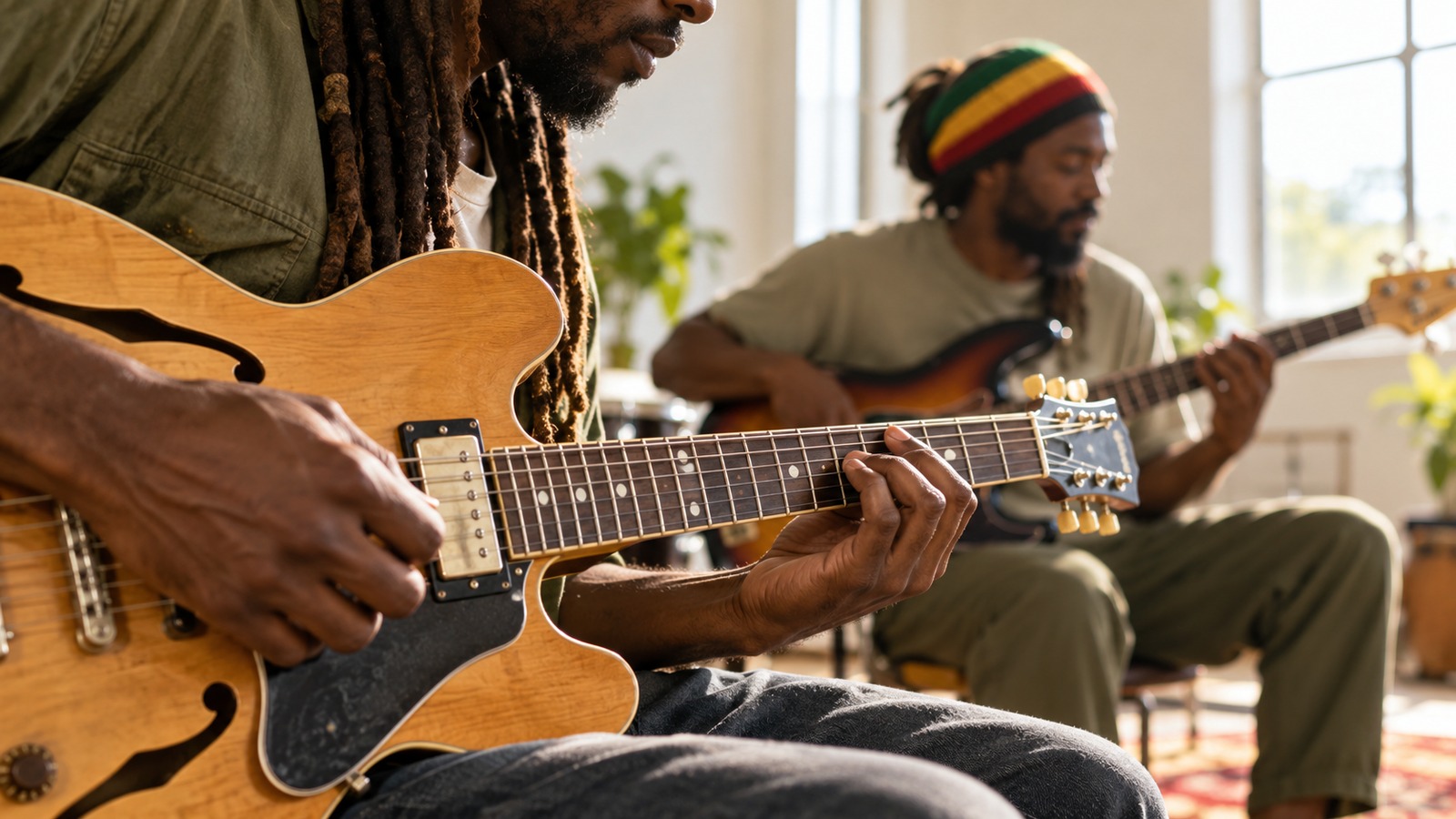
Reggae often makes the relationship among bass, drums, and offbeat accompaniment especially noticeable. A bass phrase can carry movement while clipped instrumental gestures provide another rhythmic reference. The resulting space allows a voice or response to enter clearly. Repetition establishes continuity without requiring every part to sound constantly. Hear how a pause remains active through the surrounding pattern. This coordinated organization helps explain the music’s physical invitation, but its particular feel depends on timing, articulation, and the choices of the musicians rather than the presence of one isolated accent.
Sound Systems Connect Records With Public Experience
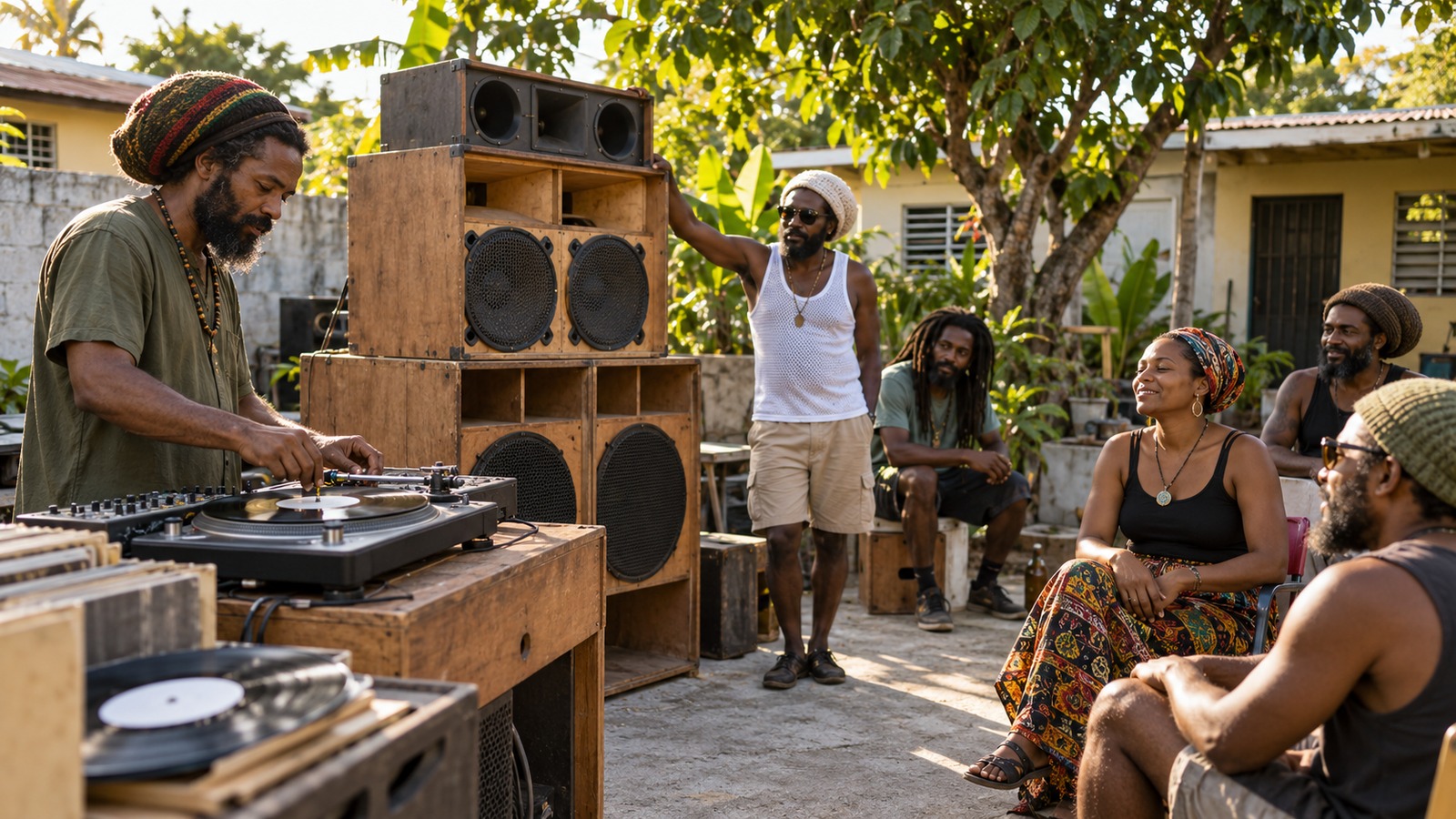
Sound-system culture is important to Jamaican music’s performance and circulation. Records meet an audience through selection, amplification, and the people organizing the event. That setting gives recorded work another life beyond a studio session. A selector’s choices and the audience’s response can contribute to the musical sequence.
A recording can also be understood differently after hearing it within a connected program. Its entrance, contrast with neighboring material, or familiar return can give a passage added force. The experience does not erase the original composition. It adds another layer of performance context that a short isolated excerpt cannot provide.
Roots Reggae Connects Musical Force With Address
Roots-associated reggae often foregrounds social and spiritual concerns within a recognizable groove. A voice can make a situation feel collective, personal, or both. The arrangement gives that address a sustained setting rather than reducing the message to spoken content alone. Rhythm and meaning work together.
The term still includes variation among artists and records. A devotional emphasis, an account of hardship, and a direct demand can use related resources without producing the same stance. Specific listening is necessary. Follow how the singer phrases the subject and how supporting voices or instrumental replies change its scale.
Context also helps clarify references that an unfamiliar listener may miss. Reliable artist information and documented cultural accounts can introduce the circumstances without replacing the performance. Return to the recording after reading so the explanation becomes audible. That sequence connects history with musical evidence instead of treating them as separate exercises.
Bob Marley and the Wailers Offer Several Entry Points
Bob Marley and the Wailers provide a major route into reggae’s international history, but their best-known recordings themselves offer contrasting approaches. Marley’s official history connects the group’s development with records and the contributions of its members. Use that route to hear an ensemble rather than turning the familiar voice into the entire production. Bass, drums, supporting vocals, and writing relationships all contribute to the result. A celebrated song becomes more informative when the listener can hear those roles as well as recognize its refrain. The next step should include other artists, leaving the broader Jamaican field visible beyond one career.
Get Up, Stand Up Makes Direct Address Musically Durable
Get Up, Stand Up offers an entry into the relationship between a direct demand and a recurring groove. The official recording credits identify Bob Marley and Peter Tosh as writers. The credited release provides a reliable route to that information. Recognition of a familiar recording should retain the collaborators behind it.
Listen to how the refrain’s clarity works with the rhythm rather than replacing it. A recurring statement can acquire force through emphasis and collective recognition. The performance carries its message through timing and vocal presence as well as words. No lyric quotation is needed to hear how the address becomes part of a durable musical form.
One Love Offers Another Public Scale
One Love / People Get Ready provides a contrasting listening route through a widely recognized communal address. Marley’s official soundtrack listing identifies the recording among the catalog’s familiar works. Hear how the voice and supporting responses make recognition feel shared. A familiar title can carry different expectations into the listening experience.
The value of comparing it with another song is the contrast in purpose and presentation. Related musical resources can frame a demand, reassurance, or an invitation differently. The genre’s recognizable movement does not require one emotional interpretation. Let the performance establish its own stance within the broader connection.
Popularity can make a recording seem self-explanatory, but a complete hearing often reveals more than the circulating refrain. Notice the supporting parts and the passages that prepare a return. Their relationships make the familiar moment possible. A well-known song can therefore remain a useful subject for attentive discovery rather than only a symbol already understood.
Jimmy Cliff Widens the Vocal and Cultural Picture
Jimmy Cliff offers another important route through Jamaican music’s recording and international history. The Rock Hall’s profile connects his career with the film The Harder They Come. That relationship makes performance, cinema, and musical circulation part of the account. A listener can explore several songs rather than expecting the artist to supply one uniform sound. Many Rivers to Cross, for example, provides a way to hear a strongly exposed vocal perspective within a broader Jamaican career. The contrast shows why an artist’s catalog and cultural role can be larger than a narrow rhythmic definition of every track.
Dub Makes the Mixing Desk a Creative Instrument
Augustus Pablo’s “King Tubby Meets Rockers Uptown,” available through the artist catalog, provides a named dub route. Compare it with Jacob Miller’s “Baby I Love You So,” the vocal recording associated with the same underlying music. Vocal fragments, bass, drums and effects become foreground events instead of remaining a fixed backing behind a continuous singer.
King Tubby’s work makes removal as consequential as addition. Echo can extend a brief gesture into the following gap; a returning bass line can seem newly forceful because another part has disappeared. Dub therefore changes how an existing performance is presented, making the mix a composition in motion rather than simply an instrumental copy.
Dancehall Moves From Sound-System Voices Toward Digital Riddims
Dancehall connects recorded music with selectors, deejays and dancers rather than naming one unchanging studio sound. Yellowman’s early-1980s records demonstrate the importance of a foreground voice addressing an audience through rhythmic speech and song. Barrington Levy supplies a complementary singing route. Their work belongs beside roots and dub in a broad reggae history, not in a footnote after Marley.
Wayne Smith’s “Under Mi Sleng Teng,” produced by Jammy in 1985, supplies a decisive digital-era example. Casio’s history identifies the MT-40 preset behind the track. Its keyboard-based backing changes the instrumental surface of the riddim while retaining the interaction of repeating foundation and distinctive vocal delivery. That contrast is easy to locate without describing all later Jamaican music as computerized.
Pair Smith with a fuller band-based groove and follow the sound sustaining the bass pattern. The production resources differ, but both provide a framework that another voice can reinterpret. The riddim’s circulation among different performers is central to this history: the backing can become recognizable independently of any one finished vocal record.
International Reach Should Keep Contributors Visible
Reggae has entered many recording and performance settings beyond Jamaica. A new audience can hear related resources through a collaboration, adaptation, or locally developed practice. The exchange becomes clearer when the source traditions and individual contributors remain named. A broad claim of global influence is less informative than a specific account of what changed. Identify which rhythmic relationship, vocal approach, or production practice the new work uses, and connect it with reliable credits and history. Wider circulation should enlarge the account rather than make the original people and circumstances anonymous.
Build a Listening Route Through Contrasts
Hear one complete reggae recording, then follow it with an example that foregrounds another resource. A direct vocal address, a spacious dub treatment, and a related earlier Jamaican form can reveal different relationships within the field. Use documented releases so the performers and contexts remain clear. The purpose is a connected exploration rather than a definitive short canon.
Return to the first recording after those contrasts. Its bass, responses, or phrase structure may now be easier to hear. This is how a historical guide becomes practical: the context changes the attention you can give to the music. A familiar groove acquires detail instead of remaining one generalized impression.
The History Remains Audible in Its Variety
Reggae connects Jamaican musical development with distinctive rhythmic relationships, recording practices, and a wide expressive range. Its related styles and internationally visible artists provide routes into that history without exhausting it. Hear specific songs, explore credited contributors, and compare recordings with different purposes. The genre becomes more understandable when its spacious movement remains connected with voice, community, and individual decisions. A relaxed impression can be one listener response, but the fuller field offers many other ways to participate in what the music says and how it moves. Keep that range present when introducing the genre to another listener. A contrasting pair of documented recordings often communicates its possibilities more clearly than a single celebrated song expected to represent every purpose.