Unfamiliar Sound Becomes Clearer Through Specific Attention
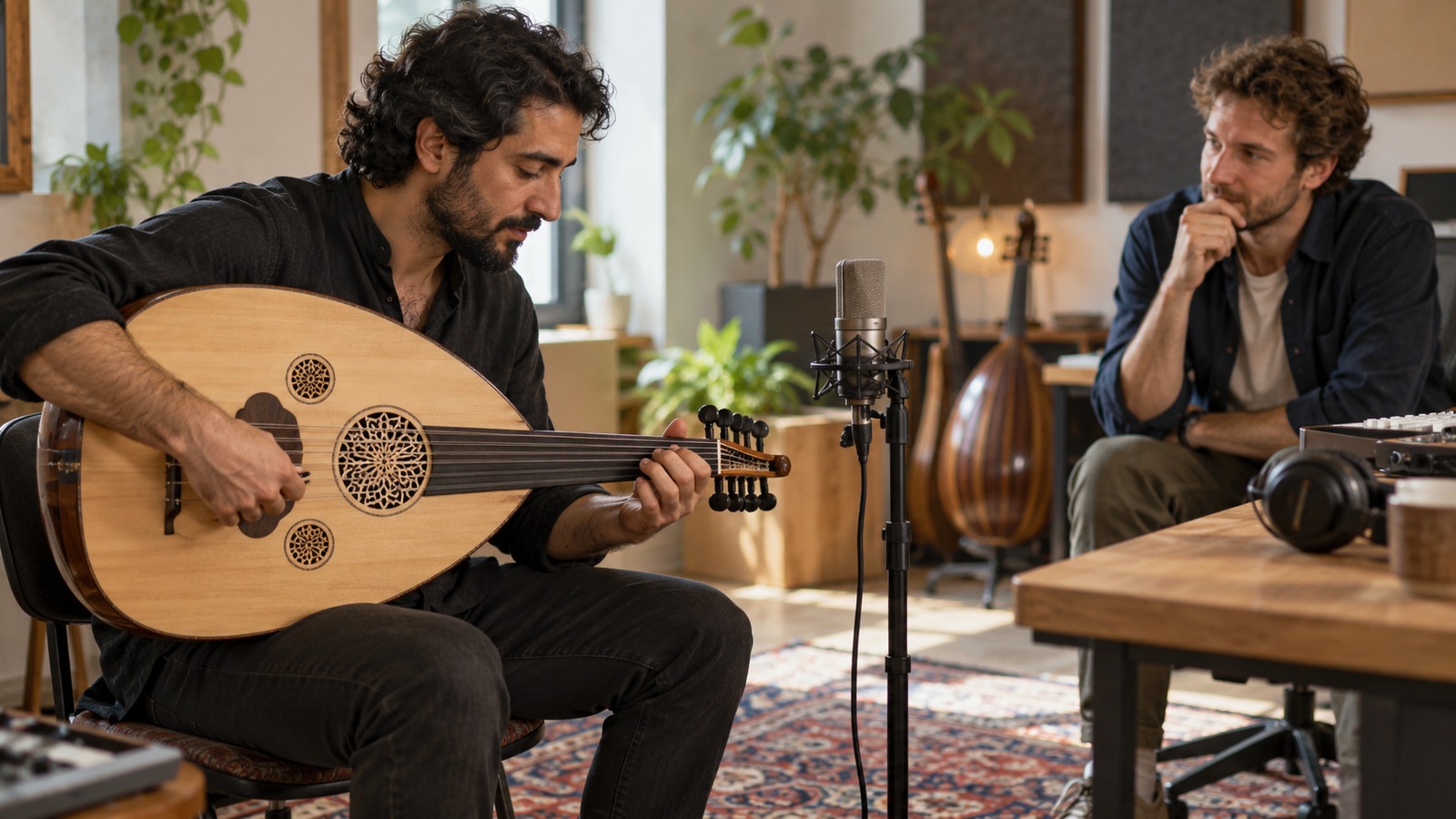
A musical performance may begin without the beat, chord sequence, or section change you expect, yet reveal a compelling order once you learn what to follow. Listening across traditions starts with that willingness to revise an expectation. World music is a broad and imperfect label rather than one unified musical style; a more useful guide names particular practices and asks how their performers organize sound. This guide follows named recordings through Malian string music, Hindustani raga, gamelan, flamenco, Afrobeat, salsa, Tuareg guitars and Korean pop, showing how performers organize melody, rhythm and ensemble roles. It does not make a continent stand for a single genre or assume that older resources belong only to the past. Begin with one documented recording, give its relationships time to become familiar, and use reliable artist and cultural accounts to connect what you hear with the people making it.
A: No. The broad label gathers practices with very different structures and histories.
A: Individual people and decisions should remain visible within cultural descriptions.
A: Yes. Contour, emphasis and characteristic movement can organize musical direction.
A: Its melodic identity involves a framework and expressive handling beyond a pitch list.
A: A larger recurring organization within which surface activity develops.
A: Its purpose may depend on interlocking with other contributions.
A: Vocal delivery and cultural associations add information beyond a literal rendering.
A: Adaptation can sustain its resources within changed circumstances.
A: Contemporary styles and production practices belong beside other living traditions.
A: Hear contrasting performers and keep the named practice's context present.
A Broad Label Cannot Replace a Tradition’s Name
This is a scoped introduction through particular recordings: Malian string collaboration, Hindustani raga, Balinese gamelan in Lombok, flamenco, Afrobeat, salsa, Tuareg guitar music and Korean pop. No short article can catalogue every global tradition. The useful promise is a set of named entrances with audible differences, including art, community and popular practices. Each example identifies people and a recording rather than treating unfamiliar music as an anonymous regional atmosphere. The listening method follows the examples instead of replacing them.
Use the most specific reliable name available, together with the performer and the recording’s context. This makes the music easier to explore on its own terms. A country can contain numerous practices, and a tradition can extend across borders or develop through migration. Geography provides useful information without serving as a complete genre definition.
Start With the Performer and the Recording
Begin with Ali Farka Touré and Toumani Diabaté’s ‘Ruby’ on Ali and Toumani. Touré’s guitar and Diabaté’s kora supply distinct kinds of plucked attack, letting short figures answer and overlap without filling every gap. The kora is a West African harp-lute associated here with Diabaté’s Malian hereditary musical background. World Circuit’s artist account documents the collaborators and the recording project. Hear the conversation between the instruments before reducing it to a broad label such as African guitar music.
A recording’s description can distinguish a particular occasion from a representative overview. An artist may deliberately depart from established practice or develop a new combination of resources. That choice belongs in the account. Listen for individuality while learning the shared framework that gives the performance meaning.
Smithsonian Folkways’ recording information directs listeners toward the accompanying materials available with its releases. Such documentation can introduce performers, repertory, instruments, and circumstances that a short streaming tag omits. Treat it as a route into a particular recording, then compare other reliable accounts when a broader claim needs clarification.
Melody Can Develop Without Familiar Chord Changes
Some traditions make melodic development within a continuing tonal reference especially important. A listener accustomed to following changing chord progressions may initially overlook how a phrase establishes and revises its identity. Hear the contour, emphasized pitches, ornaments, and approaches to a point of rest. These details can provide direction even when the harmonic setting remains comparatively stable. The practical task is to discover what relationships the performance foregrounds. Do not assume the absence of a familiar structural device means the music lacks development; it may organize attention through another resource that becomes clearer over time.
Raga Offers a Particular Framework for Creativity
Ustad Sultan Khan’s ‘Raga: Bageshree,’ on Sarangi: The Music of India, gives the raga explanation an actual performance. His bowed sarangi is accompanied by Shri Rij Ram’s tabla; the Smithsonian Folkways record identifies a 1974 live recording. The sarangi’s sustained, sliding phrases make pitch approach and melodic contour especially clear. A raga involves characteristic musical behavior rather than merely a scale that can be played upward and downward.
For a first hearing, follow how a phrase approaches and leaves a stable reference rather than trying to memorize every technical term. Notice which movements return and how the musician changes their scale or emphasis. Later documentation can help connect those observations with the tradition’s vocabulary. The sequence of hearing and learning makes a detailed explanation more useful.
Rhythmic Cycles Change the Scale of Expectation
A recurring cycle can organize musical time over a span larger than one immediately obvious accent. The performer may create movement within it while maintaining an important relationship with its return. A listener who hears only the fastest surface details can miss that broader organization. Give the recurring pattern enough time to become recognizable.
Once the cycle is familiar, variations can become more striking. A phrase may seem to move away from the reference before aligning with it again. The return carries information accumulated across the preceding activity. This is one reason complete performances can reveal relationships that a very short excerpt conceals.
Rhythmic systems differ among traditions, so one general explanation cannot stand for them all. Use the local terms when reliable teaching materials clarify them, and avoid treating unfamiliar organization as a measure of cultural distance or difficulty. The aim is a more precise hearing. Technical language should assist that attention rather than become a barrier to beginning.
Ensemble Roles May Depend on Interlocking Parts
An ensemble can distribute a musical pattern among several performers so that the combined relationship becomes the main subject. Individual parts may appear incomplete when heard alone. Their entrances, alternation, and recurring alignment create the recognizable whole. This listening situation rewards attention to coordination rather than a search for one continuous lead line. Try following one part briefly, then return to the combined texture to hear what its contribution changes. A familiar solo-and-accompaniment model may still help in some contexts, but it should not be imposed on every ensemble as the only possible organization.
Gamelan Invites Attention to Collective Sound
For a documented gamelan entrance, hear Sekaha Gong Budisatu’s ‘Tabuh Empat’ on Balinese Music of Lombok. The Smithsonian Folkways booklet identifies the ensemble and local setting. Listen to the way ringing metal tones and recurring punctuation organize a larger cycle. The impression of a collective surface comes from players with different jobs, rather than everyone playing the same melody at once. Naming Lombok also prevents Balinese-associated practice from becoming a vague label for every Indonesian ensemble.
Hear how parts recur, meet, and separate, and notice the different durations of sounds within the ensemble. A sustained resonance can connect events that initially appear distinct. The combined impression may become easier to grasp after repeated listening. More specific documentation can then clarify the roles and the local practice you are actually hearing.
Voice, Dance and Instrumental Sound Can Form One Practice
Camarón’s 1979 title track ‘La leyenda del tiempo’ offers a flamenco-related encounter in which a distinctive vocal language meets an expanded studio band. The voice bends and presses across the repeating accompaniment, while electric instruments make the setting different from an imagined timeless voice-and-guitar tableau. That tension is part of the work’s identity. The recording asks you to hear a particular singer taking a particular creative route, not to decide whether every added instrument makes a tradition less authentic.
UNESCO’s flamenco account describes a practice joining song, dance, and musicianship. That context helps a listener hear responses and accents as part of an exchange. A guitar-only presentation or a vocal recording can foreground one aspect without exhausting the wider tradition. Specific performance information clarifies which relationship is available in a particular example.
Official video can be useful when movement is central and reliable footage is available. Follow how sound and gesture coordinate without assuming every visible motion has one universally fixed meaning. Artist and community explanations can supply the information observation alone does not provide. The fuller account respects both what you can perceive and what still requires learning.
Language Carries More Than a Translatable Plot
A translation can introduce a song’s subject, but vocal meaning also depends on rhythm, pronunciation, emphasis, and the relationship with the surrounding performance. An expressive phrase may draw on associations that a literal rendering cannot carry completely. Use a reliable translation as an aid rather than a replacement for listening. Hear where a phrase changes direction, which syllables receive weight, and how another voice responds. This approach gives the words and their delivery distinct roles within the account. It also leaves room for uncertainty when the listener does not yet know the language or its performance conventions.
Traditions Continue Through Adaptation
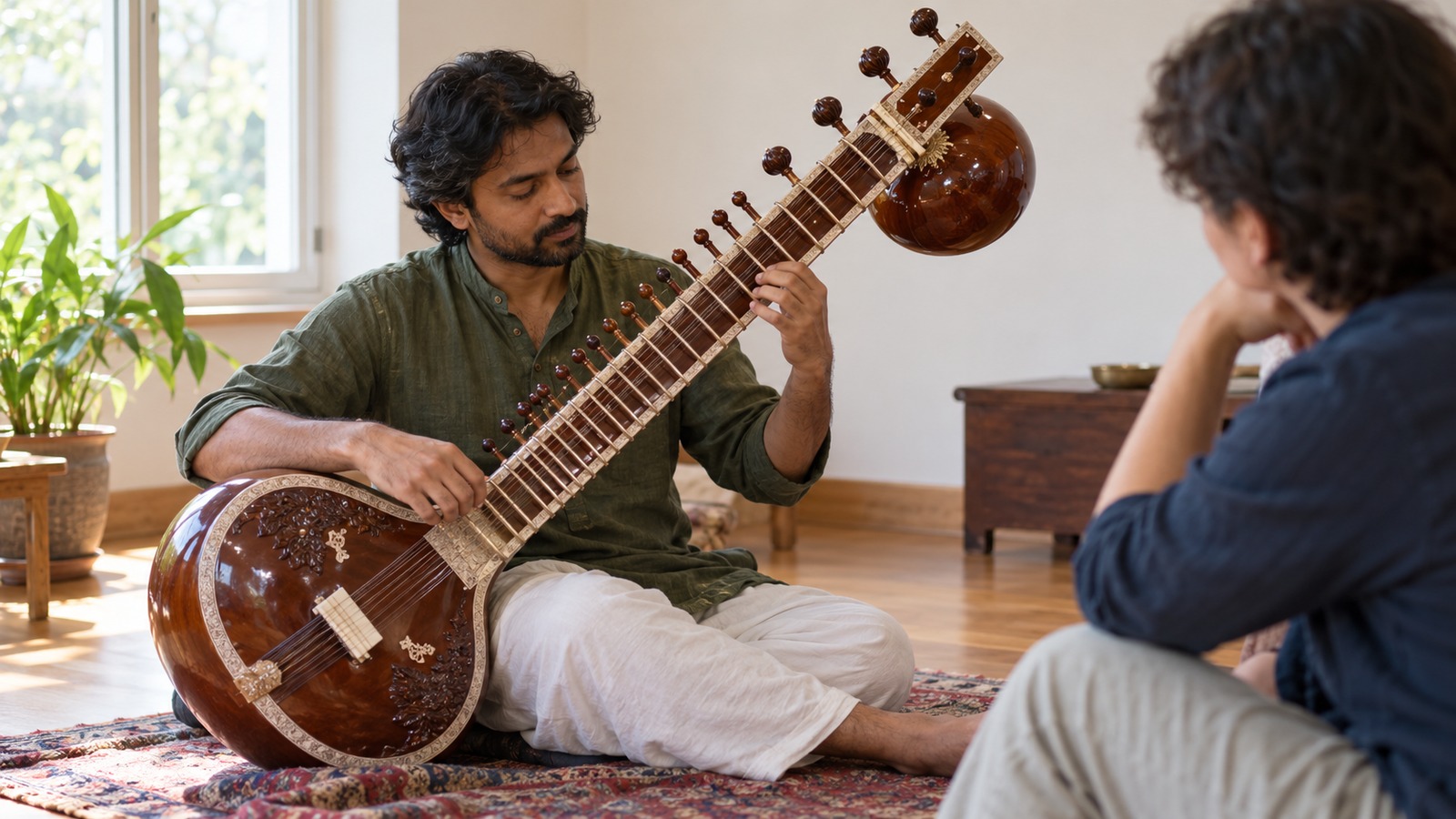
Anoushka Shankar’s 2016 Land of Gold supplies a named example of contemporary adaptation. In her own account, Shankar connects the project with displacement, refugees and the search for safety. The sitar remains an identifiable expressive voice within a collaborative production, rather than a decorative symbol of India. Hear how its plucked line participates in the arrangement and how the album’s changing settings alter its apparent closeness. A tradition can remain a source of technique and thought while a musician uses it to address present circumstances.
Smithsonian Folkways’ lesson on preservation and adaptation uses specific cases involving kulintang, kundiman, and pinpeat in the United States. Those examples offer a way to examine change through particular practices instead of a broad assumption about all migrant music. The people involved make decisions about what to sustain and what to develop. Their accounts deserve attention within the musical analysis.
Popular Music Makes the Global Map More Specific
Fela Kuti’s ‘Water No Get Enemy,’ from 1975’s Expensive Shit, supplies a Nigerian Afrobeat entrance. Repeated bass, guitar and keyboard activity gives the horns and lead voice a continually moving environment. The official recording catalog identifies the source album. Development often comes through accumulating relationships inside the groove, so a short excerpt can conceal how patiently the performance establishes its collective motion.
Celia Cruz and Johnny Pacheco’s 1974 ‘Quimbara’ makes salsa’s vocal and ensemble exchange explicit. Cruz’s forceful lead works against chorus responses, bright brass and active percussion, with changing phrases renewing a recurring setting. Fania’s album account identifies Junior Cepeda as the writer and places the record within Celia & Johnny. Cuban, Dominican, Puerto Rican and New York relationships help explain why a single national label cannot contain the performance’s history.
Tinariwen’s ‘Sastanàqqàm’ on 2017’s Elwan gives Tuareg guitar music a specific present-day recording, with circling electric figures and answering voices; the band’s history names the song and its setting. BTS’ 2018 ‘IDOL’ offers a very different popular route, moving between rapping, melody and group chant within a heavily produced dance track. The group’s official album page identifies the recording. Both belong in a global guide: contemporary production is part of musical life, not evidence that a culture has stopped possessing traditions.
Compare Carefully and Keep Difference Audible
Comparison can help a listener recognize a recurring cycle, an ensemble response, or a style of melodic development. It becomes misleading when resemblance is treated as proof that two traditions are the same. Describe the feature you are comparing and keep each work’s own context present. A useful analogy opens attention without claiming equivalence.
Choose a second recording from the same named practice before making a broad summary. The variation can reveal which features are shared and which belong to the particular performer or occasion. Then explore a contrasting tradition with a clear listening purpose. Discovery grows more detailed when each comparison answers a specific question.
Build a Listening Path One Documented Encounter at a Time
Begin with a complete recording, identify its performers and context, and follow one relationship through the performance. Read a reliable explanation after the first hearing, then return to hear what the new information makes clearer. Explore another artist within the named tradition before moving toward a neighboring practice. This method gives broad global discovery a concrete sequence. World music remains a useful search label in some settings, but the richest understanding comes from moving beyond it toward individual people, musical decisions, and living histories. An unfamiliar sound becomes an invitation to learn how another performance organizes attention. Keep track of which observation came from hearing and which came from documentation. That distinction allows a later source or another performance to revise the account without making the original encounter worthless. Learning becomes cumulative when uncertainty is specific: you can hear a recurring relationship clearly while still needing help with its local name or social purpose.