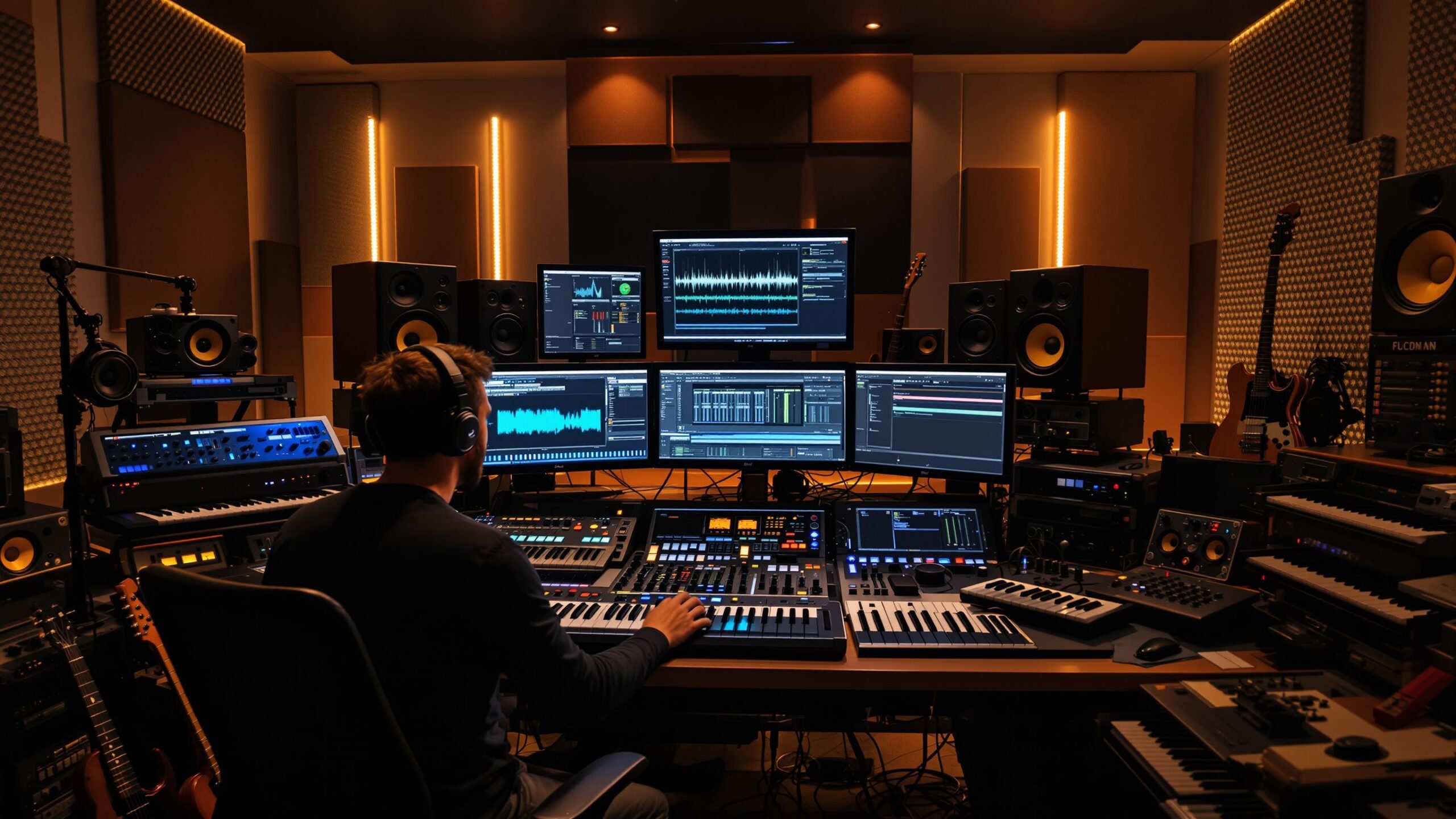
Music production is the invisible engine behind every song you hear, transforming raw ideas into polished recordings that resonate with listeners. Inside a studio, whether it is a high-end professional space or a carefully arranged home setup, songs are built step by step through a process that blends creativity, performance, and technical precision. For beginners, understanding how songs are created in the studio provides a clear roadmap into the world of music production and reveals how each layer of sound comes together to form a complete track. At its core, music production is about capturing emotion and shaping it into a structured listening experience. From the first spark of an idea to the final mastered track, every stage contributes to the identity and impact of the song. While the tools and techniques may vary, the fundamental workflow remains consistent across genres and styles.
A: Songs are developed through writing, recording, editing, mixing, and mastering stages.
A: It usually begins with songwriting or creating a basic musical idea.
A: Recording different parts separately so they can be edited and mixed individually.
A: Mixing balances tracks together, while mastering prepares the final version for release.
A: No, many songs are created in home studios with basic equipment.
A: They guide the sound, structure, and creative direction of a song.
A: Multiple takes allow producers to choose the best performance sections.
A: Adding new layers to a song after the initial recording.
A: It can range from a few hours to several weeks depending on complexity.
A: Clean recordings, strong arrangement, balanced mixing, and careful mastering.
The Starting Point: Songwriting and Pre-Production
Every song begins with an idea. This could be a melody hummed into a phone, a chord progression played on a piano, or a lyrical concept that tells a story. Songwriting is the foundation of music production, establishing the core elements that will define the track.
Pre-production is the stage where these ideas are developed and refined before recording begins. During this phase, artists and producers experiment with structure, tempo, and arrangement. Decisions are made about the style of the song, the instruments involved, and the overall mood. This preparation helps streamline the recording process and ensures that everyone involved shares a clear vision.
Pre-production may also involve creating rough demos, which serve as a blueprint for the final recording. These early versions allow producers to identify strengths and make adjustments before investing time in detailed production.
Recording: Capturing the Performance
Once the song is fully developed, the recording stage begins. This is where performances are captured using microphones, instruments, and digital tools. Each element of the song is typically recorded separately, allowing for greater control and flexibility.
Vocals are often recorded in isolation to ensure clarity and minimize background noise. Instruments such as guitars, drums, and keyboards are recorded either through microphones or direct input connections. The goal during recording is to capture clean, expressive performances that can be refined later.
Producers play an important role during this stage, guiding artists to achieve the best possible takes. This may involve multiple attempts, adjustments to timing, or changes in delivery to enhance the overall feel of the song.
Building Layers with Multitrack Recording
Modern music production relies heavily on multitrack recording, which allows each sound to be recorded on its own track. This approach makes it possible to build a song layer by layer, adding depth and complexity to the final mix.
For example, a track might begin with a rhythmic foundation such as drums or percussion, followed by bass lines that provide low-end support. Harmonic elements like guitars or keyboards are added next, along with lead vocals and backing harmonies. Additional layers, such as sound effects or atmospheric textures, can be included to enhance the overall sound.
Multitrack recording provides flexibility, enabling producers to adjust individual elements without affecting the entire song. It also allows for creative experimentation, as different combinations of sounds can be tested and refined.
Editing: Perfecting the Performance
After recording, the editing stage begins. This is where raw recordings are cleaned up and refined to create a polished performance. Editing involves selecting the best takes, correcting timing issues, and removing unwanted noise or mistakes.
Modern digital tools make it possible to adjust pitch, align tracks, and fine-tune performances with precision. While these tools are powerful, the goal is to enhance the natural quality of the recording rather than overcorrect it. A well-edited track maintains the authenticity and emotion of the original performance while improving clarity and consistency.
Editing is a crucial step that bridges the gap between recording and mixing, ensuring that each element is ready to be combined into the final track.
Mixing: Creating Balance and Clarity
Mixing is one of the most important stages in music production, where all recorded elements are blended into a cohesive and balanced sound. During mixing, the producer or engineer adjusts the volume levels of each track, ensuring that no element overpowers the others.
Panning is used to position sounds within the stereo field, creating a sense of space and separation. Equalization shapes the tonal balance, allowing each instrument to occupy its own frequency range. Compression controls dynamic range, making the track sound more consistent and controlled.
Effects such as reverb and delay add depth and atmosphere, giving the recording a sense of environment. The goal of mixing is to create a clear and engaging listening experience, where every element contributes to the overall impact of the song.
Mastering: The Final Stage
Mastering is the final step in the music production process, preparing the song for distribution and playback across various platforms. This stage involves subtle adjustments to the overall sound, ensuring consistency and compatibility across different listening environments.
During mastering, the track’s overall volume is optimized, and any remaining tonal imbalances are corrected. The goal is to create a polished, professional sound that translates well whether played on headphones, car speakers, or streaming services.
Mastering also ensures that the track meets industry standards, making it ready for release to the public.
The Role of Studio Equipment
Studio equipment plays a significant role in shaping the sound of a recording. Microphones capture the initial sound, while audio interfaces convert it into digital data. Studio monitors provide an accurate representation of the audio, allowing producers to make precise adjustments.
Digital audio workstations serve as the central hub for recording, editing, and mixing. These software platforms offer a wide range of tools and effects that enable producers to shape their sound with precision.
While professional studios may feature high-end equipment, beginners can achieve impressive results with a basic setup and a strong understanding of the fundamentals.
Collaboration in the Studio
Music production is often a collaborative process, involving artists, producers, engineers, and sometimes additional musicians. Each person brings their own expertise and perspective, contributing to the final result.
Collaboration can lead to new ideas and creative breakthroughs, as different viewpoints help shape the direction of the song. Effective communication and a shared vision are essential for a successful production process.
Even for solo producers, collaboration can occur through remote sessions, online sharing, and feedback from others.
The Creative Process Behind the Scenes
Beyond the technical steps, music production is driven by creativity and emotion. Producers make countless decisions about sound, arrangement, and style, all of which influence how the listener experiences the song.
Experimentation is a key part of this process. Trying new sounds, rearranging sections, or adding unexpected elements can lead to unique and memorable recordings. The studio becomes a space where ideas can be explored and transformed into something meaningful.
Understanding this creative aspect helps beginners appreciate that music production is not just about following steps but about expressing ideas in a compelling way.
Common Challenges for Beginners
Beginners often encounter challenges when learning how songs are created in the studio. One common issue is achieving a balanced mix, as it takes time to develop the skills needed to manage multiple elements effectively. Another challenge is maintaining clarity while adding layers, as too many sounds can make a track feel cluttered.
Learning to trust your ears and make intentional decisions is an important part of the process. Regular practice and critical listening help build confidence and improve results over time.
Patience is essential, as mastering the art of music production takes time and dedication.
From Idea to Finished Song
Music production is a journey that transforms simple ideas into fully realized songs. By understanding how songs are created in the studio, beginners can gain insight into each stage of the process and begin developing their own skills.
From songwriting and recording to mixing and mastering, every step plays a role in shaping the final sound. With practice, creativity, and a willingness to learn, anyone can explore the world of music production and start creating songs that connect with listeners.