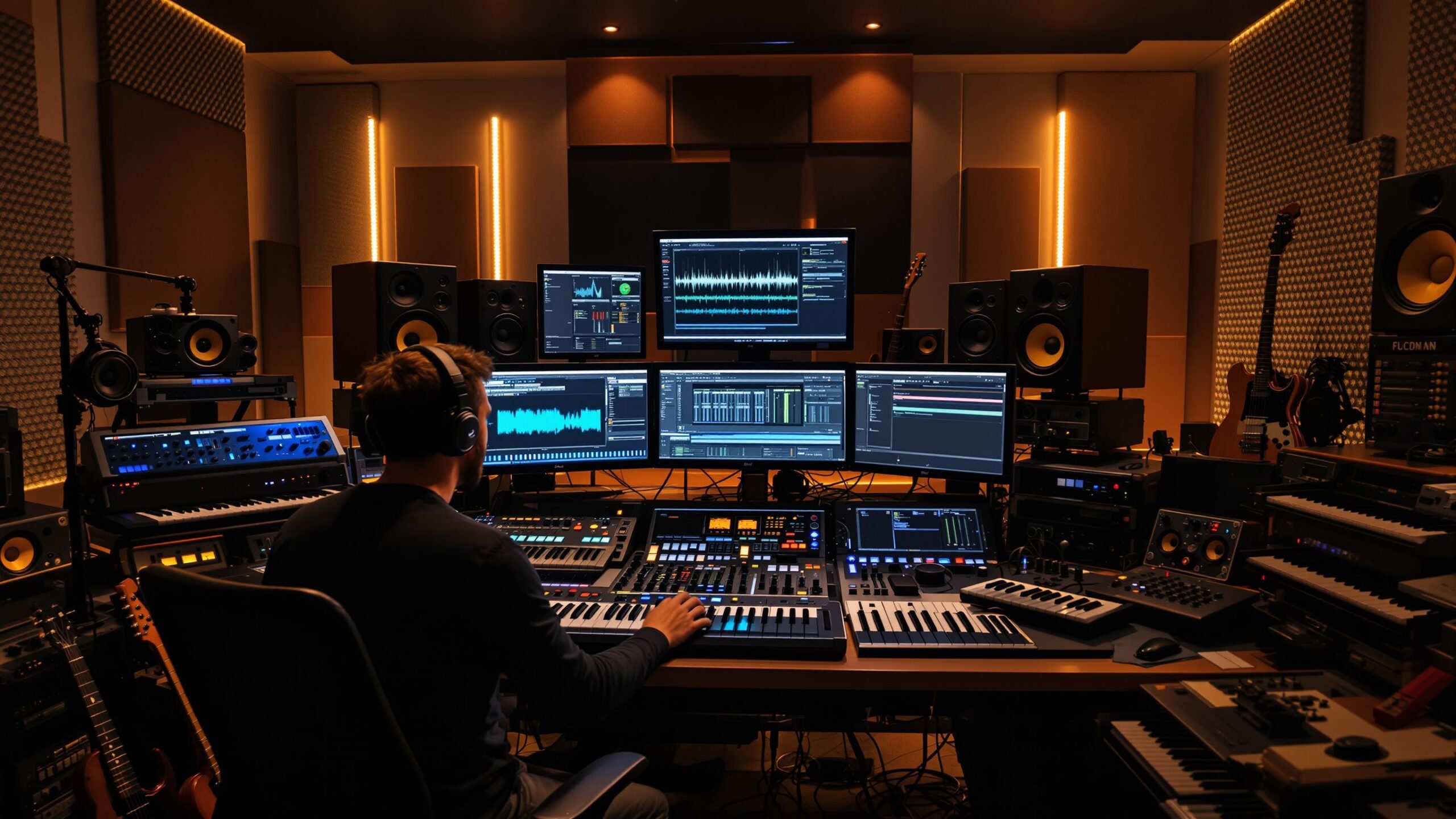
Producing a song is a journey that blends creativity, technical skill, and emotional expression into a finished piece of music. While every artist and producer has their own workflow, the process of creating a song typically follows a structured path that transforms an idea into a polished recording. For beginners, understanding this step-by-step process makes music production feel far more approachable and provides a clear roadmap for turning inspiration into reality. At its heart, producing a song is about shaping sound. It begins with a simple concept and evolves through layers of creativity and refinement until it becomes something listeners can connect with. Each stage plays a vital role, building on the previous one and contributing to the final result.
A: It usually begins with songwriting or creating a basic musical idea.
A: Editing and arranging prepare the tracks for mixing.
A: Mixing balances all elements of a song to create a cohesive sound.
A: Mastering finalizes the track for release and ensures it sounds good everywhere.
A: Yes, many songs are created in home studios with basic equipment.
A: They allow you to choose the best performance sections.
A: Adding new layers to a song after initial recording.
A: It can take hours, days, or weeks depending on complexity.
A: Clean recordings, strong arrangement, balanced mixing, and proper mastering.
A: A strong idea and emotional connection are the foundation of any great song.
Step 1: Finding the Idea
Every song begins with an idea. This could be a melody that comes to mind, a chord progression played on an instrument, a rhythm, or even a single lyric that sparks inspiration. Some songs start with a beat, while others begin with a story or emotion that the artist wants to express.
At this stage, the focus is on creativity rather than perfection. Capturing ideas quickly, whether through voice memos or rough recordings, ensures that inspiration is not lost. These early fragments serve as the foundation for everything that follows.
Step 2: Songwriting and Structure
Once the initial idea is captured, it is developed into a complete song. This involves building melodies, writing lyrics, and establishing a structure. Most songs follow familiar formats, such as verse, chorus, and bridge, but there is always room for experimentation.
During this stage, producers and artists refine the direction of the song. They decide on the tempo, key, and overall mood. The goal is to create a strong foundation that supports the message and emotion of the track.
Songwriting is where the identity of the song truly takes shape. A well-written song provides clarity and direction for the rest of the production process.
Step 3: Pre-Production Planning
Pre-production is the preparation phase where ideas are organized and tested before recording begins. This often involves creating a rough demo, which acts as a blueprint for the final track.
During pre-production, decisions are made about instrumentation, arrangement, and style. Producers experiment with different sounds, tempos, and structures to find what works best. This stage helps identify potential issues early, saving time and effort during recording.
Pre-production is also where the creative vision becomes more defined, ensuring that everyone involved understands the direction of the song.
Step 4: Recording the Tracks
Recording is the stage where performances are captured. Each element of the song is typically recorded separately, allowing for greater control and flexibility. Vocals, instruments, and digital sounds are recorded onto individual tracks.
The goal during recording is to capture clean, expressive performances. Multiple takes are often recorded to ensure the best possible result. Producers guide artists through this process, offering feedback and helping refine performances.
Recording can take place in a professional studio or a home setup, depending on the resources available. With modern technology, even simple setups can produce high-quality recordings when used effectively.
Step 5: Layering and Arrangement
Once the core tracks are recorded, additional layers are added to enhance the song. This may include harmonies, background vocals, sound effects, or additional instruments. Layering adds depth and richness, making the track more engaging.
Arrangement plays a key role in this stage. Producers decide how the song progresses, when elements enter and exit, and how energy builds throughout the track. A well-arranged song keeps the listener interested and creates a sense of movement.
This stage is where the song begins to feel complete, as all the elements come together to form a cohesive piece.
Step 6: Editing and Cleanup
After recording and layering, the editing stage begins. This involves refining the recorded tracks to improve clarity and consistency. Unwanted noise is removed, timing issues are corrected, and the best takes are selected.
Modern editing tools allow for precise adjustments, including pitch correction and time alignment. While these tools are powerful, the goal is to enhance the performance without losing its natural feel.
Editing ensures that the track is clean and ready for the next stage, providing a solid foundation for mixing.
Step 7: Mixing the Song
Mixing is the process of combining all the individual tracks into a balanced and cohesive final mix. This stage involves adjusting volume levels, panning sounds across the stereo field, and applying effects to shape the overall sound.
Equalization is used to balance frequencies, ensuring that each element has its own space. Compression helps control dynamics, making the track sound more consistent. Reverb and delay add depth, creating a sense of space and atmosphere.
Mixing requires careful listening and attention to detail. The goal is to create a clear and engaging sound where every element contributes to the overall experience.
Step 8: Mastering the Final Track
Mastering is the final step in producing a song. It involves making subtle adjustments to the overall mix to ensure it sounds polished and consistent across different playback systems.
During mastering, the track’s volume is optimized, and any remaining tonal issues are addressed. The goal is to create a professional sound that translates well whether played on headphones, speakers, or streaming platforms.
Mastering also prepares the track for distribution, ensuring it meets industry standards and is ready for release.
Step 9: Reviewing and Refining
Before releasing a song, it is important to review and refine the final product. This may involve listening on different devices, gathering feedback, and making small adjustments to improve the overall sound.
Taking the time to review ensures that the song meets the desired quality and effectively communicates its intended message. Fresh ears and perspective can often reveal details that were missed during production.
Step 10: Releasing the Music
The final step is sharing the song with the world. This can involve uploading it to streaming platforms, promoting it on social media, or distributing it through various channels.
Releasing music is an exciting milestone, marking the completion of the production process. It allows artists to connect with listeners and showcase their work.
The Creative Journey Behind Every Song
While the steps of producing a song provide structure, the process is ultimately driven by creativity. Each decision, from the first idea to the final master, shapes the listener’s experience.
No two songs are created in exactly the same way, and producers often develop their own workflows and techniques. This flexibility allows for endless possibilities and encourages experimentation.
Understanding the process gives beginners the confidence to start creating, knowing that every great song begins with a simple idea.
Conclusion: Bringing Your Music to Life
Producing a song is a rewarding journey that transforms inspiration into something tangible and meaningful. By following a step-by-step process, beginners can navigate the complexities of music production and develop their skills with confidence.
From capturing the initial idea to mastering the final track, each stage contributes to the creation of a complete and polished song. With practice, patience, and creativity, anyone can learn to produce music and share their unique voice with the world.