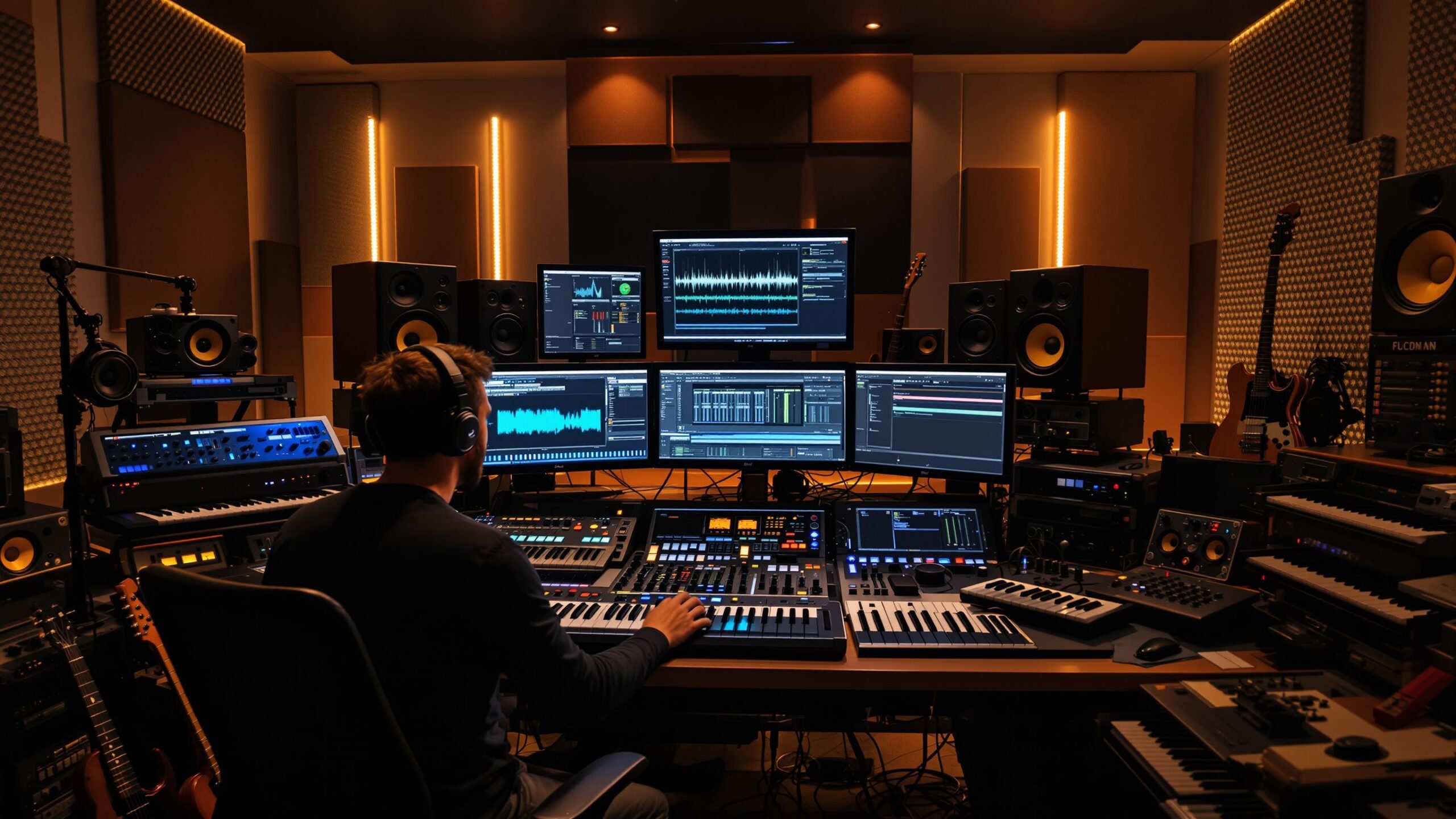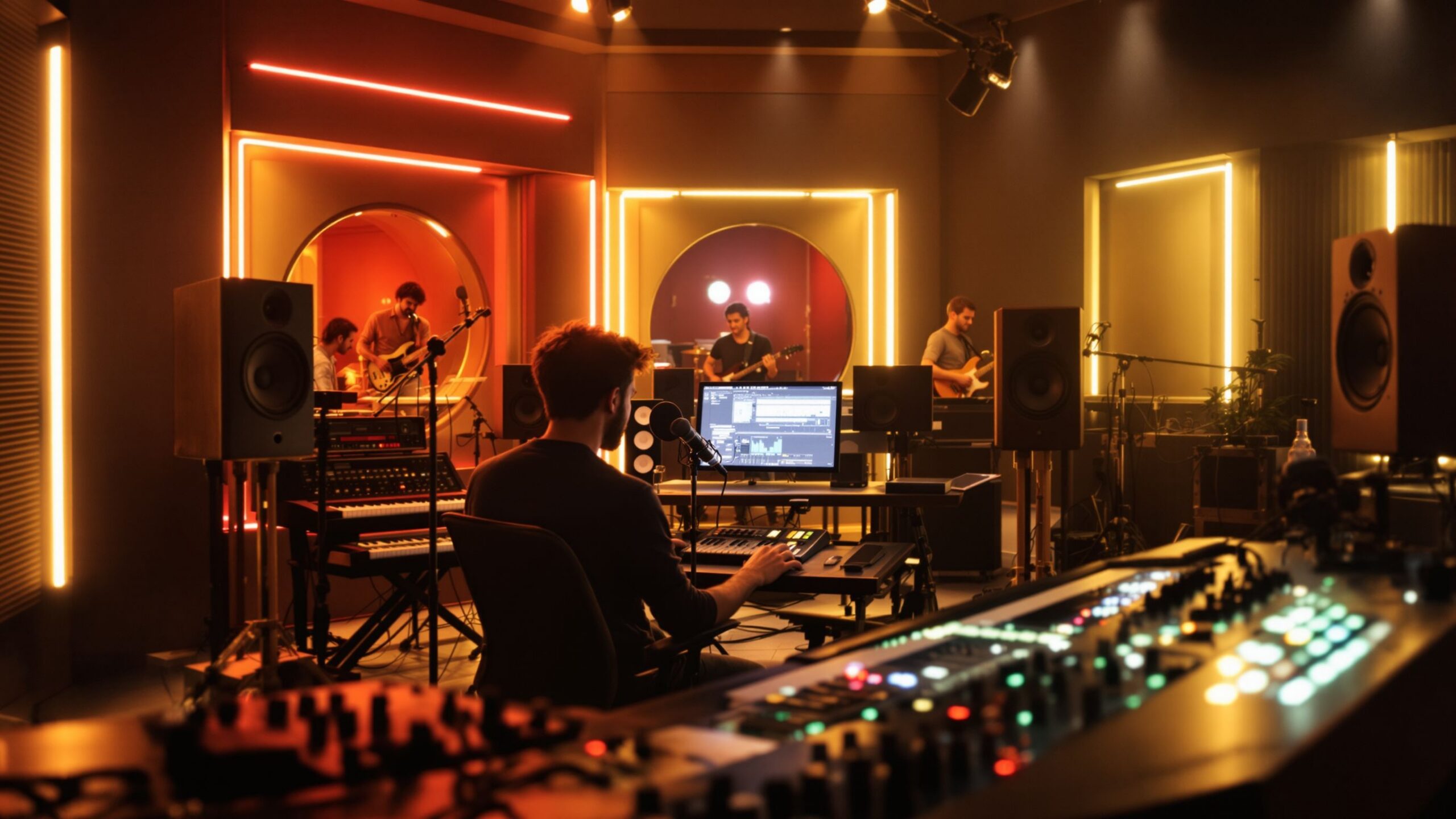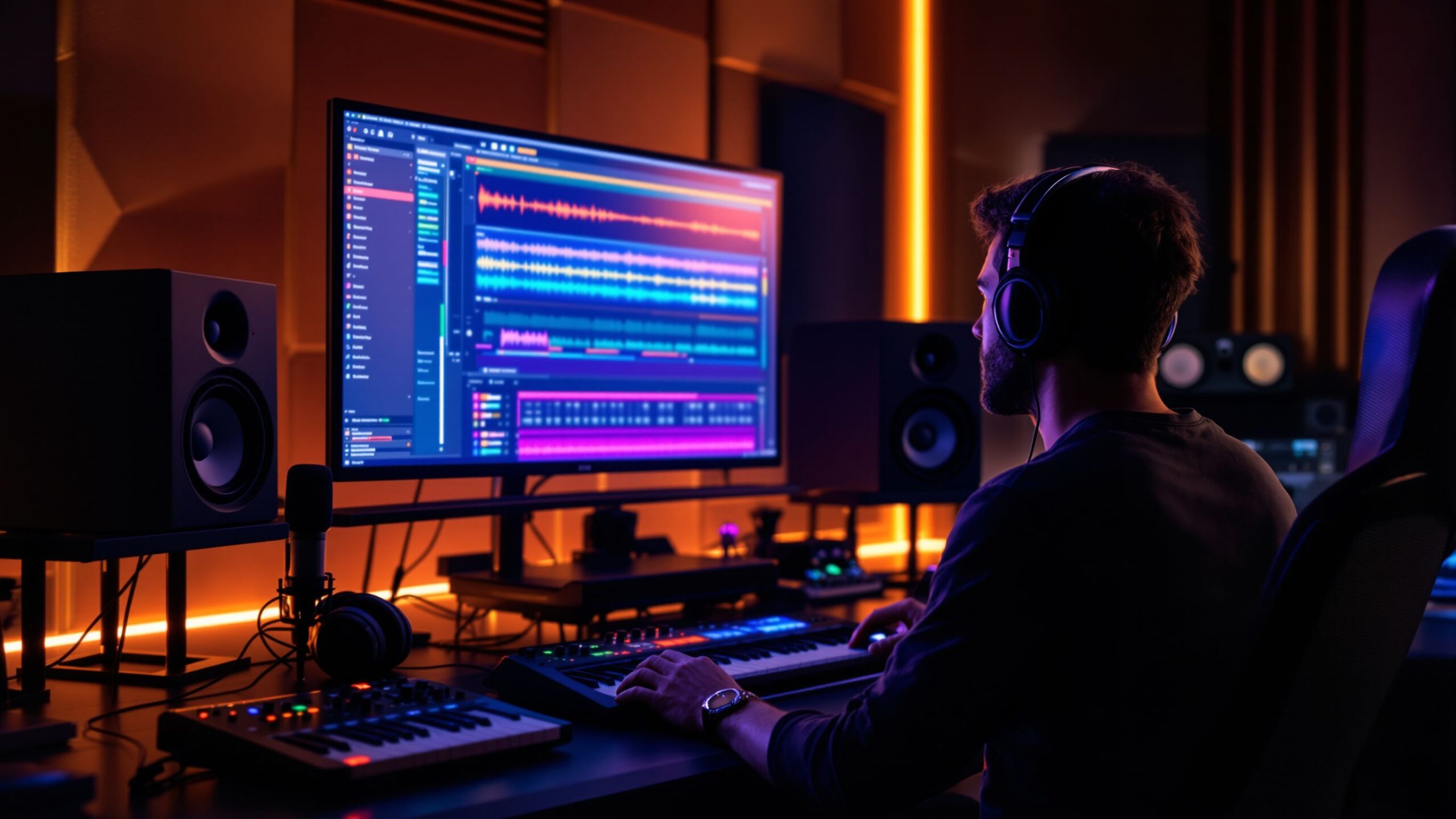
Music production is the creative and technical process of turning musical ideas into finished recordings that people can listen to, share, and experience. It is where imagination meets technology, blending songwriting, sound design, recording, and editing into a cohesive final product. For beginners, music production may seem like a complex world filled with unfamiliar tools and terminology, but at its core, it is about shaping sound and bringing ideas to life. Whether you are creating a simple beat, recording vocals, or producing a full song, music production gives you complete control over how your music sounds. It allows you to experiment, refine, and transform raw ideas into something polished and expressive. With modern tools and accessible software, anyone can begin learning music production from home and start building their own unique sound.
A: Music production is the creative and technical process of building a song from idea to finished recording.
A: No. A computer, DAW, headphones, and simple tools are enough to start learning.
A: A producer helps shape the song’s sound, arrangement, performances, mood, and final direction.
A: A DAW is digital audio workstation software used to create, record, edit, mix, and export music.
A: No. Production builds the song, while mixing balances and polishes the recorded parts.
A: Basic theory helps, but beginners can start by learning chords, rhythm, melody, and song structure.
A: Yes. Many producers use MIDI, loops, samples, drum programming, and virtual instruments.
A: Learn your DAW, basic recording, simple arrangement, volume balance, and how to finish short songs.
A: They may need stronger arrangement, better sound selection, fuller layers, or improved rhythm and bass support.
A: Finish songs regularly, study reference tracks, practice small techniques, and keep improving your ear.
Understanding Music Production
Music production is more than just recording sound. It involves guiding a song from its earliest concept to its final release. A music producer often plays multiple roles, acting as a creative director, sound engineer, and collaborator all at once. They help shape the arrangement, choose sounds, refine performances, and ensure that the final track communicates the intended emotion and energy.
In today’s world, many producers work independently, using digital tools to create entire songs on their own. This has made music production more accessible than ever, allowing beginners to explore their creativity without needing a full studio or team.
The Key Stages of Music Production
The process of music production typically follows several stages, each contributing to the final result. While the workflow can vary depending on the project, most productions include songwriting, recording, editing, mixing, and mastering.
Songwriting is the foundation, where melodies, lyrics, and chord progressions are developed. This stage defines the identity of the song and sets the direction for everything that follows. Recording comes next, capturing performances using microphones or digital instruments.
Editing involves refining those recordings by correcting timing, adjusting pitch, and selecting the best takes. Mixing brings all the elements together, balancing levels and applying effects to create a cohesive sound. Finally, mastering prepares the track for distribution, ensuring it sounds polished across different playback systems.
Each stage builds upon the previous one, gradually transforming an idea into a finished piece of music.
The Role of Technology in Music Production
Technology is at the heart of modern music production. Digital audio workstations, often referred to as DAWs, provide a central platform where all aspects of production take place. These software programs allow users to record audio, create beats, edit tracks, and apply effects in a single environment.
Virtual instruments and plugins expand the possibilities even further, offering a wide range of sounds that can be used to create anything from orchestral compositions to electronic music. With these tools, producers can experiment freely, layering sounds and shaping them to fit their vision.
The accessibility of technology means that beginners can start producing music with just a computer and a basic setup. As skills develop, more advanced tools and techniques can be explored.
Essential Equipment for Beginners
Starting music production does not require a large investment, but having the right equipment can make the process smoother and more enjoyable. A computer is the foundation, providing the power needed to run recording software and manage audio files.
A digital audio workstation is essential, serving as the main tool for creating and editing music. Headphones or studio monitors allow you to hear your work clearly and make accurate adjustments. A MIDI keyboard can be useful for creating melodies and controlling virtual instruments, while a microphone is necessary for recording vocals or live instruments.
An audio interface can improve sound quality by providing better conversion and control over recording levels. While beginners can start with minimal gear, adding these components over time can enhance the production experience.
Understanding Sound and Arrangement
A key aspect of music production is understanding how different sounds work together. Arrangement involves organizing musical elements in a way that keeps the listener engaged and supports the overall structure of the song.
This includes deciding when instruments enter and exit, how sections transition, and how energy builds throughout the track. A well-arranged song feels dynamic and balanced, with each element contributing to the overall experience.
Learning to listen critically and analyze music can help beginners develop a sense of arrangement and improve their productions.
Mixing: Shaping the Sound
Mixing is where the individual elements of a song are blended into a cohesive whole. This stage involves adjusting levels, panning sounds across the stereo field, and applying effects to enhance clarity and depth.
Equalization is used to shape the tonal balance, ensuring that each instrument occupies its own space in the frequency spectrum. Compression helps control dynamics, making the track sound more consistent and polished. Reverb and delay add a sense of space, creating a more immersive listening experience.
A good mix allows every element to be heard clearly while maintaining a sense of unity. For beginners, focusing on balance and clarity is the most important goal.
Mastering: Preparing for Release
Mastering is the final step in music production, where the track is polished and prepared for distribution. This stage involves subtle adjustments to the overall sound, ensuring consistency and compatibility across different playback systems.
Mastering engineers focus on enhancing clarity, adjusting volume levels, and ensuring that the track meets industry standards. While beginners may not need advanced mastering techniques right away, understanding its purpose helps complete the production process.
Developing Your Skills as a Producer
Music production is a skill that improves with practice and experience. Beginners should focus on learning the fundamentals and experimenting with different techniques. Creating simple projects and gradually increasing complexity helps build confidence and understanding.
Listening to a wide range of music can also provide inspiration and insight into different production styles. Paying attention to how songs are structured and mixed can help you develop your own approach.
Consistency is key. Regular practice and a willingness to learn from mistakes are essential for growth.
Common Challenges and How to Overcome Them
Many beginners face challenges when starting out in music production. One common issue is feeling overwhelmed by the number of tools and options available. Focusing on a few essential features and gradually expanding your knowledge can make the learning process more manageable.
Another challenge is achieving a professional sound. This often comes down to practice, critical listening, and understanding how to use tools effectively. Comparing your work to reference tracks can help identify areas for improvement.
Creative blocks are also a natural part of the process. Taking breaks, trying new approaches, and collaborating with others can help overcome these obstacles and keep your creativity flowing.
The Creative Freedom of Music Production
One of the most exciting aspects of music production is the freedom it offers. There are no strict rules, and every producer develops their own style and workflow. This freedom encourages experimentation and innovation, allowing you to explore new sounds and ideas.
Music production is not just about technical skills but about expressing emotions and telling stories through sound. Whether you are creating music for yourself or sharing it with others, the process is an opportunity to connect and communicate in a unique way.
Begin Your Music Production Journey
Music production is an accessible and rewarding craft that combines creativity with technology. By understanding the basics and practicing essential techniques, beginners can start creating music that reflects their ideas and emotions.
The journey may seem complex at first, but with patience and dedication, it becomes an enjoyable and fulfilling process. Every project is a step forward, bringing you closer to developing your skills and finding your voice as a producer.