Country’s Current Story Has Several Centers
A recent country recording can offer a familiar instrumental setting, a sharply situated narrator, a quiet moment of reflection, or a dance invitation that reaches far beyond the genre’s usual commercial center. The 2020s have provided prominent examples of all four. This guide chooses six 2022–2024 recordings, assessed on October 19, 2026, that make those possibilities clear. It combines widely visible releases with musical judgments rather than claiming a complete chart ranking or a final verdict on an unfinished decade. Some performers entered these years as established stars; others expanded their audience through a particularly recognizable song. A cover can also introduce earlier writing to a new generation without changing the composition’s original history. Listen to the selected versions in full, keep those contexts distinct, and use their differences as routes into a wider contemporary country landscape. Even listeners who rarely follow country radio may recognize these songs, but recognition can hide the differences between their speakers and settings. Comparing a reflective album track with a widely shared refrain makes those choices easier to hear. The aim is to discover how each performance works, not to require every artist to present the same idea of modern country.
A: No. His 2023 recording interprets Tracy Chapman's earlier writing.
A: No. Increased recognition can follow many years of work.
A: It is a dated listening selection with explicitly musical judgments.
A: Their coexistence reveals the decade's range of expressive settings.
A: No. History, musical relationships and institutional framing also matter.
A: No. Those recordings belong to a much longer history.
A: It can replace attention to phrasing, tone and musical roles.
A: A persuasive interpretation of the story and its musical setting.
A: The decade remains unfinished and later discoveries will change its account.
A: Explore complete projects, collaborators and less familiar scenes beyond the headline single.
A Dated Selection Needs Clear Criteria
This guide selects six contrasting recordings released in 2022–2024 and assesses them on October 19, 2026. Best names an editorial judgment; biggest requires a specified chart and period. The selection therefore treats hits and rising performers as routes into contemporary country, without claiming that six songs represent every release through 2026. The original releases, actual stories and instrumental choices are the evidence below. Covers are identified as interpretations of earlier writing rather than credited to the newer singer as compositions.
The selection also has boundaries. It emphasizes several English-language recordings from the decade’s first half and does not claim to list every significant release through October 2026. That leaves room for new work and overlooked scenes to change the conversation. A useful survey makes its perspective visible instead of allowing a short familiar list to stand in for an entire genre.
Lainey Wilson: Heart Like a Truck
Wilson’s 2022 ‘Heart Like a Truck’ compares a damaged but still moving heart with a vehicle marked by hard use. The metaphor makes renewed attachment a risk taken after experience, rather than an untouched optimism. Her grainy lower phrases establish wear before the chorus opens into a stronger release. The official recording is the reference for the performance. Hear how the bigger vocal arrival makes resilience something the singer does in time, not merely a message attached to a familiar object.
Vocal Identity Is More Than an Image
A performer can become widely recognizable through clothing, visual presentation, or a recurring public story, while the recording’s actual character lies elsewhere. Tone, accent, breathing, and phrase endings give a voice its musical presence. Those details can make a familiar kind of lyric feel individually inhabited. A listener should hear them before assuming an artist’s image fully explains the record.
In contemporary country, polished arrangements can leave such characteristics intact. A bright production does not necessarily make every singer interchangeable, just as a lean production does not guarantee individuality. The relationship between vocal perspective and musical setting is the better test. Ask whether the supporting parts help the speaker’s particular stance remain audible across the complete performance.
This distinction also helps when exploring a rising performer beyond the breakout single. Another recording may reveal less familiar dynamics, a different narrator, or a subtler form of delivery.
Recognition should encourage that exploration rather than making every release answer the same public expectation. An artist’s range often becomes clearer only after the audience follows the first doorway inward.
Luke Combs: Fast Car
Combs’s 2023 recording of ‘Fast Car’ brings Tracy Chapman’s earlier composition into another prominent performance setting. It is a new recording within the 2020s, not a composition first written in the decade. That distinction is essential to a useful survey. A cover’s success should not erase the original songwriter or make the new audience the beginning of the work’s history.
Combs preserves Chapman’s narrative of escape from poverty and family responsibility, including the hope that a shared car can carry the couple toward a different life. The recurring guitar pattern helps hold that hope together as later circumstances make it less secure. Combs’ heavier vocal grain changes the surface of the account while the narrator’s situation remains recognizable. The Recording Academy’s account of his 2024 performance with Chapman supplies the later shared-performance context. The critical comparison concerns how each voice inhabits the story, while authorship continues to belong to Chapman.
Megan Moroney: Tennessee Orange
Megan Moroney’s 2022 ‘Tennessee Orange’ gives a love song a specific social obstacle: a Georgia-supporting narrator is wearing the rival Tennessee Volunteers’ orange for a man. She explains that change to her mother, making a familiar football affiliation into evidence of emotional surrender. The label’s video account identifies Moroney as a Georgia graduate and explains the rival colors. The premise matters because the narrator can confess attachment indirectly through a small, visible betrayal of habit.
Listen to how the vocal handles the difference between describing events and revealing what those events mean to the speaker. A small detail can carry the turning point more effectively than a broad declaration. The arrangement needs enough clarity for the listener to follow that connection. The resulting accessibility is an achievement of proportion rather than evidence that the song contains nothing to examine closely.
The Recording Academy’s interview with Moroney places the song within the growth of her career. Breakthrough visibility did not mean the performer arrived without earlier preparation. Hear the recording as a particularly effective presentation of her perspective, then follow the surrounding work to learn what one single leaves outside its frame.
Kacey Musgraves: Deeper Well
Musgraves’ 2024 ‘Deeper Well’ describes leaving habits and relationships that no longer sustain the narrator, with a turning point around age twenty-seven. Its acoustic picking and lightly floating vocal make change feel considered rather than announced through a huge climax. The image of finding another source of nourishment gives the song its direction. Hear how the restraint lets each decision sound chosen; the performance does not need to turn every farewell into a confrontation. It supplies a quieter contemporary-country route whose actual subject is reassessing what belongs in a life, rather than calm treated as a mood without a situation.
Beyoncé: Texas Hold ‘Em
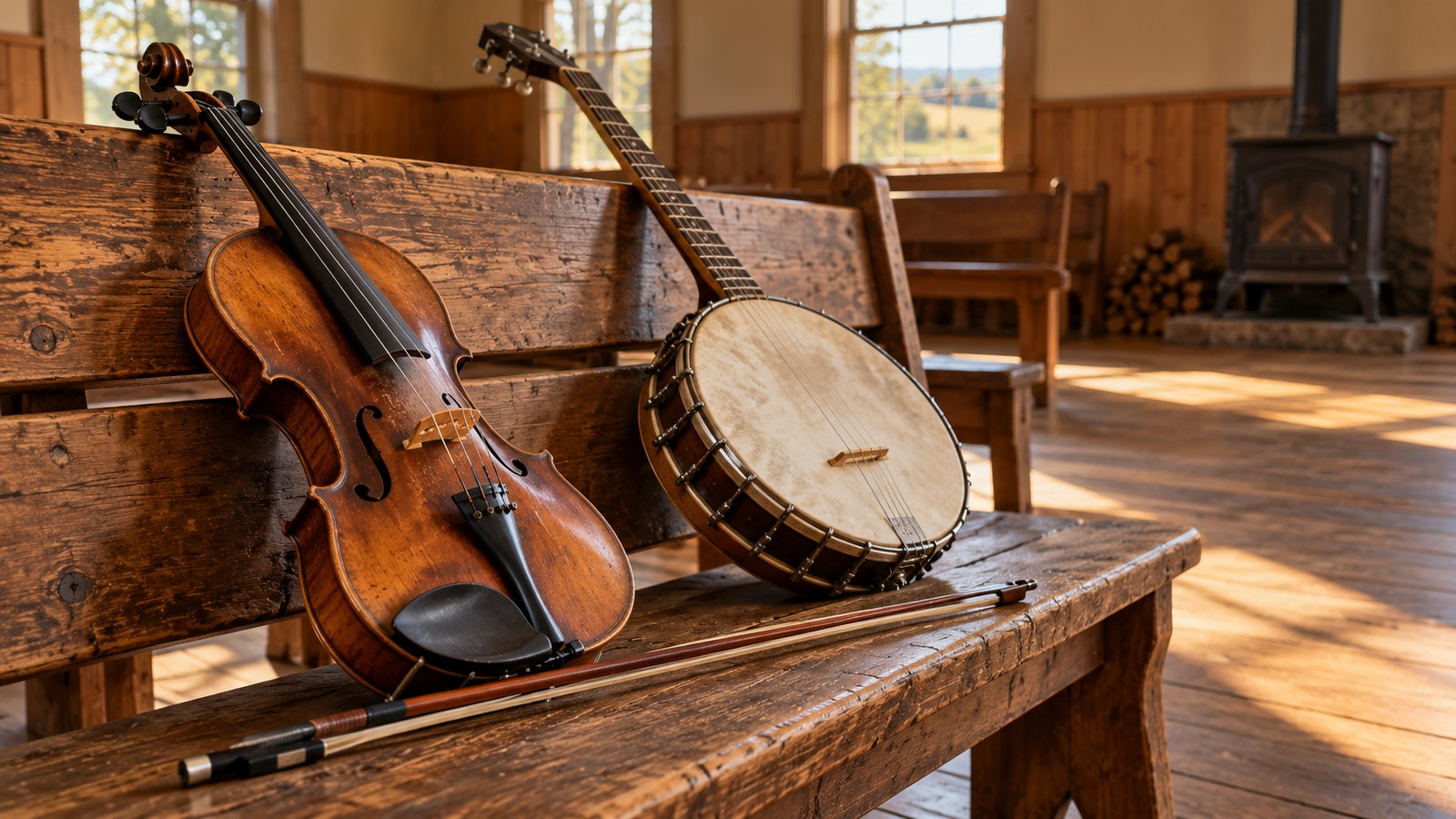
Beyoncé’s 2024 ‘Texas Hold ‘Em’ puts a dry, ringing banjo at the front of its dance invitation. Rhiannon Giddens plays banjo and viola, as the official recording credits specify. Naming her contribution turns a general claim about country color into an audible instrumental choice. The plucked attack gives the repeated pulse definition before the larger vocal invitation takes over. The record’s social energy comes from how those parts make participation feel immediate.
The 2024 Cowboy Carter context also directs attention to histories of country participation and recognition. Black musicians are part of the genre’s history, not newly introduced by one successful release. The Recording Academy’s historical discussion offers context for that wider conversation. A prominent contemporary recording can renew public attention to a history without becoming the history’s starting point.
Shaboozey: A Bar Song (Tipsy)
Shaboozey’s 2024 ‘A Bar Song (Tipsy)’ interpolates J-Kwon’s 2004 rap hit ‘Tipsy,’ relocating its familiar party language within a country-facing singalong. The Recording Academy’s songwriting explanation identifies the interpolation. That is a specific connection between compositions, not merely a vague mixture of influences. Shaboozey’s narrator works, faces bills and seeks temporary release in a room where a private complaint can become a shared refrain.
The song’s 2024 visibility is documented in the Recording Academy’s 2025 nominees account. The later nomination belongs to its extended public life rather than establishing a new release date. Its place in this collection is also musical: the track offers another way to connect country-associated sound, familiar popular material, and a performance shaped for collective use.
Do not treat crossover as proof that the genre has suddenly become a single blended style. Different recordings use different resources, and a quiet song from the same period may organize attention through very different means. The notable feature is coexistence. Contemporary country can contain several centers of musical and commercial activity without every performer needing to follow the same route.
Rising Stars Have Histories Before the Headline
These songs also reveal different routes to broader recognition. Moroney’s ‘Tennessee Orange’ led into the 2023 album Lucky, where its conversational voice sits beside other stories. Wilson’s ‘Heart Like a Truck’ belongs to 2022’s Bell Bottom Country, so a first encounter can move immediately to an album rather than stopping at a visual brand. Shaboozey’s Where I’ve Been, Isn’t Where I’m Going gives the 2024 bar anthem a wider setting. Those are concrete next listens: they let a reader test whether the single’s voice, rhythmic choices and storytelling remain persuasive over a longer sequence.
Country’s Boundaries Are Musical and Institutional
Genre categories operate through sound, audience expectation, history, and systems that distribute music. A banjo or steel-guitar color can signal a connection, but no isolated instrument settles every classification. Radio formats, playlists, award categories, and marketing choices may frame the same recording differently. These institutions affect what becomes visible to a particular audience.
A listener can examine those frames without letting them replace the performance. Ask what musical practices the recording uses and which histories its public presentation brings forward or leaves out. That approach is more specific than deciding legitimacy through a performer’s appearance or the presence of one familiar timbre. Contemporary disagreements become clearer when different kinds of evidence remain distinct.
Hear Beyond the Most Circulated Refrain
A memorable chorus can introduce a recording while hiding the decisions that make its return meaningful. Hear the full opening, follow the verse’s speaker, and notice whether a later section alters the perspective. A circulated excerpt may represent the most useful fragment for a particular setting rather than the complete emotional shape. The difference matters when comparing a reflective song with a communal singalong.
A cover especially benefits from this attention because the listener may already carry another performance in memory. Let the new version establish its own scale, then compare what has changed. Tone, phrasing, and arrangement can supply a meaningful interpretation without requiring the composition to become unrecognizable. Credit the earlier work while hearing the new performance’s particular choices.
Complete listening also makes the survey less dependent on immediate publicity. The music remains available after a chart moment or a debate has moved elsewhere. Returning with a different focus can reveal whether the recording offers more than the gesture initially responsible for recognition. That is one way present favorites begin to acquire a more sustained place in a listener’s life.
Keep the Decade’s Next Chapter Open
These selections show several approaches to contemporary country: distinctive vocal grain, narrative interpretation, culturally specific storytelling, reflective space, and broad participation. They are routes through the decade so far rather than a complete account of everything released. Future music and deeper attention to overlooked work will continue changing the conversation.
Explore complete projects, songwriting credits, alternate performances, and scenes beyond the most familiar commercial center. Keep release dates separate from recognition, and let musical judgments rest on what you actually hear. A useful 2020s guide should make the variety easier to enter without declaring the unfinished story settled. The strongest discoveries may come when a recognizable single encourages you to listen somewhere new.