Great Songs Give Someone a Place to Stand
Country classics often make a situation recognizable before a listener has time to analyze the craft behind it. A speaker remembers home, asks for mercy, faces a loss, or describes an ordinary source of happiness. The details can be direct while the emotional experience remains complicated. A melody gives the words a route through time, and a particular voice makes that route feel inhabited. This guide chooses essential recordings for those different achievements rather than claiming one numerical ranking can settle every listener’s favorites. It includes intimate singing, sharp narrative perspective, public warmth, and carefully shaped heartbreak. The collection is a beginning, with boundaries that should encourage exploration of other eras, communities, and regional sounds. Hear the performance behind the familiar title, and notice how a singer turns a shared musical language into a specific human presence.
A: No. Warmth, humor, gratitude and celebration can be equally persuasive.
A: No. Many singers interpret crafted narrators and imagined situations.
A: Pacing, arrangement and phrasing can change the same composition's perspective.
A: Not necessarily. Its choices can make a particular voice more clearly expressive.
A: It keeps another person present while the speaker sustains a plea.
A: The preparation gives the final change its musical and emotional meaning.
A: Yes. Specific detail and proportion can leave a wider world suggested.
A: No. Their expressive roles matter more than mere presence.
A: Its familiar center leaves many contributors, regions and approaches unexplored.
A: Follow the speaker's situation and the sounds supporting its development.
Choose the Recording, Then Explain the Judgment
A country composition can circulate through many voices, so the version matters. Another singer may alter its pace, move the emotional emphasis, or give a familiar phrase a different weight. The most widely recognized recording is not automatically the only valid interpretation. Listening to a particular performance lets a recommendation identify what the artist actually contributes.
The choices here emphasize enduring writing and persuasive delivery, while leaving room for several kinds of pleasure. A warm, inviting record can be as carefully made as a severe account of grief. Popularity provides historical context but does not explain the music on its own. A useful greatest-song discussion points to audible relationships rather than asking an established reputation to do all the work.
Hank Williams: I’m So Lonesome I Could Cry
Hank Williams’ 1949 ‘I’m So Lonesome I Could Cry’ gives loneliness a setting through concrete images and a vocal that does not need to shout its significance. The melody holds the listener’s attention while the words make an emotional state feel visible. Hear the shape of the phrases, especially how the singer allows their endings to linger. The effect comes from specificity joined to restraint.
Williams gives the lament external sounds: a whippoorwill is too miserable to sing, a midnight train seems to whine, and a falling star marks another lonely passage of time. These are not interchangeable claims that the singer feels sad. Each turns something outside the speaker into an apparent witness to the feeling. His held phrase endings let the images settle before the next arrives, so the recording’s restraint gives the scene greater force.
Its importance in a classic collection is therefore broader than representing an early period. It offers a model of musical proportion: enough detail to situate the feeling, enough melodic clarity to make it memorable, and enough space for a listener to respond. A performance can sound modest in scale while leaving a large emotional impression.
Patsy Cline: Crazy
Patsy Cline’s 1961 recording of Willie Nelson’s ‘Crazy’ lets the singer circle an attachment she already suspects is hopeless. The opening piano gestures prepare a measured performance in which she can delay a word, stretch a vowel and then let a phrase fall away. The control matters because the narrator’s judgment is unstable: she calls herself foolish while still returning to the feeling. Cline makes that contradiction graceful rather than merely sad. Hear how the line’s pauses leave room for the accompaniment to answer; the record does not need a hurried explanation to make the speaker’s self-doubt clear. A slow pace becomes active through small changes of emphasis.
Dolly Parton: Jolene
Parton’s 1973 ‘Jolene’ begins with a repeating picked-guitar figure and a plea to a rival who never answers within the recording. The narrator praises the other woman’s beauty while asking her not to take the man simply because she can. That imbalance gives the address its urgency: admiration and fear occupy the same sentence. The repeated name keeps redirecting the song toward this silent imagined listener, while the guitar’s circular movement makes the appeal feel difficult to escape. The record’s persistence is a dramatic action, not just a catchy title repeated for recognition.
Parton’s vocal makes vulnerability sound focused rather than indistinct. Hear how the repeated name changes in relation to the surrounding phrases, and how the arrangement gives the voice a clear setting. Her official Jolene album page provides release context for the project. The song’s many later interpretations offer useful comparisons, but the familiar performance remains a particular choice of pacing, articulation, and perspective.
Loretta Lynn: Coal Miner’s Daughter
Lynn’s 1970 ‘Coal Miner’s Daughter’ names the work beneath a remembered childhood: a father in the mines, a mother washing clothes and a family making do in Butcher Holler. The details establish affection without pretending the household possessed material comfort. Her voice makes the account sound owned, while the brisk musical setting keeps hardship from being presented only as a slow lament. The museum’s career account identifies the self-written song. The achievement is a particular family history made singable without removing the labor that gave it shape.
Charley Pride: Kiss an Angel Good Mornin’
Charley Pride’s 1971 recording of Ben Peters’ ‘Kiss an Angel Good Mornin” presents happiness as a small repeated practice of affection. The narrator answers curiosity about his good mood with a domestic habit rather than a grand rescue story. Pride’s warm, even delivery gives that advice a convincing everyday scale. The melodic ease makes the refrain welcoming, while the singer’s articulation prevents it from becoming an anonymous slogan. Its place beside this collection’s losses matters because ordinary contentment is also a situation a skilled performer must make believable.
The performance’s ease is worth hearing as an achievement rather than assuming upbeat material is less demanding. Phrasing needs to remain natural while carrying a melody across a full arrangement. The singer’s character keeps the warmth specific. Without that presence, a simple affirmative message could become merely generic reassurance.
Pride’s career also belongs in the main account of country history rather than a side note about exceptions. The Country Music Hall of Fame and Museum’s profile documents his major standing and enduring hits. Historical recognition can establish context, while listening explains the particular pleasure of the recording. Both matter, and neither should be allowed to replace the other.
Willie Nelson: Blue Eyes Crying in the Rain
Nelson’s 1975 Red Headed Stranger recording of Fred Rose’s ‘Blue Eyes Crying in the Rain’ remembers a parting that time has not repaired. The narrator’s recollection of a goodbye looks toward reunion beyond this life, so the apparent simplicity carries both distance and enduring attachment. Nelson leaves room around the melody and the guitar responses instead of continuously announcing the emotion. The lean setting makes a delayed entrance or held word consequential. The record’s intimacy lies in how patiently it lets a remembered image occupy the space.
This is an especially useful selection for hearing interpretation as a creative act. A performer can make an existing composition feel newly situated through sound and pace, even when the song remains clearly recognizable. Listen to how a phrase is placed and how the accompaniment behaves afterward. The result is a particular encounter, not simply a neutral presentation of a tune.
George Jones: He Stopped Loving Her Today
Jones’ 1980 recording of Bobby Braddock and Curly Putman’s ‘He Stopped Loving Her Today’ delays the reason a man’s lifelong attachment has finally ended: he has died. The funeral scene changes the title from a promise of emotional recovery into something far more final. Jones’ measured account prepares that revelation through preserved memories and the sense of a life organized around absence. The arrangement grows around the narration without disclosing the whole situation at once. Its power depends on pacing: the listener first understands persistence, then has to reinterpret the claim that it has stopped. A famous plot turn works because the recording has made the waiting feel inhabited.
The Speaker Is Not Always the Singer’s Biography
Country’s reputation for direct storytelling can lead listeners to assume every first-person line documents an artist’s own experience. Some recordings are autobiographical, others are interpretations, and many draw on a crafted narrator. Those differences do not decide whether the performance is emotionally persuasive. A singer can inhabit an imagined situation convincingly, just as a personally grounded song can require substantial artistic shaping.
The useful listening question is whether the perspective remains clear. Who is speaking, to whom, and what do they know at this point in the song? A lyric can change the answers gradually. The arrangement and vocal delivery then help the listener follow that development. Hearing the narrator as a musical role makes interpretation easier to appreciate without confusing artistic expression with a factual statement about every part of the performer’s life.
This also keeps critical attention on the recording. Public gossip can dominate a song’s reception while contributing little to an explanation of melody or phrasing. Biography can provide context when reliably established, but it is not a substitute for the work. A familiar performance often offers more detail than the simplest story told about its creator.
Instruments Help Place the Voice
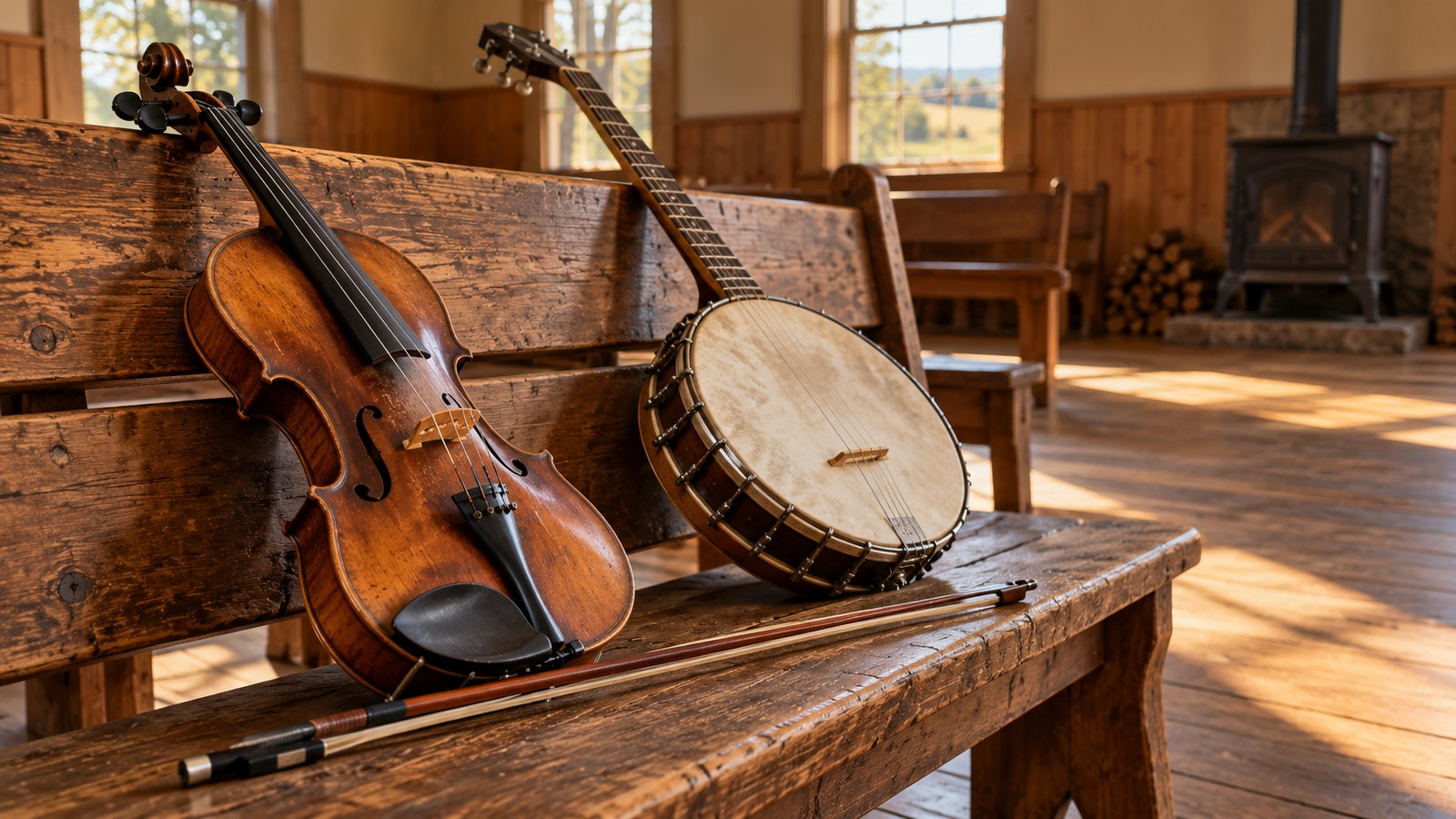
A fiddle line, a steel-guitar response, a piano gesture, or a quiet acoustic pattern can help establish the singer’s emotional surroundings. Their roles vary across recordings. An instrument may supply motion, underline a phrase, or leave room for words that need unusual clarity. No single timbre alone guarantees that the song will feel persuasive or determine everything about its genre identity.
Listen to the interaction instead of treating instrumental color as a checklist of authenticity. A polished string texture can support a personal perspective, while a lean band can fail to give a lyric enough space. The recording works when the choices fit its speaker and movement. A recognizable country vocabulary offers resources, and the musicians give those resources a particular purpose.
Short Forms Can Hold Large Emotional Worlds
Many country classics achieve their effect within a compact recording, using proportion rather than extended duration. A detail introduced early can acquire significance on its return, and a restrained arrangement can make one later change feel substantial. Brevity creates pressure to choose what the listener actually needs. That economy is not the same as reducing the situation to something easy or shallow. A short song can imply a larger history through the specificity of its voice, the musical treatment of its recurring material, and the emotional space left around a final phrase. Hear those relationships before assuming that an elaborate form must offer a more complete experience.
The Canon Should Include More Than One Identity
This collection emphasizes well-known American recordings and a particular part of country’s historical center. It leaves many regional styles, international adaptations, contemporary developments, and overlooked contributors unexplored. Those limits should remain visible. A classic selection can be useful without presenting itself as the complete identity of everyone who has made or heard the music.
Follow discoveries toward different sounds and perspectives, including performers who challenge a narrow image of the genre’s audience or creators. Country history contains negotiation over who receives exposure and whose traditions become legible within commercial categories. The listening experience becomes richer when the canon stays available for revision. Familiar achievements remain valuable while another recording reveals a quality the established selection does not emphasize.
Keep the Situation and the Sound Together
To revisit a classic, choose the precise point where its speaker becomes recognizable to you. It may be an image, a phrase ending, a repeated name, or a narrative detail that changes what came before. Then hear how the music prepares and supports that moment. The lyric and performance are most informative when considered in relation. The greatest country songs endure because particular voices make shared situations feel inhabited. Longing, gratitude, fear, memory, and happiness become more than broad labels through melody and delivery. A useful essential collection opens several of those experiences and gives you reasons to keep exploring. Return to the complete recordings, and the familiar titles can reveal decisions that reputation alone has never fully explained.