A Rural Name With a Moving History
Country music’s name can suggest a fixed place, yet its history is full of movement: musicians traveling, recordings circulating, broadcasts connecting distant homes, and listeners carrying sounds into new towns and situations. A fiddle tune, a carefully polished ballad, and a modern crossover single may all belong to the conversation without sounding identical. Understanding the genre therefore requires more than finding an acoustic guitar or a rural image. Musical traditions, individual voices, performance settings, and commercial institutions have all helped shape what people recognize as country. This guide introduces those relationships and the stylistic variety they made possible. It treats storytelling and instrumental color as useful listening resources while keeping the people behind them visible. A clearer definition should help you hear differences within the music, rather than asking every recording to confirm one expected costume, mood, or background.
A: No. The genre has long traveled through cities and international settings.
A: No. Instrumental resources vary across approaches and periods.
A: No. They are part of its foundational and continuing development.
A: It created shared listening spaces and new performance opportunities.
A: It is connected to the country world but has its own identity.
A: Some establish a situation or perspective without an extended story.
A: Yes. Arrangement can clarify a singer's individual phrasing.
A: They explain rhythmic and instrumental priorities beyond private storytelling.
A: No. Exchanges with other traditions have a much longer history.
A: Hear the voice's perspective and how one supporting part responds.
Country Is a Tradition and a Public Category
The genre connects musical practices with a history of recording, performance, and audience identification. Those connections help explain why two country recordings can have different arrangements while still sharing recognizable expectations about voice, phrasing, or narrative. A definition based only on rural origin would exclude musicians and listeners whose lives have long been urban or internationally connected. Place matters, but it does not decide the whole category.
The public label also changes as businesses and audiences organize music. Recording companies, broadcasters, venues, and listeners have emphasized different sounds at different times. That history means the genre is not a sealed collection of timeless ingredients. It remains a conversation in which inherited practices and new circumstances can change what seems central, familiar, or controversial.
Shared Musical Resources Came Before the Label
The 1927 Bristol Sessions provide a concrete recording landmark rather than the invention of music that already existed. Ralph Peer recorded acts including the Carter Family and Jimmie Rodgers, whose different approaches became central to country’s commercial history. The Carter Family’s ‘Bury Me Under the Weeping Willow’ makes close vocal relationships and string accompaniment prominent; Rodgers’ ‘Blue Yodel,’ recorded later in 1927, combines blues-shaped verses with his distinctive yodel. The Birthplace of Country Music Museum documents Bristol’s role. The contrast is useful: country’s recorded public identity included multiple vocal and rhythmic priorities from its earliest major breakthroughs.
Race Is Part of the Musical and Commercial History
DeFord Bailey makes Black participation in that history specific. A harmonica virtuoso and early Grand Ole Opry star, he made train imagery musical in ‘Pan American Blues.’ The Country Music Hall of Fame’s biography documents his regular broadcasts from 1926 and the 1927 announcement associated with the Opry name. His harmonica could suggest a moving machine through breath, repeated attacks and pitch color. This was a distinctive featured performance, not an invisible contribution hidden somewhere behind the genre’s better-known white stars.
The Country Music Hall of Fame and Museum’s account of the string-band era restores specific Black contributions, including DeFord Bailey’s recording history. Specificity matters: naming a performer and the work they did is more useful than a general statement that the genre had diverse influences. It keeps historical credit connected to people.
This perspective also changes how current participation is discussed. A newly prominent Black artist does not introduce a community that was entirely absent before. Wider visibility can bring neglected histories into public conversation, but the earlier work remains important in its own setting. Understanding that continuity makes the genre’s present more legible without turning every contemporary debate into a completely new beginning.
Recording and Radio Built Shared Listening Spaces
A commercial recording allows a particular performance to travel beyond the room where it happened. Radio can introduce that sound to listeners who have never met the musicians, creating repeated encounters and expectations about familiar voices. Country’s development was deeply connected to these technologies. A style rooted in particular settings could become part of a much larger shared musical world.
The Library of Congress’s Louisiana Hayride collection documents one broadcast setting within that history. Such institutions did more than distribute finished music; they created stages, relationships, and opportunities. An account of the genre should therefore include the organizations that helped audiences hear it, while remembering that access to those organizations was not equally available to every musician.
Instruments Supply Color and Function
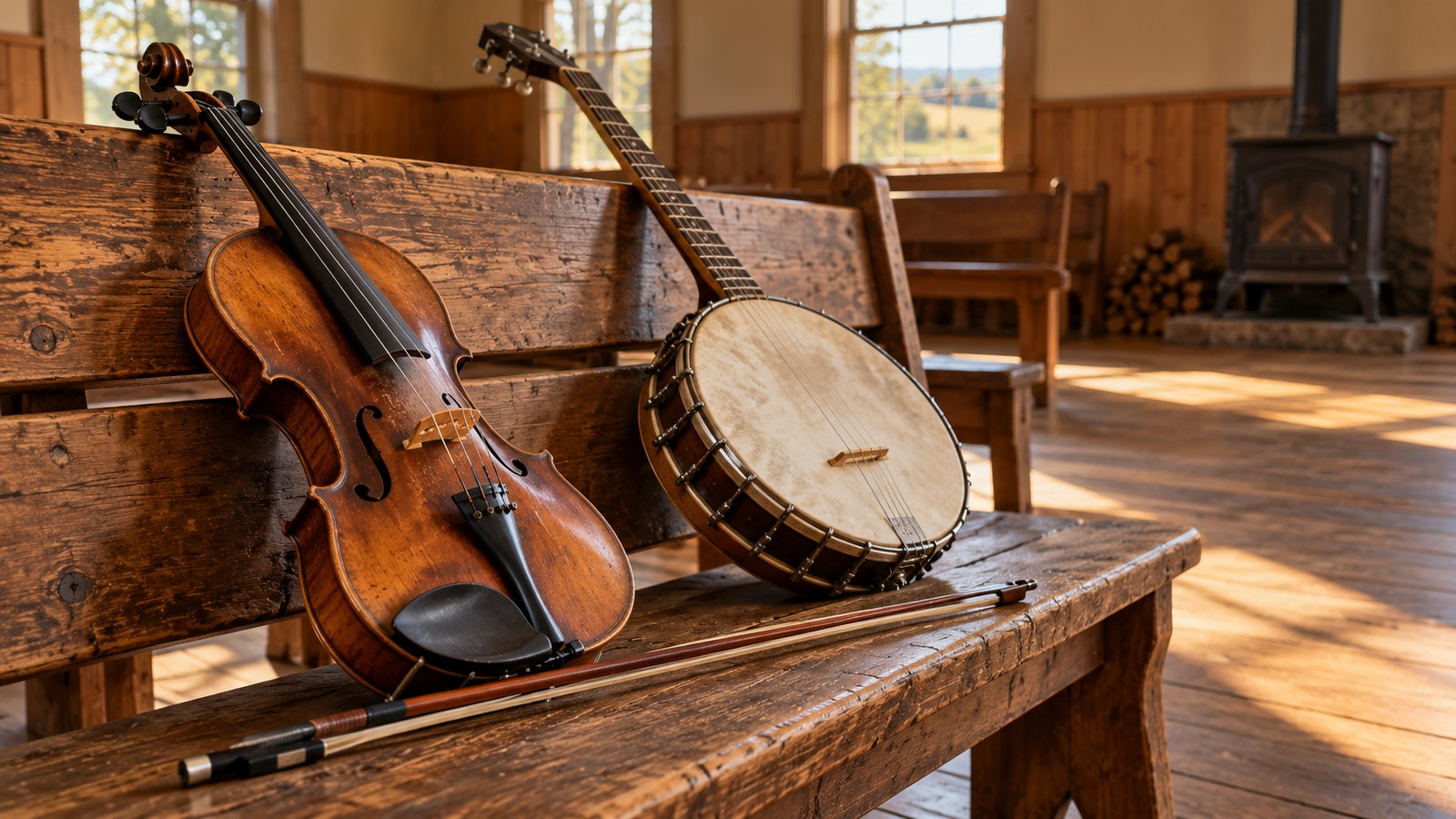
Fiddle, banjo, guitar, mandolin, bass, piano, steel guitar, and drums have all contributed to different country approaches. Their presence does not automatically produce one sound because performers assign them different roles. A fiddle can carry a melody, supply an answering phrase, or add rhythmic energy. A guitar can anchor the pulse, create harmonic support, or establish a recurring signature.
Listen to the role before treating the timbre as a symbol. A steel-guitar response may extend the feeling of a vocal pause, while a piano figure can keep a polished arrangement moving. Two recordings using similar instruments can organize them quite differently. The expressive result comes from those relationships rather than the possession of a standard instrumental inventory.
The instrument’s history also deserves attention beyond a simple genre association. Sounds and techniques can move across traditions, gaining another function in a new setting. Country musicians have repeatedly worked through those connections. A familiar instrumental color may therefore reveal exchange and adaptation as much as an attempt to preserve an unchanged past.
Storytelling Gives Perspective a Musical Form
Country songs often make a narrator’s situation readily recognizable through ordinary details, direct address, and clear development. The writing may describe a sequence of events or establish one charged moment without a long plot. A voice and melody make that perspective unfold in time. This distinguishes a sung story from its prose summary. Phrasing can complicate an apparently plain statement, and a returning line may acquire another meaning after the listener learns more. Not every song is autobiographical or narrative in the same way, but the relationship between language and an inhabited vocal perspective offers a useful route into the genre.
Dance-Hall Music Has Its Own Priorities
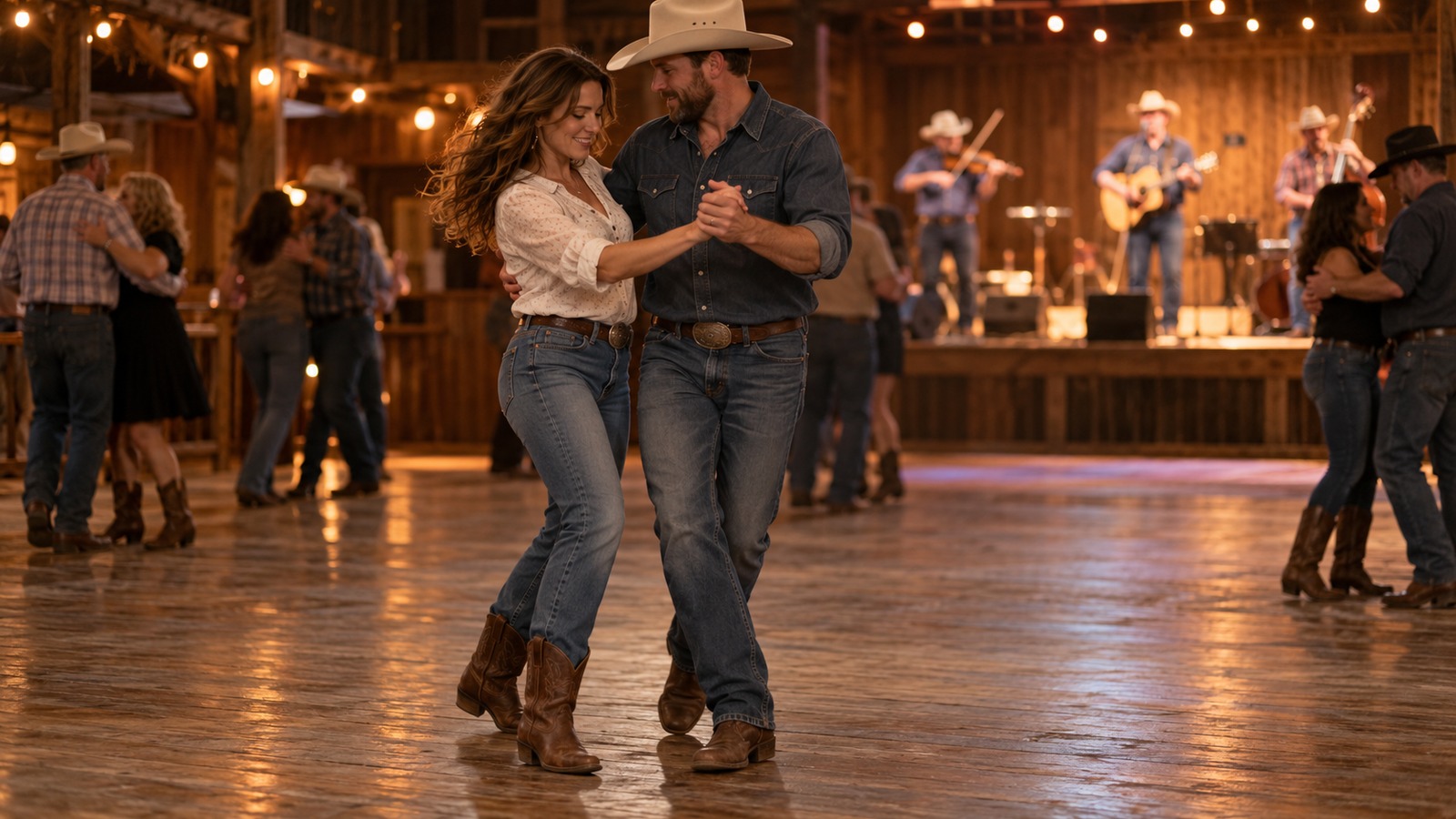
Western swing makes the dance-hall purpose particularly clear. Bob Wills and His Texas Playboys’ ‘New San Antonio Rose’ places a country-associated melody inside a band language involving swing rhythm, reeds, brass, fiddle and steel guitar. Wills’ 1930s and 1940s work reached audiences through both radio and dance engagements. The museum’s account identifies the musical blend. Country dancing therefore did not require one small acoustic setup: instrumental exchange and a larger band’s propulsion could be central.
Honky-tonk and western-swing associations point toward different historical approaches within that wider field. Their shared connections to social performance do not make them identical. Musicians organize tempo, instrumental color, and voice according to particular purposes. A beginning listener can compare the physical gait of two recordings before learning every stylistic term, using the felt differences as an entry point into history.
Bluegrass Is Connected, With Its Own Identity
Bluegrass took a particularly influential ensemble shape when Earl Scruggs joined Bill Monroe’s Blue Grass Boys in 1945. His three-finger banjo approach joined mandolin, fiddle, guitar and bass, with Lester Flatt’s singing and guitar part of the late-1940s recording group. The Bluegrass Hall of Fame’s account identifies that lineup’s importance. A recording such as ‘Blue Moon of Kentucky’ makes the high vocal delivery and driving string-band relationships concrete. Bluegrass is connected to country, but the distribution of instrumental breaks and the pressure of its ensemble pulse give it a recognizable identity.
The Library of Congress’s bluegrass history provides context for Bill Monroe and the development of the style. That history is more informative than assuming the category has always existed unchanged. Players made choices, audiences recognized them, and later musicians continued developing the approach.
Hear how an instrumental entrance fits the group’s continuing motion. The featured player gains space while the other musicians maintain an active setting. A change of foreground can be exciting without making accompaniment passive. Such listening helps the style’s precision and social character remain audible together rather than reducing it to fast picking.
Polished Country and Lean Country Can Both Be Specific
Compare Hank Williams’ 1949 ‘I’m So Lonesome I Could Cry’ with Patsy Cline’s 1961 ‘Crazy.’ Williams’ direct vocal and country-band responses keep the lament close to a honky-tonk-associated language; Cline’s measured phrasing, piano and smoother ensemble setting suggest a different studio ideal. Neither succeeds through instrumentation alone. The same broad genre could accommodate exposed ache and carefully upholstered restraint, while Owen Bradley and other Nashville producers helped make polished recordings a major commercial route.
The museum’s history of RCA Studio B offers one route into the professional recording environment. Studio resources become meaningful through the roles they support. The relevant listening test asks whether the arrangement gives the song a coherent character, rather than assuming a production’s smoothness or roughness settles its artistic value in advance.
Movement Changes the Genre’s Public Image
Musicians and audiences carried country-associated sounds into changing workplaces, towns, media, and cultural settings. The music could maintain a connection to a remembered place while being made and heard elsewhere. Its public image therefore involved both continuity and reinvention. Western imagery, regional accents, and rural narratives could become recognizable signs without describing every participant’s actual life. A definition that mistakes those signs for universal facts becomes narrower than the music. Hear them as part of how performers and audiences express identity, then consider the other musical and historical relationships in the particular recording.
Contemporary Crossovers Continue an Older Conversation
Country’s interaction with pop, rock, soul, and other traditions did not begin with the newest widely discussed release. The resources available to musicians have long included encounters beyond a supposedly isolated genre. Contemporary crossover makes those relationships visible in current commercial settings. Each recording still needs a specific musical explanation.
Ask which sounds are brought together and how the performance assigns them roles. A borrowed texture can remain a superficial reference, or it can become integral to the song’s movement and perspective. A familiar genre sign is not enough to answer that question. The best evidence comes from the record’s actual behavior: the fit between voice, rhythm, arrangement, and the experience it invites.
Writing and Singing Are Distinct Contributions
A songwriter can give a composition its narrative, melodic movement, and recognizable shape, while a performer determines how those ideas arrive for a listener. Sometimes one person carries both roles, but country recording history also includes many interpreters whose defining releases were written by others. The difference helps explain why musical identity does not depend on every singer claiming personal authorship. A performer can make a song feel individual through timing, emphasis, and a relationship with the accompanying musicians. Conversely, a writer can create language flexible enough to support several convincing voices without making the work anonymous. When comparing releases, keep the composition and its realization available as separate objects of attention. One recording might clarify the story while another emphasizes a melodic possibility you had missed. Reading credits then becomes a way to discover more music, following either the songwriter across interpreters or the singer across different kinds of material.
Listen for the Relationship, Then Use the Label
A useful first playback follows the voice and one supporting instrument. Notice what makes the speaker recognizable and how the accompaniment behaves around a phrase. On another pass, concentrate on the rhythm or the arrangement’s change of scale. These attention choices can reveal a recording’s identity more clearly than an immediate decision about whether it sounds traditional enough.
Country music is an evolving field shaped by inherited practices, individual perspective, and systems of public listening. Its range includes movement and memory, polished presentation and exposed detail, local identity and broad exchange. The name becomes useful when it leads toward these relationships rather than replacing them. Understanding begins with particular people making particular sounds available to one another, and with a listener willing to hear the differences inside a familiar category.