One Familiar Name, More Than One Meaning
Classical music can mean a broad tradition heard through concert halls, recordings, opera houses, classrooms, and many other settings. Classical, with a capital letter in historical discussion, can also name one particular period within that tradition. Confusing the two makes a varied musical world seem smaller than it is. The broad category includes different centuries, forms, instrumental resources, and approaches to expression, not one permanent sound of calm background music. This guide focuses on the Western classical tradition commonly intended by the label, while recognizing that other cultures have their own classical traditions and histories. It explains how written works, interpreters, ensembles, and institutions fit together, and why a familiar title may identify a composition without telling you exactly how a performance will sound. The useful aim is orientation that leads toward listening, rather than a vocabulary test that keeps the music at a distance.
A: No. The broad category includes several historical eras.
A: No. Performers shape pacing, articulation, balance and expression.
A: No. One can name a work; the other describes musical organization.
A: No. Solo, chamber, vocal and theatrical work offer other achievements.
A: Yes. Notation and performer invention have interacted historically.
A: No. Its expressive settings include energy, tension, humor and disruption.
A: Conducting and composing are distinct roles, sometimes held by one person.
A: No. Current composers work in many directions.
A: Exposure and preservation histories can leave substantial work less visible.
A: Provide orientation while opening attention to particular musical relationships.
Classical Music Is Not a Single Mood
The category can contain tenderness, comedy, physical energy, religious gravity, suspense, and forceful disruption. A restrained piano work and a large orchestral climax belong to different expressive situations even if both appear in one classical playlist. Treating the whole field as relaxing music misses the contrasts through which many works develop their effect. Its variety becomes easier to understand when forms and performance settings remain visible.
The word classical also carries a history of institutions selecting, preserving, teaching, and repeating particular music. That history gives listeners access while shaping which composers become familiar. The category is therefore more than a set of sounds that can be recognized without context. Musical practices and public systems help connect a broad range of work, and both continue changing.
The Work and the Performance Are Related Objects
A composition is not identical to any one recording of it. The written work establishes musical material and instructions, while performers make the result audible through pacing, articulation, balance, and expression. These decisions can give the same piece a different apparent character. Recognition of the composition can remain clear across those differences.
This relationship helps explain why listeners compare interpretations. The question is not always which musician follows the score and which ignores it. A score can leave meaningful choices open, and performers can organize them into coherent approaches. Hear a substantial passage before judging a difference, because a particular tempo or emphasis may make sense only within the larger direction.
The same distinction makes credits useful. Composer, conductor, ensemble, soloist, and recording date describe different parts of the musical object you are encountering. A famous performer’s name does not necessarily identify the writer, and a new album release may contain music composed centuries earlier. Keeping these roles separate makes classical recommendations easier to find and discuss accurately.
Notation Preserves Ideas Without Eliminating Judgment
A score helps communicate pitches, rhythms, relationships, and performance instructions across time and distance. It can coordinate many musicians or preserve material that another interpreter will later encounter. That does not make every performance a mechanically identical delivery. Sound still depends on human choices, instruments, acoustics, and the priorities of the particular realization. Historical practices have also included improvisation and performer invention, so the presence of notation should not imply that spontaneous musical activity belongs only to other genres. Written and interpretive resources can work together in different proportions. The listener hears their result rather than the page alone.
Ensemble Size Changes the Available Relationships
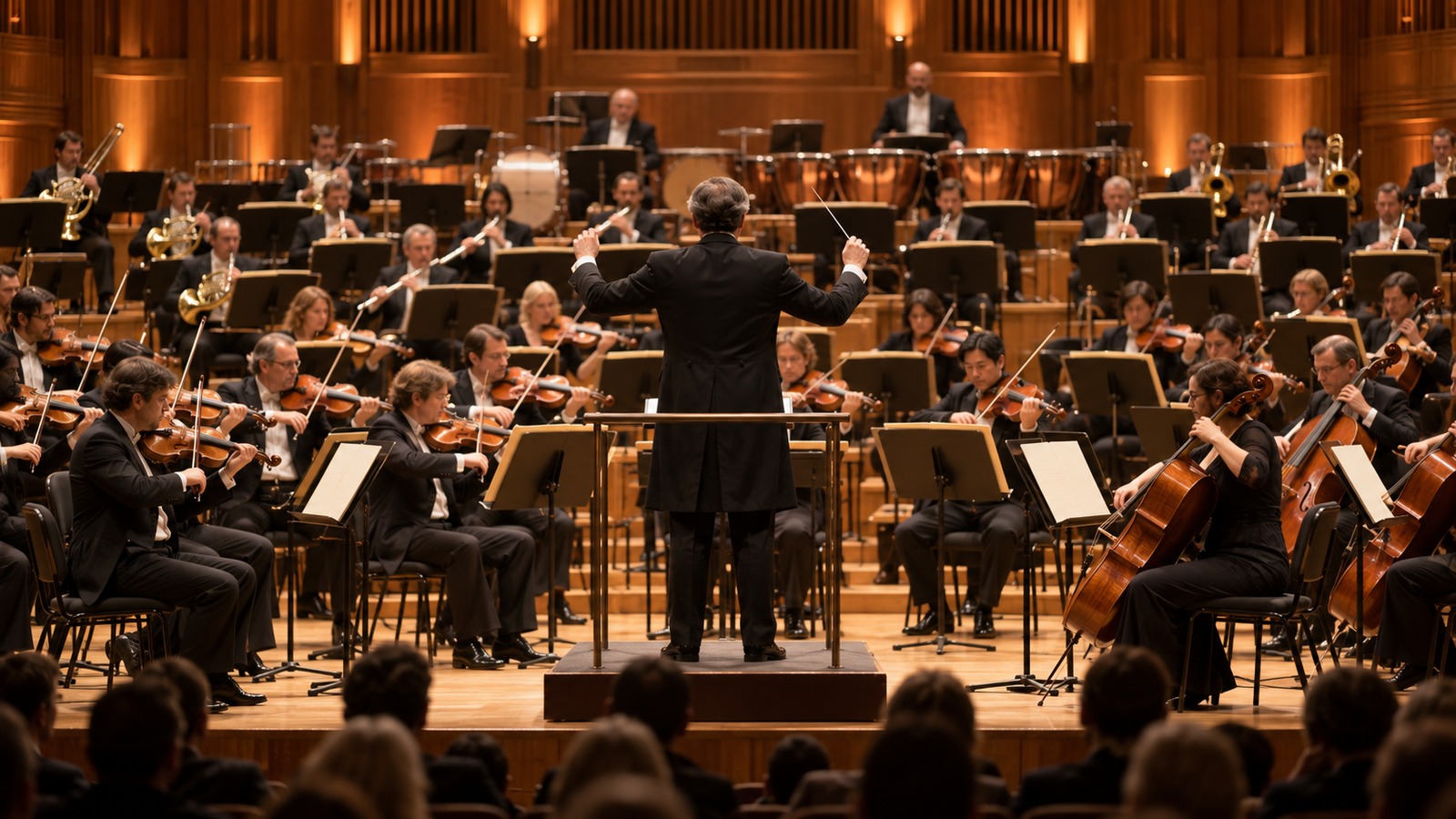
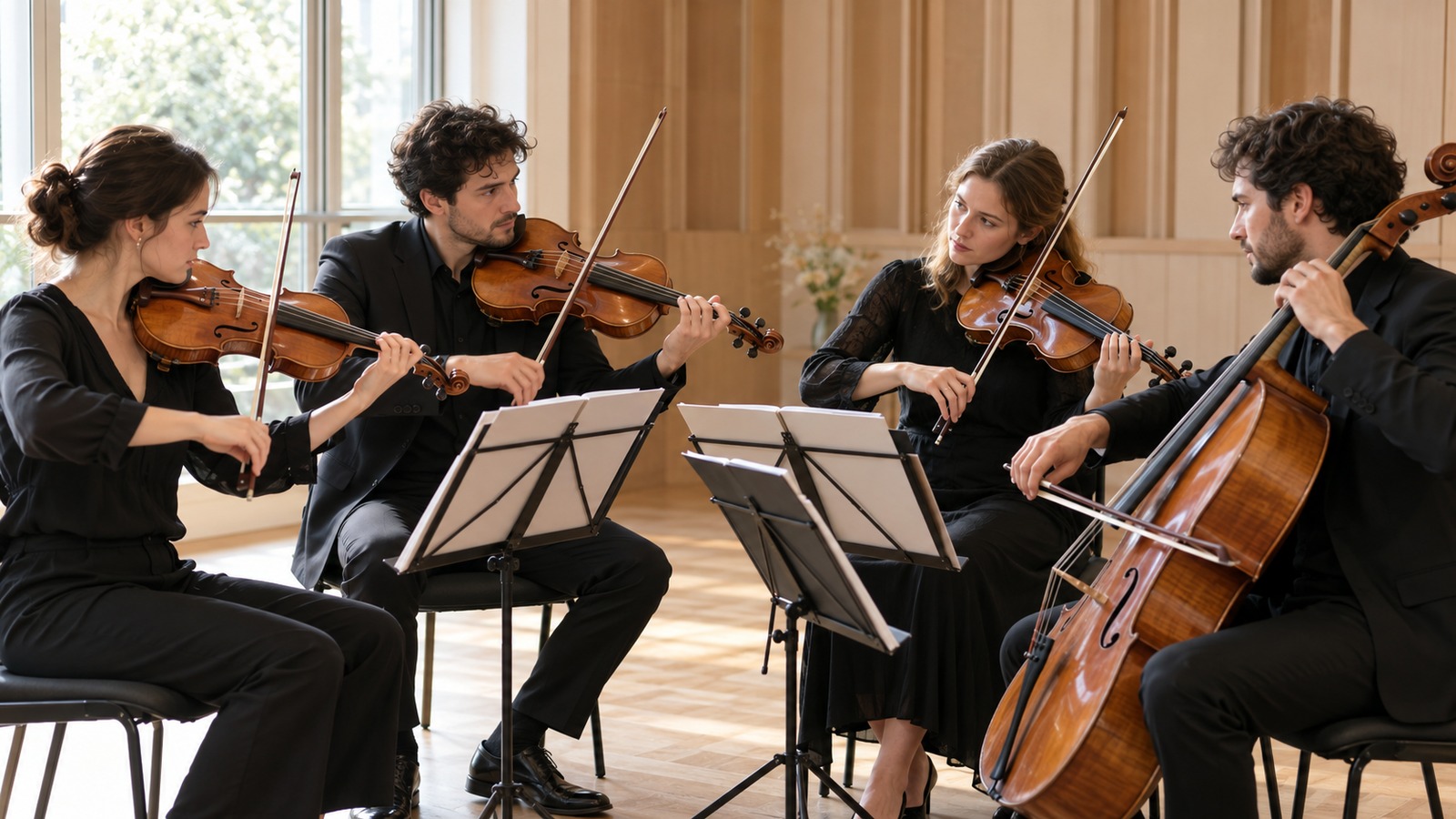
A solo instrumental work can make one person’s articulation and pacing unusually exposed. Chamber music usually gives a small group individual parts through which they coordinate and respond directly. An orchestra offers a larger palette and ways to organize instrumental groups into changing textures. None is automatically a higher level of artistic achievement. Each supplies different resources and demands.
The Philharmonia’s orchestra resource introduces instrument families and ensemble roles. Those categories help identify color, but a listener should also hear what the instruments are doing. A string section can supply an active foundation, a lyrical foreground, or a surrounding texture. The job matters alongside the name of the sound source.
Forms Help You Navigate, With Historical Flexibility
A symphony generally identifies a substantial orchestral work, often divided into several movements. A concerto typically establishes a relation between one or more soloists and an ensemble. A suite can gather distinct sections, sometimes associated with dances or character pieces. These descriptions provide orientation without demanding that every composition meet an identical checklist.
Sonata can identify a work, while sonata form refers to a way of organizing musical relationships within a movement. The two should not be treated as exact synonyms. A title’s practical job is often to distinguish one composition or section from another. Knowing the distinction can help a beginner search for the intended recording without first learning every historical change in terminology.
Forms also make different kinds of expectation possible. A recurring sequence can help the listener recognize return, while contrasting sections can change the impression of material already heard. The artistic achievement lies in how a composer and performers use those resources. A familiar form is a framework for choices, not an automatic explanation of their quality.
Vocal Music Connects Sound With Language and Drama
Classical vocal work includes songs, choral pieces, sacred settings, and music for staged drama, among other approaches. An individual singer can carry an intimate perspective, while multiple voices can organize several lines or create a shared public scale. Language and sound interact through articulation and musical timing. A text translation can support listening when the sung language is unfamiliar.
Opera adds a theatrical setting in which voices, instruments, acting, and design help shape the event. The Metropolitan Opera’s terms guide offers vocabulary for some of those relationships. A recording can preserve much of the music, but a stage production supplies another set of interpretive choices. The two experiences need not be identical to be meaningful encounters with the work.
A Listening Route Through the Historical Periods
The boundaries are approximate, but contrasting works make them useful. Renaissance vocal polyphony, heard in Palestrina’s sixteenth-century Missa Papae Marcelli, interweaves independent lines without a modern orchestra. Bach’s 1721 Brandenburg Concertos show a Baroque alternative: instrumental groups exchange ideas over a strong harmonic foundation. Mozart’s 1788 Symphony No. 40 gives the Classical period a more compact orchestral example, with balanced phrases that can be disturbed, developed and brought back. Beethoven’s Ninth, premiered in 1824, expands the symphony’s scale and finally brings in voices. Debussy’s 1905 La Mer then makes shifting orchestral color central to a three-part design. These are entrances into large, overlapping histories, not claims that every composer of an era wrote alike.
Composers Belong to Particular Circumstances
A composer works within available instruments, performance opportunities, training, audiences, and practical demands. Their music can transform inherited resources while remaining connected to those conditions. Historical context helps explain why a form, ensemble, or expressive vocabulary became useful. It should not reduce the work to a direct translation of every event in the composer’s private life.
Well-known figures such as Bach, Haydn, Beethoven, Chopin, and Debussy provide several routes into this history, but a familiar short list is not the history itself. Women composers and creators outside its most repeatedly promoted center also produced work worth hearing. The public canon reflects opportunities for performance and preservation as well as compositional achievement. Recognizing that distinction makes further discovery more informed.
Reliable program notes can supply context after an initial encounter raises a question. They are most helpful when tied to a particular work rather than treated as a substitute for listening. An anecdote may be memorable while explaining little about the musical relationships. Keep the score’s audible behavior available alongside the history, allowing each to contribute its own kind of evidence.
Modern Classical Music Has Many Directions
Twentieth-century music offers several directions at once. Stravinsky’s 1913 The Rite of Spring gives rhythm disruptive physical force through changing accents and repeated blocks. Steve Reich’s 1976 Music for 18 Musicians creates another kind of motion from recurring patterns, breathing and gradual changes of harmony. Florence Price’s First Symphony, premiered in 1933, places African American spiritual and dance resources inside an extended orchestral form. The Chicago Symphony’s teaching material identifies those resources. Modern classical music therefore cannot be summarized as either tuneful continuation or difficult rejection of the past; these works organize ensemble, rhythm and memory in substantially different ways.
Institutions Shape Access Without Settling Value
Concert organizations, publishers, teachers, broadcasters, libraries, and recording companies help determine what audiences can encounter. Repeated performance can make some works appear inevitable while others remain hard to find. These systems preserve important music and also carry histories of exclusion. A listening account should recognize both functions rather than assuming visibility is a neutral measure of everything composed.
The Carnegie Hall performance-history project shows one way institutional patterns can be examined. A frequently performed title is evidence about that setting’s history, not a complete ranking of all musical achievement. Use such information to understand a canon’s construction while leaving room for a less familiar work to change your personal judgment.
Listening Can Follow Recognition, Contrast and Return
A first encounter can begin by identifying one idea you recognize when it comes back. Notice whether its later setting is larger, quieter, faster, or differently colored. Then hear a contrasting passage and ask how it changes your memory of the first idea. These observations provide a practical route into form without requiring specialist analysis at every moment.
A second focus might follow an instrument or voice across the sequence. The part can lead, support, answer, or disappear before returning. Those changes make the ensemble easier to understand as an organized set of relationships. A large texture becomes more legible when attention can move between one strand and the whole.
Repetition helps this process because unfamiliar material gradually acquires reference points. A first impression does not need to become a final verdict. You can remain curious about a work that initially feels distant, or recognize that one approach does not appeal to you. Understanding includes clearer differences in response, not an obligation to approve every established title.
Use the Category to Open Particular Encounters
Western classical music is a broad, evolving tradition shaped by compositions, interpretations, ensembles, and cultural systems. The Classical period is only one historical part of it, and the category should not be confused with every other culture’s classical traditions. Naming that scope makes the explanation clearer and more respectful of musical differences.
The most useful knowledge connects directly to hearing. Titles help you find a piece, forms orient its movement, instrument families identify color, and historical context explains circumstances. None should prevent the immediate experience of a sound that interests you. Let the category lead toward particular works and performers, then return to the relationships that make each encounter distinct.
Acoustics Make the Performance Physical
Try a three-part first session: a movement of a Brandenburg Concerto, the opening of Mozart’s Fortieth and the central ‘Play of the Waves’ from La Mer. Listen for the relation between a prominent line and the surrounding ensemble. Bach distributes activity among instrumental partners; Mozart makes the return of a nervous theme a structural event; Debussy shifts color so rapidly that the surface itself becomes a subject. The LA Phil’s work guide identifies Debussy’s orchestral resources and dates. The purpose of period names is to help you find such contrasts, then hear the particular work with more precision.